

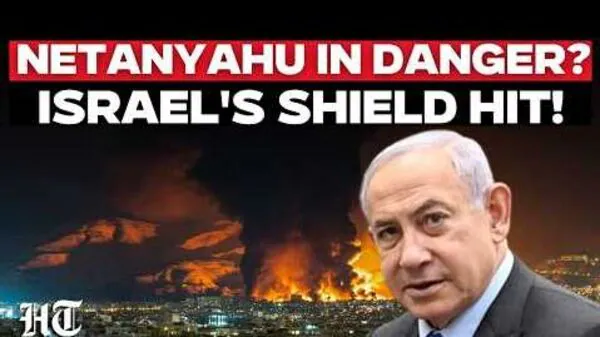
Israel Launches Airstrikes Against Hezbollah In Lebanon's Dahiyeh


In a joint statement with his defense minister, Israeli Prime Minister Benjamin Netanyahu confirmed that the Dahiyeh strike was a direct retaliation for Hezbollah fire directed at Israeli territory. While no immediate casualties were reported, the military earlier stated it had intercepted two projectiles crossing from Lebanon following air raid sirens in Yiftah and Ramot Naftali. Hezbollah has not claimed responsibility for those specific launches. Additionally, Israel's military issued evacuation orders on Sunday to residents of the southern Lebanese city of Tyre and its suburbs ahead of anticipated strikes.
Regionally, Iran has positioned a Lebanese ceasefire between its ally and Israel as a mandatory prerequisite for any peace agreement with the United States. Hezbollah formally entered the war on March 2, framing its involvement as retaliation for the assassination of Iran's Supreme Leader at the onset of a broader conflict that has claimed thousands of lives in Lebanon and displaced over a million citizens. Even before March 2, Israel had continued launching operations in Lebanon despite a previous U.S.-brokered ceasefire from November 2024, asserting that its targets remain strictly limited to Hezbollah personnel and military assets.
Meanwhile, US President Donald Trump said that he would not unfreeze Iranian assets or lift any sanctions before a peace deal is reached.
Trump said he would consider those steps after an agreement is done.
Trump also said that he was not demanding that Lebanon be a part of a short-term deal with Tehran.
US intercepts fresh Iranian attacksFresh hostilities have erupted between US and Iranian forces following a week of heightened tensions, marking the worst escalation since their unstable ceasefire began and stalling progress toward an interim peace agreement. On Sunday, US Central Command announced via social media that it had successfully downed two Iranian one-way attack drones threatening international shipping lines in the Strait of Hormuz. No damage or casualties were reported from the incident.
Also Read | Bahrain's Gulf Air Sees Travel Demand Recovering in the SummerThis followed a significant salvo on Friday, where six ballistic missiles aimed at Bahrain and Kuwait were intercepted, while another failed mid-flight. These missile strikes occurred just hours after Centcom neutralized four unmanned aircraft bound for Hormuz. In retaliation, the US military launched targeted strikes against Iranian coastal surveillance radar installations located in Goruk and on Qeshm Island.
Meanwhile, in Washington, the Trump administration is considering a proposal to redirect frozen Iranian assets within the US to help Persian Gulf allies recover from damage caused by Tehran, as well as to fund future reconstruction efforts. However, with peace talks already gridlocked over Tehran's demand for the release of $24 billion in frozen financial assets, this new financial strategy risks further derailing negotiations. The diplomatic impasse threatens not only a extension of the truce and the reopening of the Strait of Hormuz, but also future discussions regarding Iran's nuclear program. This spike in military action underscores the ongoing failure to achieve a diplomatic breakthrough, with major hurdles remaining, including a parallel ceasefire track between Israel and Lebanon.

Legal Disclaimer:
MENAFN provides the
information “as is” without warranty of any kind. We do not accept any
responsibility or liability for the accuracy, content, images, videos,
licenses, completeness, legality, or reliability of the information
contained in this article. If you have any complaints or copyright issues
related to this article, kindly contact the provider above.
Comments
No comment