




403
Sorry!!
Error! We're sorry, but the page you were looking for doesn't exist.
Is J&K Heading Towards A Water Crisis?
(MENAFN- Kashmir Observer)
ADVERTISEMENT
- Valley Districts Record Sharp Rainfall Deficit Experts Warn of Falling Water Levels, Power Stress
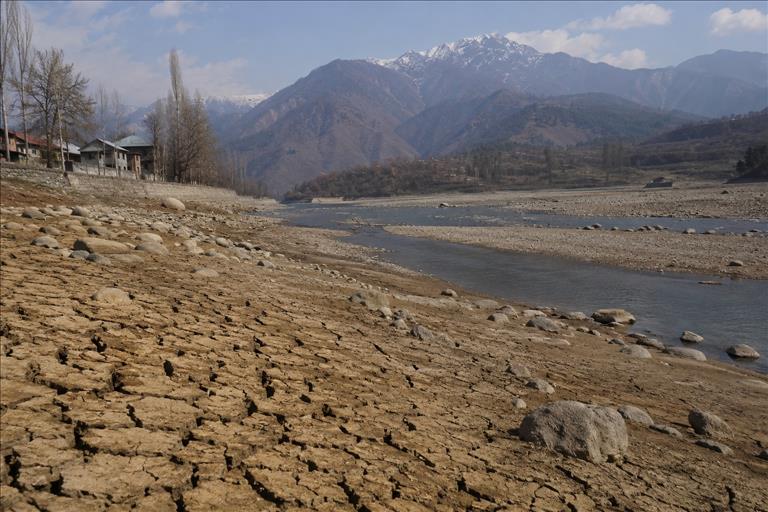
Srinagar- Jammu and Kashmir is witnessing an alarming rainfall deficit for the sixth consecutive month, triggering fears of a looming water crisis, declining river levels and stress on hydropower generation across the Union Territory.
Fresh rainfall data for April has further deepened worries, with J&K recording 86.5 mm precipitation against the normal 99.6 mm, marking a 13 percent deficit.
ADVERTISEMENT
“The clouds over Jammu and Kashmir seem to have forgotten their way home,” independent weather forecaster Faizan Arif said, warning that the prolonged dry spell was no longer just a seasonal anomaly but a sign of a deepening environmental concern.
He noted that precipitation levels have remained below normal since November last year, creating a six-month dry streak with no clear signs of recovery.
“This isn't just a matter of a few dry days; we are heading toward a genuine water crisis,” he said, adding that residents in far-flung and vulnerable areas may face severe shortages if dry conditions continue through the coming months.
Faizan said the crisis extends beyond drinking water and could significantly impact rivers, streams and electricity generation.
“Our streams and rivers are running well below their normal levels, which directly translates to a massive hit on electricity generation,” he said.
Read Also Batmaloo Residents Block Road Over Acute Water Crisis Video: The Water Crisis In Kashmir Is Bigger Than You ThinkThe forecaster warned that the current dry spell is compounding a longer pattern of climatic stress in the region.
“The real danger lies in the fact that this isn't an isolated bad year. We are coming off seven consecutive winters of below-normal precipitation. We have been spending our water savings without replenishing the bank,” he said.
Calling for urgent intervention, Faizan said authorities must begin preparing immediately rather than waiting for shortages to intensify.
ADVERTISEMENT“The government needs to wake up to this reality and start preparing now. We cannot wait for the crisis to reach our doorsteps to start planning,” he added.
The district-wise rainfall data for April paints a grim picture, particularly for Kashmir Valley and parts of south Kashmir.
Shopian recorded the steepest rainfall deficit at 67 percent, receiving only 33.9 mm rainfall against the normal 102.1 mm. Kathua followed with a 60 percent shortfall, while Anantnag recorded 46 percent below-normal precipitation.
Kulgam and Pulwama registered deficits of 39 percent and 38 percent respectively, while Srinagar witnessed a 32 percent shortfall after receiving 63.8 mm rainfall against the normal 93.9 mm.
Budgam recorded a 34 percent deficit, Kishtwar 26 percent, Ganderbal 23 percent, while Bandipora and Baramulla both recorded a 13 percent shortfall.
“When south Kashmir districts continue recording such massive deficits, it becomes clear that the water levels in streams and even the Jhelum are going to fall sharply this year,” Faizan warned.
However, a few districts in Jammu division and north Kashmir recorded surplus rainfall during April.
Samba registered the highest surplus at 96 percent, followed by Rajouri (+46%), Reasi (+40%), Jammu and Udhampur (+15% each), Poonch (+14%), Kupwara (+4%), Ramban (+2%) and Doda (+1%).
The uneven rainfall distribution has once again highlighted growing concerns around climate variability in the Himalayan region, with experts warning that erratic weather patterns and prolonged dry spells are becoming increasingly frequent across Jammu and Kashmir.
Srinagar Logs Season's High At 31.7°C
Kashmir witnessed an unusual spike in day temperatures on Saturday, with Srinagar recording the season's highest temperature at 31.7 degrees Celsius, which was 7.6 degrees above normal.
Several other places across the Valley also recorded temperatures significantly above seasonal averages amid prevailing dry weather conditions.
According to data, Sopore emerged among the hottest places in Kashmir at 32.1°C, while Qazigund recorded 31.0°C, Kupwara 29.5°C, Kokernag 28.6°C and Pahalgam 25.2°C.
Tourist destination Gulmarg recorded 23.0°C, while Beerwah in Budgam registered 28.7°C and Aloosa in Bandipora recorded 30.3°C.
In the Jammu region, Jammu city recorded 35.1°C, while Katra settled at 32.0°C. Banihal recorded 30.0°C, Bhaderwah 28.8°C and Batote 24.6°C.
Officials from the Meteorological Department said the weather is expected to remain generally dry till Saturday evening, with chances of brief showers at a few places during evening and night hours.
However, the MeT department has forecast a change in weather conditions from May 11 to May 13.
During the period, Jammu and Kashmir is likely to witness generally cloudy weather with one or two spells of light to moderate rain and thundershower at many places.
The department has also predicted hailstorm activity, thunder, lightning and gusty winds with speeds of 40 to 50 kilometres per hour at a few places during the forecast period.
Officials said day temperatures are expected to fall by 3 to 5 degrees Celsius at many places between May 11 and May 13 due to the anticipated wet spell.
In view of the expected weather change, farmers have been advised to continue farm operations till May 10.
Legal Disclaimer:
MENAFN provides the
information “as is” without warranty of any kind. We do not accept
any responsibility or liability for the accuracy, content, images,
videos, licenses, completeness, legality, or reliability of the information
contained in this article. If you have any complaints or copyright
issues related to this article, kindly contact the provider above.
Most popular stories
Market Research

More Story






Comments
No comment