

Nuclear Imaging Equipment Market Size, Trends & Growth Report By 2034


| Market Metric | Details & Data (2025-2034) |
|---|---|
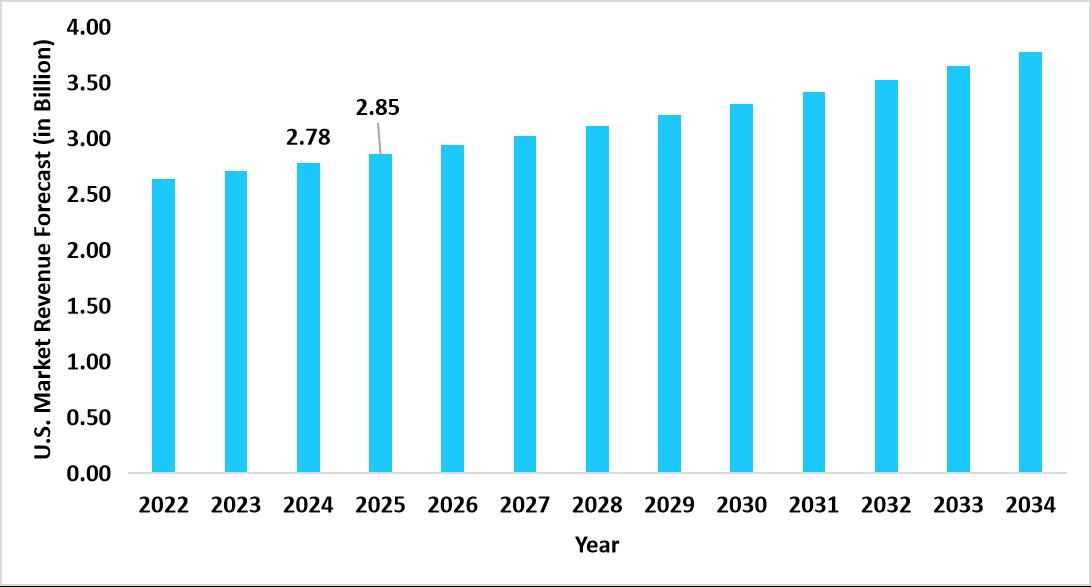
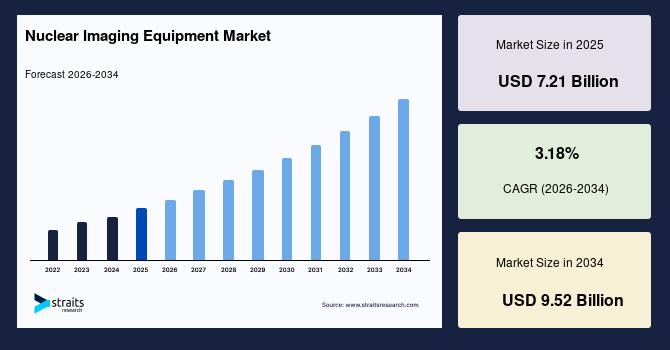
| 2025 Market Valuation | USD 7.21 Billion |
| Estimated 2026 Value | USD 7.41 Billion |
| Projected 2034 Value | USD 9.52 Billion |
| CAGR (2026-2034) | 3.18% |
| Dominant Region | North America |
| Fastest Growing Region | Asia-Pacific |
| Key Market Players | Siemens Healthineers AG, GE HealthCare, Koninklijke Philips N.V., Canon Medical Systems Corporation, Neusoft Medical Systems Co., Ltd. |
Download Free Sample Report to Get Detailed Insights.
Latest Market Trends Growing Integration of Radiomics-Driven Imaging InterpretationA rising trend in the nuclear imaging equipment market is the growing integration of radiomics pipelines into PET and SPECT image interpretation. Research institutions and advanced clinical centers are increasingly extracting quantitative patterns from nuclear imaging datasets to support tumor phenotyping, treatment response evaluation, and metabolic profiling. This shift toward computational image analysis encourages wider adoption of nuclear imaging platforms capable of producing high-detail datasets suitable for radiomics workflows, expanding the analytical applications of PET and SPECT modalities.
Shift Toward Compact Radiopharmacy-Linked Imaging EcosystemsThe major trend shaping the market is the transition toward compact imaging ecosystems where small footprint cyclotrons, automated tracer synthesizers, and digital PET scanners are integrated into unified clinical workflows. This model supports decentralized tracer production within hospital campuses and enables facilities without large radiopharmacy infrastructure to perform advanced molecular imaging. The rise of compact system layouts drives interest in modular equipment configurations that streamline tracer preparation and imaging procedures within a single operational environment.
Nuclear Imaging Equipment Market Driver Growing Adoption of Molecular Imaging in Therapy Response MonitoringA key driver for the market is the expansion of nuclear imaging in therapy response monitoring across oncology, autoimmune disorders, and metabolic diseases. Clinicians are increasingly using PET and SPECT scans to assess early biological changes during treatment rather than relying solely on anatomical imaging. This shift toward functional evaluation encourages higher utilization of advanced scanners and supports procurement of systems capable of delivering quantifiable metabolic and receptor-level insights across diverse patient cohorts.
Nuclear Imaging Equipment Market Restraint Short Operational Window of Radiotracers Challenges Workflow ScalabilityA major restraint arises from the short half-life of several commonly used PET and SPECT radiotracers, which compresses production, transport, and scanning schedules. Facilities without on-site radiopharmacy infrastructure face additional scheduling constraints, as tracer availability directly affects patient throughput. This time-sensitive workflow structure limits the expansion of nuclear imaging services across centers that lack localized tracer production capabilities, constraining broader equipment utilization.
Nuclear Imaging Equipment Market Opportunity Expansion of Targeted Radioligand Therapy Pipelines Elevates Demand for Advanced Imaging SystemsA growing opportunity emerges from the rapid expansion of radioligand therapy candidates for prostate cancer, neuroendocrine tumors, and rare malignancies. As clinical trials scale globally, high-precision nuclear imaging systems are required to assess tracer biodistribution, quantify receptor expression, and guide patient selection. Rising investment in radioligand therapy development encourages hospitals, research centers, and trial networks to upgrade their PET and SPECT infrastructure, creating new avenues for equipment manufacturers across multiple regions.
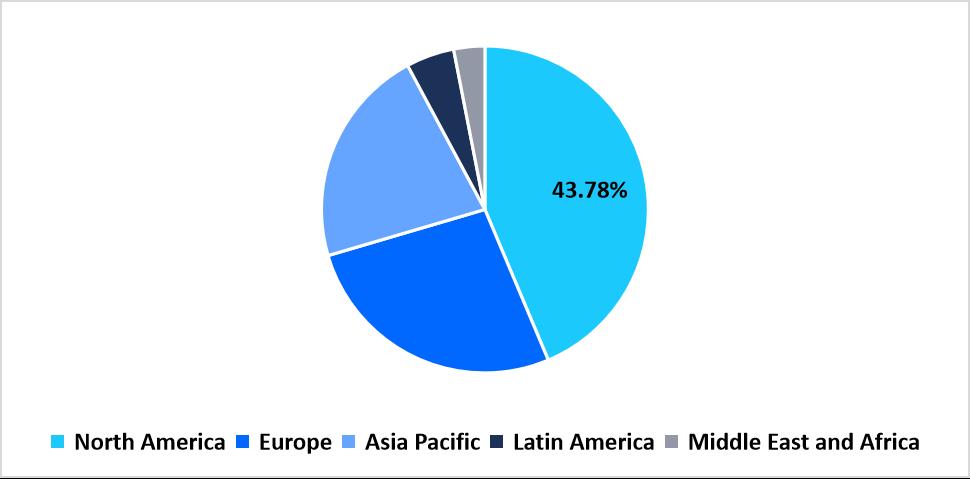
Regional AnalysisNorth America held a major position of 43.78% in the nuclear imaging equipment market in 2025, driven by the expansion of PET tracer production centers across key U.S. medical technology corridors. Regional imaging networks continued integrating advanced PET/CT and SPECT/CT systems through partnerships between research hospitals and domestic device manufacturers, supporting higher utilization of hybrid imaging across oncology and cardiology diagnostics.
In the U.S., growth was influenced by federal investments in molecular imaging research, where academic institutions expanded radiopharmaceutical development programs linked to precision oncology pipelines. The rise in decentralized radiotracer facilities encouraged broader installation of compact cyclotrons and digital PET scanners across tertiary care centers, strengthening market penetration across large hospital networks and specialized imaging clinics.
Asia Pacific Market InsightsAsia Pacific is anticipated to register the fastest CAGR of 5.18% during the forecast period, propelled by the surge of molecular imaging research hubs established within national cancer control missions. These programs supported the development of localized PET tracers tailored to region-specific disease patterns, driving sustained adoption of advanced imaging systems across public and private healthcare institutions.
China showed notable growth due to the expansion of provincial radiopharmacy clusters, where PET/CT installation rates increased across tier-two cities. New imaging centers equipped with digital detector systems improved clinical throughput and encouraged broader utilization of nuclear imaging across neurology, endocrinology, and rare disease assessment.
Regional Market share (%) in 2025
Source: Straits Research
Europe Nuclear Market InsightsEurope experienced a rise in nuclear imaging equipment adoption, fueled by regional imaging standardization frameworks integrated into cross-border healthcare initiatives. These measures encouraged harmonized installation of PET/CT and SPECT/CT platforms across university hospitals participating in multinational clinical programs.
In France, market expansion was supported by upgrades to national cancer imaging infrastructure, where public hospitals replaced aging gamma cameras with hybrid digital systems. The rollout of facility modernization programs increased demand for advanced reconstruction technologies, expanding domestic procurement of nuclear imaging systems.
Latin America Market InsightsLatin America's nuclear imaging equipment market observed steady development as regional healthcare systems boosted investment in molecular imaging for oncology and cardiac evaluation. Brazil's expansion of radiopharmaceutical production facilities accelerated the adoption of PET and SPECT platforms across metropolitan hospital networks, supporting wider availability of advanced diagnostic imaging.
Mexico recorded an uptick in installations as private diagnostic chains incorporated new PET/CT systems to address rising demand for early cancer detection. Modernization of radiology centers and partnerships with international imaging vendors strengthened the country's transition toward higher-resolution nuclear imaging technologies.
Middle East and Africa Market InsightsThe Middle East and Africa region experienced heightened activity in nuclear imaging procurement due to the establishment of new precision-medicine clusters focusing on molecular diagnostics. These initiatives supported the installation of hybrid PET/CT systems and expanded regional radiotracer production capacity.
In the United Arab Emirates, growth was driven by imaging infrastructure expansion within major healthcare free zones, where newly built oncology centers incorporated state-of-the-art PET/CT and SPECT systems. These installations enhanced access to advanced clinical imaging and accelerated adoption across both public and private medical facilities.
By ProductThe SPECT imaging systems segment dominated the market in 2025, accounting for 58.98% share. This position is driven by rising adoption of advanced SPECT platforms across hospitals upgrading their nuclear medicine departments. As healthcare facilities continue integrating hybrid SPECT configurations, clinicians utilize improved detector layouts and optimized workflow designs to achieve greater diagnostic clarity across cardiac, neurological, and multi-system evaluations, strengthening demand for this product category.
The PET imaging systems segment is projected to grow at the fastest pace during the forecast period with 4.12% CAGR. Growth stems from expanding use of PET/CT scanners in molecular oncology and metabolic imaging, where refined reconstruction algorithms support high-precision quantification. Increasing availability of regional radiotracer production hubs encourages broader installation of PET equipment across both public and private imaging networks, accelerating adoption across new clinical settings.
By ApplicationThe oncology segment dominated the market in 2025, contributing 50.12% share. Expansion of PET-based tumor characterization and widespread use of SPECT/CT for metastasis evaluation supported high uptake of nuclear imaging platforms across cancer centers. As oncology programs integrate more functional imaging pathways into treatment planning and therapy monitoring, procurement of advanced hybrid systems continues to rise across major clinical institutions.
The cardiology segment is expected to record the fastest growth, registering a 4.45% CAGR during the forecast period. Increased adoption of myocardial perfusion imaging and PET-based cardiac assessments contributes to rising installation of SPECT and PET systems in facilities seeking improved visualization of perfusion abnormalities and early-stage cardiac dysfunction, driving strong application expansion in cardiovascular diagnostics.
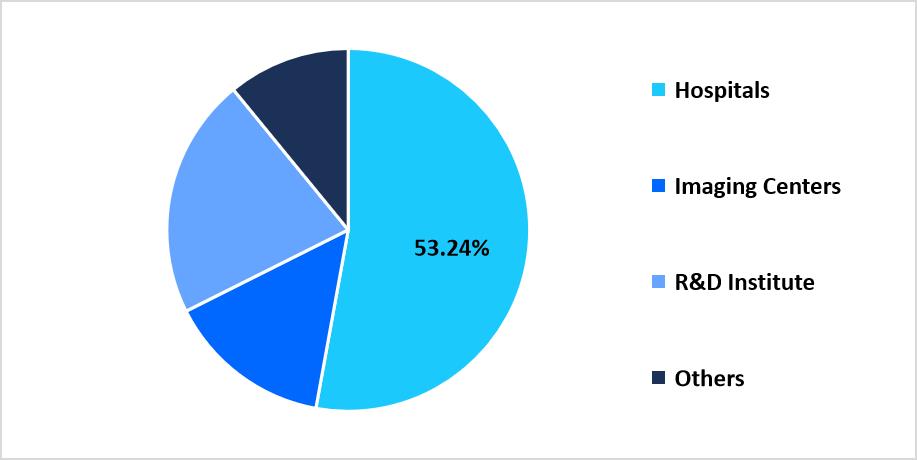
By End UseThe hospitals segment dominated the market in 2025 with a 53.24% share. Large public and private hospitals continued to expand nuclear imaging departments, integrating hybrid PET/CT and SPECT/CT systems to support rising diagnostic volumes. Adoption of in-house radiopharmacy units and multi-disciplinary imaging frameworks further strengthened procurement across major hospital ecosystems.
The R&D institutes segment is projected to grow at the fastest rate, posting a 4.68% CAGR during the forecast period. Increased involvement in tracer research, preclinical molecular imaging, and translational science programs has driven the installation of specialized PET and SPECT systems across academic research laboratories and national biomedical centers.
By Technology Market Share (%), 2025
Source: Straits Research
Competitive LandscapeThe global nuclear imaging equipment market features a moderately consolidated competitive landscape, dominated by a mix of established medical imaging giants and specialized manufacturers focused on PET, SPECT, and hybrid imaging systems. Leading players rely on advanced detector technologies, proprietary reconstruction algorithms, and robust manufacturing capabilities to strengthen their global positioning.
MinFound Medical Systems: An emerging market playerMinFound Medical Systems Co., Ltd. is an emerging competitor gaining visibility in the nuclear imaging equipment market through its advancements in PET/CT and SPECT/CT scanner technologies. The company focuses on cost-efficient, high-performance imaging systems tailored to both developed and emerging markets. Its latest platform, introduced in 2024, features enhanced time-of-flight capabilities and improved digital detectors that deliver superior image clarity with reduced radiation dose. By offering competitively priced solutions, accelerating R&D investments, and expanding its global distribution footprint, MinFound is rapidly establishing itself as a strong new entrant challenging established multinational players in the nuclear imaging equipment ecosystem.
List of Key and Emerging Players in Nuclear Imaging Equipment Market Siemens Healthineers AG GE HealthCare Koninklijke Philips N.V. Canon Medical Systems Corporation Neusoft Medical Systems Co., Ltd. Mediso Ltd. Catalyst MedTech SurgicEye GmbH CMR Naviscan MinFound Medical Systems Co., Ltd. MR Solutions Bruker United Imaging Healthcare Co., LTD Hitachi Ltd. Shimadzu Corporation NeuroLogica Corp. Fujifilm Corporation Agfa-Gevaert Group Others Strategic Initiatives-
July 2024: Shanghai United Imaging Healthcare Co., LTD announced that it had installed the first PET/CT scanner in Mexico, located at the Instituto Nacional de Pediatría.
June 2024: GE HealthCare expanded its technology portfolio with the launch of the MINItrace Magni, a compact cyclotron designed for reliable in-house production of commercial PET tracers and radiometals; the Omni Legend 21 cm, a performance-driven PET/CT system intended to meet growing healthcare system demands across multiple care settings; and Clarify DL, a deep learning reconstruction technology that delivered clearer, more accurate, and seamless imaging.
| Report Metric | Details |
|---|---|
| Market Size in 2025 | USD 7.21 Billion |
| Market Size in 2026 | USD 7.41 Billion |
| Market Size in 2034 | USD 9.52 Billion |
| CAGR | 3.18% (2026-2034) |
| Base Year for Estimation | 2025 |
| Historical Data | 2022-2024 |
| Forecast Period | 2026-2034 |
| Report Coverage | Revenue Forecast, Competitive Landscape, Growth Factors, Environment & Regulatory Landscape and Trends |
| Segments Covered | By Product, By Application, By End Use |
| Geographies Covered | North America, Europe, APAC, Middle East and Africa, LATAM |
| Countries Covered | US, Canada, UK, Germany, France, Spain, Italy, Russia, Nordic, Benelux, China, Korea, Japan, India, Australia, Taiwan, South East Asia, UAE, Turkey, Saudi Arabia, South Africa, Egypt, Nigeria, Brazil, Mexico, Argentina, Chile, Colombia |
Download Free Sample Report to Get Detailed Insights.
Nuclear Imaging Equipment Market Segments By Product-
SPECT Imaging Systems
Hybrid SPECT Imaging Systems
Standalone SPECT Imaging Systems
PET Imaging Systems
Planar Scintigraphy Imaging Systems
-
Cardiology
Oncology
Neurology
Others
-
Hospitals
Imaging Centers
R&D Institute
Others
-
North America
Europe
APAC
Middle East and Africa
LATAM

Legal Disclaimer:
MENAFN provides the
information “as is” without warranty of any kind. We do not accept any
responsibility or liability for the accuracy, content, images, videos,
licenses, completeness, legality, or reliability of the information
contained in this article. If you have any complaints or copyright issues
related to this article, kindly contact the provider above.
Comments
No comment