




403
Sorry!!
Error! We're sorry, but the page you were looking for doesn't exist.
The Other Brontë Sister: Why Do We Always Forget About Anne?
Author: Amy Wilcockson
(MENAFN- The Conversation) A recent trip to Haworth, in West Yorkshire, got me thinking about Anne Brontë, who died 177 years ago this month. Stepping into St Michael and All Angels' Church, a carved stone pillar prominently declares the location of the Brontë family vault. All members of the Brontë family – parents Patrick and Maria, sisters Elizabeth and Maria who died young, the rebellious brother Branwell, and Emily and Charlotte – are all listed. Yet, not mentioned is Anne Brontë, who is buried in Scarborough, almost 100 miles away.

Charlotte Brontë's Jane Eyre and Emily Brontë's Wuthering Heights are repeatedly included on lists of Britain's favourite novels and are firmly ensconced in the popular literary canon.
Anne Brontë's The Tenant of Wildfell Hall and Agnes Grey occasionally receive an honourable mention, but are often nowhere in sight. Like their author, they have been too frequently overlooked. Googling for articles on Anne Brontë brings up very few hits. I began to wonder: why is that?
Finding AnneAgnes Grey, A Novel was the name of Anne's first book, published in December 1847. She had been working on the text for many months before sending it off to the publisher Thomas Cautley Newby in July of that year. Emily's Wuthering Heights was also accepted by Newby at the same time. It was a painful two months later that Charlotte finally found a publisher for her book, Jane Eyre.
Unluckily for her sisters, Charlotte's publisher was more proactive than their own, and Jane Eyre became a sensation. Newby then decided to print Agnes Grey and Wuthering Heights, riding on the coattails of Charlotte's success. More naturalistic than Charlotte's Jane Eyre, but similarly focused on the life of a poor governess, Anne's novel had been upstaged and was received, as the author Samantha Ellis notes, as a“pale imitation of Jane Eyre”.
Even worse, the gender-neutral pseudonyms the sisters had chosen to hide their identities (Currer, Ellis and Acton Bell), had ensured that the three books were thought to have been by only one author. Anne was not disheartened by Charlotte's success or these authorship disputes however, and soon embarked on her second literary project.
Appallingly, many editions of Anne second and most famous work, The Tenant of Wildfell Hall, have been abridged. In 1854, overzealous publisher Thomas Hodgson slashed huge chunks of text which featured controversial subject matter detailing the protagonist's concerns about her husband's depraved behaviour, so that the novel would fit neatly into a single volume.
Brontë scholars declare this to be a“corrupt text”, which cuts four pages of the novel's opening, all expletives (filler words), 25 additional paragraphs and most of chapter 28. While more recent editions of the novel have reprinted the original 1848 text, many of us, without knowing, have read the potted version.
This censorship of Anne's text is frankly unacceptable, as poor editing aside, much contextual information which she included for a reason has been removed. Charlotte's opinion of her sister's book, writing in a letter in 1850 that it“hardly appears desirable to preserve”, also damaged Anne Brontë's reputation further.
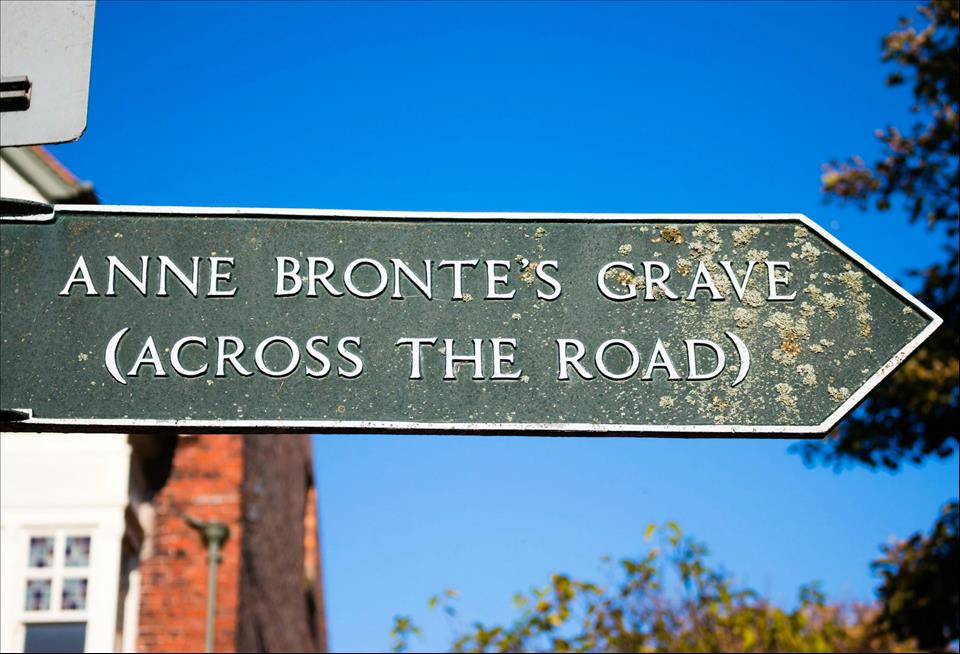
Far from HaworthAnother factor in her neglect is that Anne's grave is miles away from the rest of her family's. She travelled to Scarborough in 1849 in an attempt to ease the symptoms of the tuberculosis that killed her only three days after her arrival.
Only a very dedicated Brontë fan would follow in her footsteps and make the pilgrimage to Scarborough in addition to Haworth. This Yorkshire town will always be the main site of the Brontë sisters fandom as long as their home, now the Brontë Parsonage Museum, remains. Anne Brontë does not have a formal memorial in Haworth, while the rest of her family is buried there. This sets her apart even more.
Perhaps it is simply that Anne was the youngest in a remarkable family, and so in death is overlooked as she may have been in life. Or her stories are not the gothic fantasies featuring troubled and problematic literary heroes like Rochester and Heathcliff we immediately associate with the Brontë name.
Instead, Anne Brontë's works are visceral and real, commenting unflinchingly on the dark sides of human nature: cruelty and violence to children and women, adultery, alcoholism, and coercive control being just some of the topics she covers. Contemporary reviewers called the novel“brutal” and“coarse”.
Utterly shocking at the time, with its descriptions of alcohol abuse and a female protagonist leaving her unhappy marriage, The Tenant of Wildfell Hall is often hailed as a feminist masterpiece. Yet, this does not tie into the romantic ideal readers expect. Wuthering Heights grapples with many of the same themes, but while that novel is viewed as a gothic romance, Anne Brontë's The Tenant of Wildfell Hall is considered by many as a social-realist text.
This enduring oversight could be for all of these reasons or a combination of some. Still, I resent the descriptions of Anne by journalists such as Charlotte Cory as the “runt of the literary litter”, and urge readers and Brontë fans to give her work a chance in its own right.
The 1996 mini-series of The Tenant of Wildfell Hall is available to watch online. To me it is a travesty that it is 30 years since there was an adaptation of this novel. And there has never been a big-screen treatment of Agnes Grey, while Jane Eyre and Wuthering Heights have seen myriad film versions. A fine writer and one who is equal to her sisters, Anne Brontë deserves better.
This article features references to books that have been included for editorial reasons, and may contain links to bookshop; if you click on one of the links and go on to buy something, The Conversation UK may earn a commission.
Institution:Queen Mary University of London

Legal Disclaimer:
MENAFN provides the
information “as is” without warranty of any kind. We do not accept
any responsibility or liability for the accuracy, content, images,
videos, licenses, completeness, legality, or reliability of the information
contained in this article. If you have any complaints or copyright
issues related to this article, kindly contact the provider above.
Most popular stories
Market Research

More Story






Comments
No comment