


How The Venice Biennale Gets Built: Inside The Logistics, Costs, And Chaos


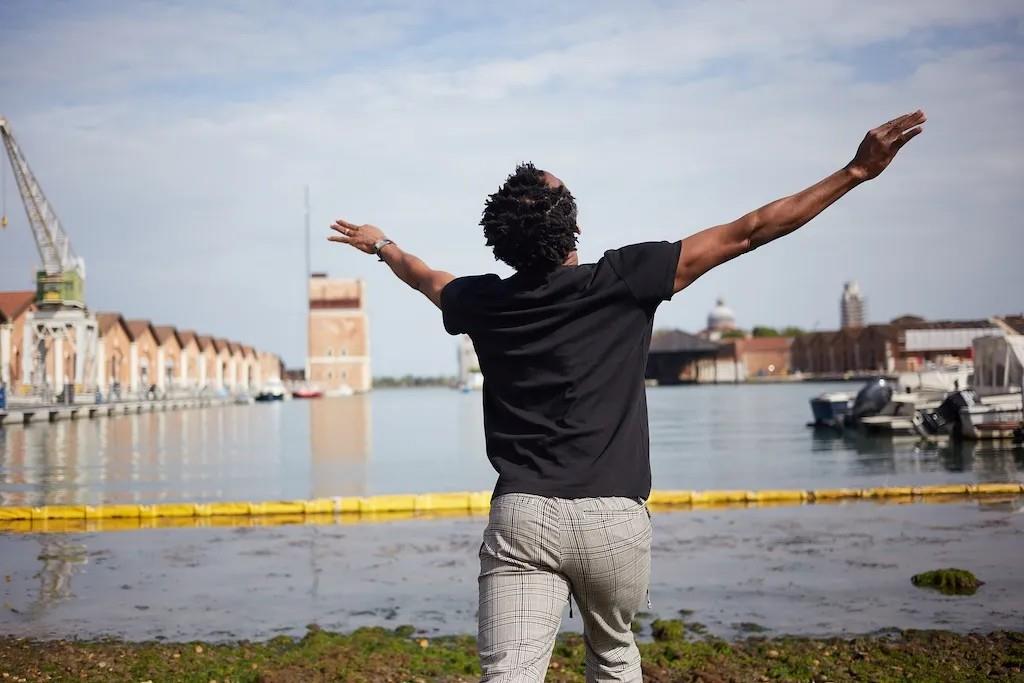
Venice is rarely still in late spring, but in the days before the Venice Biennale opens to press and invited guests on May 5, the city's art infrastructure was only partly awake. The Giardini remained closed. Sections of the Arsenale were accessible only with permission and an escort. What will soon read as a polished global exhibition still looked, in places, like a site under construction.
That unfinished quality is not incidental. The Biennale depends on a city built on timber piles driven into mud more than a thousand years ago, then asked every two years to absorb a vast international exhibition that must be shipped, installed, powered, insured, and opened on schedule. This year, the pressure is sharper. Wars in Iran and Ukraine have pushed up shipping costs and complicated supply chains, while political disputes continue to shadow national pavilions. The Biennale's international jury also reportedly resigned via Instagram, adding another layer of uncertainty to an already strained moment.
Even so, the work continues across Venice. In churches, former naval buildings, improvised studios, and the Giardini, artists and technicians are assembling projects that will soon appear effortless. Among the most site-responsive is Faustin Linyekula's The Galeazze Project, presented by the foundation Scuola Piccola Zattere and Studios Kabako. The performance takes place in a roofless 16th-century complex at the far edge of the Arsenale Nord, a space long used intermittently for storage and still largely undefined in the city's cultural map.
When Linyekula first visited the site in January, there was almost nothing there: no seating, no staging, only an ancient shell and patches of grass. Rather than force the space into a conventional theater, he chose to work with what it already offered. Gravel from the Veneto region will serve as both material and seating. Light will shift naturally as evening falls. Sound will move across water and stone, with the lagoon acting as an amplifier.
Barry X Ball's The Shape of Time, meanwhile, will bring 23 sculptures to the Basilica of San Giorgio Maggiore. Some are based on Bartholomew Flayed from the Duomo in Milan. Shipped from Brooklyn in early February, several of the works were delayed at sea, a reminder that even the most refined presentation can depend on the least visible forms of labor.
In Venice, the spectacle is never just what the public sees. It is also the waiting, the hauling, the permissions, and the improvisation that make the final image possible.

Legal Disclaimer:
MENAFN provides the
information “as is” without warranty of any kind. We do not accept
any responsibility or liability for the accuracy, content, images,
videos, licenses, completeness, legality, or reliability of the information
contained in this article. If you have any complaints or copyright
issues related to this article, kindly contact the provider above.


Comments
No comment