


Ras Al Khaimah Waterfront Living Reprices Real Estate As Investors Chase Lifestyle-Led Luxury


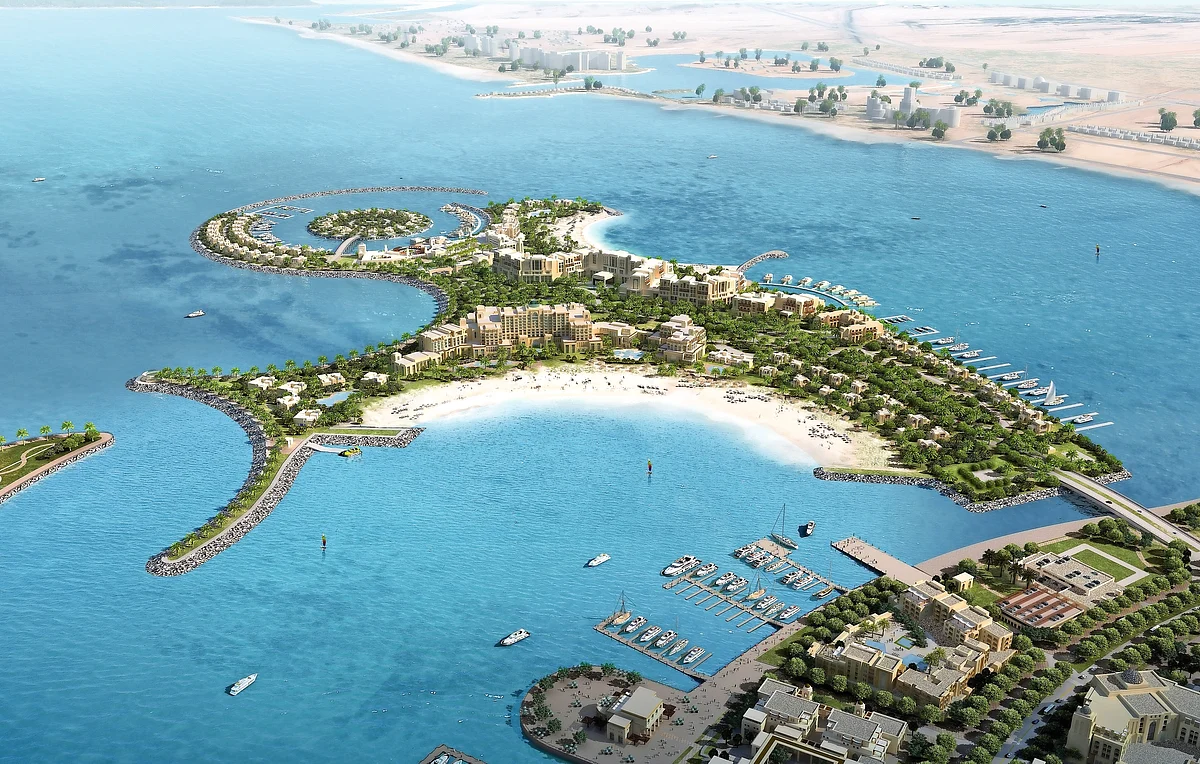
On Al Marjan Island, this approach is being executed at scale. The development pipeline is anchored by global hospitality brands and flagship assets such as the $5.1 billion Wynn Al Marjan Island Resort, expected to open in 2027 with more than 1,500 rooms alongside a broad mix of entertainment and lifestyle offerings. In parallel, a new generation of branded residences - spanning hospitality, fashion and automotive affiliations is reshaping the residential mix, signalling a shift towards experience-driven real estate products.
Recommended For You UAE bans citizens from travel to Iran, Lebanon and Iraq, urges those there to leaveFurther along the coast, Al Hamra and Mina Al Arab are moving beyond traditional residential communities into more complete lifestyle destinations. Marinas, beachfront promenades, boutique hospitality and curated dining concepts are reshaping how these communities are experienced and valued.
The investor profile is evolving alongside this shift. Demand is increasingly driven not only by relative price positioning, but by a differentiated lifestyle proposition - one that offers lower density, design-led living and waterfront access, while remaining within close proximity to Dubai's economic and transport hubs.
What's Driving Premium Demand
Across Al Marjan Island and Al Hamra, premium development is being driven by a combination of policy direction, infrastructure investment and changing investor behaviour. According to Mohammad Rafiee, CEO and Founder of Richmind Development, the shift is the outcome of a carefully structured approach rather than organic spillover demand.“The shift is not accidental, it is the result of a deliberate convergence of vision, infrastructure, and policy,” he said, pointing to the emirate's growing global relevance as both a leisure and investment destination.
Catalytic projects such as the upcoming Wynn Al Marjan Island Resort are reinforcing that trajectory.“What we are witnessing is not expansion, it is structured transformation,” Rafiee added, noting that investors are increasingly moving beyond saturated markets in search of space, waterfront access and development flexibility.
This repositioning is also being shaped by shifting investor behaviour. Rakesh Mirchandani, Co-Founder of RRS International Development FZ LLC and Partner at RRS Capital Management LLC FZ, highlighted how demand is becoming more strategic and forward-looking. Investors, he noted, are prioritising lifestyle-led assets with long-term upside, entering at earlier stages of development to capture value. The appeal of coastal districts lies not only in product quality, but in land dynamics.
“There is a growing understanding that island developments offer limited land supply, where scarcity drives significant long-term value appreciation,” he said, adding that rising land values particularly on Al Marjan Island are already reflecting this structural demand.
At the same time, the current wave of development is building on an existing hospitality base rather than starting from scratch. Maxim Novikov, Head of RAK branch at Metropolitan Premium Properties, pointed out that established luxury assets such as Waldorf Astoria Ras Al Khaimah, The Ritz-Carlton Ras Al Khaimah, Al Hamra Beach and Rixos Al Mairid Ras Al Khaimah have been anchoring the emirate's premium hospitality offering for more than a decade. That foundation, combined with the emirate's natural advantages from its coastline to its proximity to the Hajar Mountains has long supported steady tourism demand.
The difference now is the scale and pace of what is being added. The Wynn resort, alongside a new pipeline of ultra-luxury developments including Janu by Aman and The Luxury Collection's Nasim Al Bahr, is accelerating both investor confidence and international visibility.“This has acted as a catalyst, accelerating investor interest and reinforcing confidence in the emirate's long-term positioning as a luxury destination,” Novikov said.
From Destination to Long-Term Proposition
The emirate's coastal districts are reshaping how Ras Al Khaimah is perceived, not just as a place to visit, but as a location where people are increasingly choosing to live, invest and return to regularly. What was once positioned primarily as a leisure destination is now being reframed as a more complete, long-term proposition built around lifestyle, accessibility and economic activity.
Rafiee argues that Al Marjan Island is“redefining Ras Al Khaimah from a destination you visit... into a place you choose to belong.” He attributes this to a combination of global credibility, integrated development thinking and sustained engagement.
“The question is no longer 'Why Ras Al Khaimah?' It has become: 'How early can I be part of this?'” Rafiee said, describing a market that is approaching a clear inflection point.
This transition is also being reinforced by the structure of master-planned communities. Mirchandani points out that developments across the coast are being built as complete ecosystems.“These master-planned communities offer a complete lifestyle integrating residential, hospitality, retail, and leisure components, encouraging longer stays and repeat engagement while building stronger emotional and financial ties to the emirate,” he said.
He adds that Al Hamra plays a key supporting role, with established infrastructure such as the Al Hamra Golf Club and Al Hamra Mall reinforcing connectivity and day-to-day convenience within a short distance of Al Marjan Island.
At a broader level, the shift is being supported by policy and economic infrastructure. Novikov notes that the expansion of freehold developments, alongside the growth of Ras Al Khaimah Economic Zone (RAKEZ), has been central to repositioning the emirate.
“While RAK was primarily known as a leisure and tourist destination just a few years ago, these developments have played a pivotal role in transforming the emirate into a place where people can truly live, work and invest,” he said.
With over 40,000 companies registered in RAKEZ, the emirate is building a stronger base of employment and economic activity, supporting sustained real estate demand. At the same time, comparatively accessible beachfront pricing relative to Dubai is drawing end-users looking for long-term residency rather than short-term stays. For developers and investors alike, the outcome is a shift in behaviour. As Dmitriy Starovoitov, Founder of Almal Real Estate Development, said:“These destinations are creating a real lifestyle. People are not just coming to visit, they are coming to live and invest.”
Experience-Led Demand up
Waterfront and island-style developments are fundamentally reshaping buyer expectations in Ras Al Khaimah, particularly among affluent second-home seekers and lifestyle-driven investors. Rafiee argues that waterfront living is no longer positioned as a premium add-on.“Waterfront living is no longer a luxury feature, it is becoming the foundation of modern luxury,” he said, noting that today's buyers are benchmarking Ras Al Khaimah against global destinations across the Mediterranean, Southeast Asia and Europe.
As a result, expectations have evolved beyond conventional real estate metrics. Buyers are prioritising individuality over standardisation, seeking residences that feel curated rather than replicated. There is also a growing emphasis on fluid living where interiors connect seamlessly with the natural environment and on experience as a core value driver.“Lifestyle, services, and programming are as important as the asset itself,” Rafiee added, pointing to a broader shift where developments are conceived as part of a larger living environment rather than standalone properties.
This perspective is echoed by investors tracking buyer sentiment. Mirchandani highlights how waterfront and island-style living are redefining baseline expectations.“Direct access to the water, expansive views, and low-density environments are becoming standard requirements,” he said.
He notes that buyers are increasingly comparing Ras Al Khaimah to established global resort markets, looking for a balance between escape and accessibility. That is translating into stronger demand for privacy, design quality and seamless indoor-outdoor living, alongside communities that offer a curated mix of dining, wellness and leisure experiences.
At the same time, the emirate's value proposition continues to play a role in attracting demand. Novikov points out that Ras Al Khaimah still offers a combination that is difficult to replicate regionally.“For second-home seekers, RAK continues to deliver exceptional value for money, offering options that are increasingly difficult to find in other emirates,” he said.
However, he adds that expectations are rising alongside that value. Buyers are no longer looking at waterfront properties in isolation, but as part of a broader lifestyle ecosystem.“Developments centred around beachfront, marinas and resort-style living, surrounded by luxury hotels and beach clubs, are raising expectations and attracting more affluent, lifestyle-driven investors,” Novikov noted.
A Different Pace of Luxury
While Dubai continues to lead with scale, spectacle and vertical ambition, Ras Al Khaimah is carving out a more measured, lifestyle-led proposition, one that is increasingly resonating with a different kind of high-end buyer.“Dubai represents a powerful form of global luxury, dynamic, vertical, and fast-moving. Ras Al Khaimah is shaping something different, a more refined, nature-led, and experiential luxury,” Rafiee says.
That contrast is not positioning the two emirates in competition, but rather in alignment with evolving buyer behaviour.“This is not competition, it is complementarity,” Rafiee adds, noting that a growing segment of buyers is now actively choosing both - Dubai for opportunity and energy, and Ras Al Khaimah for retreat and long-term lifestyle value.“We are not replicating Dubai, we are responding to a new mindset, one that seeks meaning, not just momentum.”
That mindset is increasingly visible across global luxury markets, where high-net-worth individuals are placing greater emphasis on well-being, space and environmental context alongside traditional markers of status. In this shift, Ras Al Khaimah's lower-density coastal developments and nature-led masterplans are becoming a strategic differentiator rather than a limitation. Mirchandani sees this positioning as both deliberate and timely.
“Ras Al Khaimah is beginning to define a distinct identity within the UAE's luxury landscape,” he explains.“Rather than replicating the high-energy, vertical urban model of Dubai, it is positioning itself around space, nature, privacy, and a slower, more intentional pace of living.”
For investors and developers, this distinction is not purely conceptual, it has direct implications for long-term value. Mirchandani points to the importance of aligning projects with infrastructure growth, government priorities and connectivity.“We carefully evaluate proximity to key landmarks, commercial districts and lifestyle anchors, ensuring that developments are positioned within areas that can sustain growth and appreciate over time,” he says, underlining that even in a slower-paced market, fundamentals remain critical.
That balance between lifestyle and accessibility is central to Ras Al Khaimah's appeal. According to Novikov, the emirate is increasingly being viewed through a different lens.“Many travellers and residents often characterise Dubai as fast-paced and highly business-oriented,” he says.“Ras Al Khaimah, by contrast, is increasingly seen as more life-centric, with a growing emphasis on lifestyle, wellbeing and a more relaxed pace of living.”
This positioning is translating into tangible demand, particularly in waterfront communities such as Mina Al Arab and Al Marjan Island, where master-planned developments are integrating residential, retail and leisure components within walkable environments.“Residents have access to essential amenities such as retail, leisure and wellness within close proximity,” Novikov notes, highlighting the shift toward self-contained, experience-led living.
Ultimately, what is emerging is not a redefinition of luxury, but an expansion of it. As Dmitriy Starovoitov explains:“Dubai is about spectacle, and it does that very well. RAK is about something different - space, nature, calm, and for today's luxury buyer, that is becoming more valuable than anything else.”
ALSO READ- RAK property market records Dh12.4 billion sales as off-plan dominates 85% of deals Ras Al Khaimah gears up for 2028 economic growth surge Family travel and tech innovations reshape UAE's hospitality landscape

Legal Disclaimer:
MENAFN provides the
information “as is” without warranty of any kind. We do not accept
any responsibility or liability for the accuracy, content, images,
videos, licenses, completeness, legality, or reliability of the information
contained in this article. If you have any complaints or copyright
issues related to this article, kindly contact the provider above.


Comments
No comment