


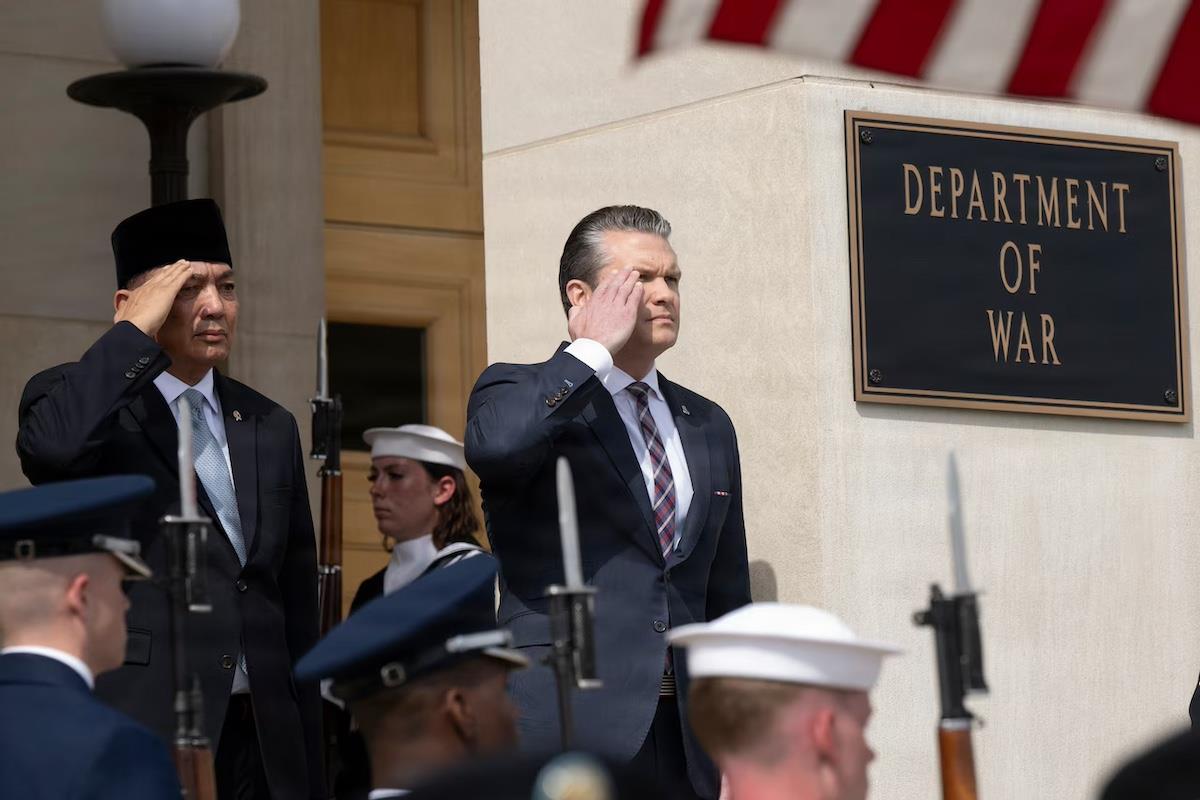
Indonesia Shows The Non-Aligned Way Through US-China Rivalry


Simultaneously, on the other side, President Prabowo Subianto held a marathon five-hour meeting with Russian counterpart Vladimir Putin at the Kremlin in Moscow.
The synchronized events were no administrative coincidence - they were a deliberate expression of Indonesia's“multi-alignment” doctrine, designed to protect national interests amid a global energy crisis triggered by the paralyzing closure of the Strait of Hormuz.
The Moscow visit was driven by cold pragmatism: securing Russian crude oil at a significant discount, estimated at US$59 a barrel, to shield Indonesia's economy from acute energy inflation.
But buying Russian energy is a diplomatic minefield, carrying the risk of US sanctions under the Countering America's Adversaries Through Sanctions Act (CAATSA).
This is where the new MDCP with the US functions as a diplomatic shield. By offering Washington a high-level security commitment, Indonesia effectively executed a strategic trade-off, compelling the US to grant sanctions waivers in the interest of global energy supply stability.
Where previous US-Indonesia cooperation was broad and often vague, the 2026 MDCP is a sharper, functional instrument. The agreement grants Indonesia access to sensitive domains including subsurface technology, autonomous systems and advanced asymmetric capabilities - privileges typically reserved for America's closest treaty allies.
The economic foundation for this military modernization was laid weeks earlier during Prabowo's visits to Japan and South Korea, which yielded 575 trillion rupiah (US$33 billion) in investment commitments, giving Indonesia the fiscal space to finance procurement of advanced defense hardware compatible with Western technological ecosystems.
However, a sharp friction has emerged within this new intimacy: the US demand for blanket overflight rights, meaning automatic military transit through Indonesian airspace.
A classified document titled“Operationalizing US Overflight” revealed the Pentagon's desire for rapid transit corridors from the Pacific to the Indian Ocean to respond to Middle East crises.
The Defense Ministry maintained that airspace sovereignty remains absolute and that permissions are granted case by case, but the issue has sparked internal tension. The Foreign Ministry voiced concerns about an“alliance trap,” while the military remained focused on the need to enhance operational capacity and interoperability.

Legal Disclaimer:
MENAFN provides the
information “as is” without warranty of any kind. We do not accept
any responsibility or liability for the accuracy, content, images,
videos, licenses, completeness, legality, or reliability of the information
contained in this article. If you have any complaints or copyright
issues related to this article, kindly contact the provider above.


Comments
No comment