




403
Sorry!!
Error! We're sorry, but the page you were looking for doesn't exist.
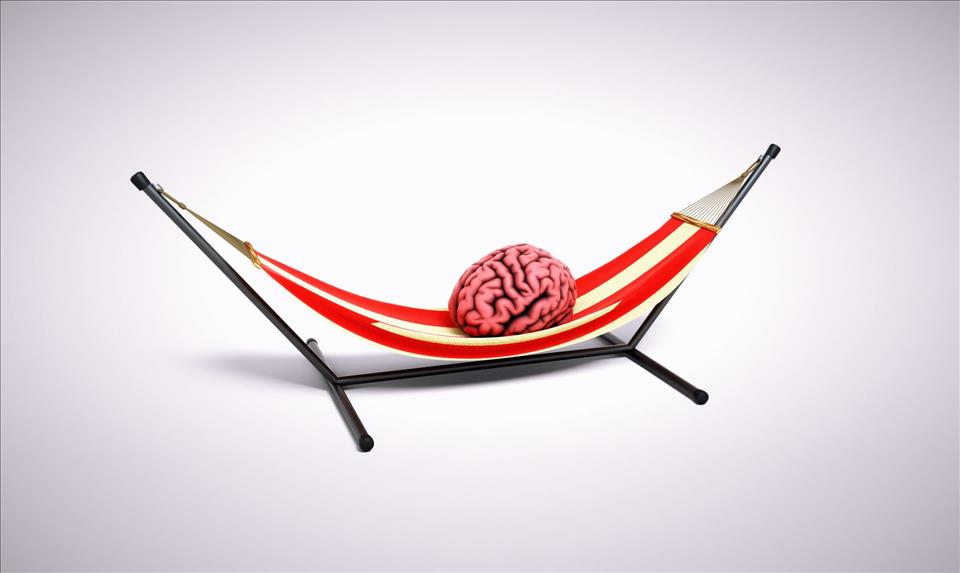
The New Brain Break App For Philadelphia Students Raises Questions About More Screen Time
Author: Mary Jean Tecce DeCarlo
(MENAFN- The Conversation) If you have a child in school right now, you may have heard them talk about needing a“brain break” while doing homework or studying for a test. Maybe they shake their bodies out, do some deep breathing exercises, or watch their favorite YouTube video of hamsters in a maze or a hydraulic press crushing various items.

To assist with these brain breaks, the School District of Philadelphia recently announced that an app called Rallee will be available to teachers and students in the district. The district's version of Rallee will include a section of the app with branded activities related to the Philadelphia Flyers hockey team.
I'm a clinical professor of literacy studies at Drexel University in Philadelphia, and I previously worked as an elementary school teacher for 18 years. I know some families will wonder: Will this digital tool actually improve my child's learning? And do students really need a brain break that involves more screen time?
What is Rallee?Rallee encourages users to“turn your body into the controller for timed obstacle courses” and“stretch and breathe alongside the avatar.” While using Rallee, students might jump in place to help their avatar clear an obstacle or imitate their avatar by stretching their arms wide while taking a deep breath. These movement breaks are designed to take 1 to 5 minutes. The website says the activities help students improve learning comprehension, reduce stress and manage overwhelming emotions.
What are brain breaks?Brain breaks are brief interruptions in instructional time during which students do cognitive or physical activities that are different from what they are doing in class. These breaks are grounded in some general principles of learning science and human physiology.
Researchers and educators know that learning requires students to absorb new information or skills and actively connect this new information to things they already know. One way the brain does this is through a process called consolidation. When a learner focuses on something other than the new information or skill, it gives the brain a chance to improve the neural connections it is making between the new information and prior knowledge. This improves long-term retention.
Scientists also know that movement increases blood flow to the brain, which enhances executive function. Executive function refers to the ability to focus on new information and then organize that information in the brain. Executive function skills also help a learner filter distraction, which is something many teachers and families see as a challenge for today's learners.
Finally, long-standing research shows that recess, which is an extended break from learning, has a positive effect on student learning.
These established ideas support the idea of shorter“brain breaks” during lessons starting in preschool and all the way through college.
Do 'brain breaks' actually work?The research that supports the idea of brain breaks is strong, but what does the research say about how effective brain break programs and practices are when applied in schools?
Many small studies show positive outcomes for specific learning measures with specific populations.
For example, a study of 35 Canadian students in grades 1 to 3 showed that classroom activity breaks improved kids' engagement in learning tasks.
Another study involving second and third graders in the U.S. demonstrated that brain breaks using the popular website GoNoodle were associated with improved reading fluency
And a study involving 7- to 9-year-olds in Europe showed that classroom-based physical activity breaks were correlated to better math scores and an improvement in some executive function skills, such as cognitive flexibility, which is the ability to switch attention from one thing to another.
Still other studies have shown that activity breaks help adolescents and college students with general cognitive skills, such as attention and concentration.
However, when researchers combine the results of these smaller studies and do a larger statistical analysis, they find that the impact of brain breaks on learning and achievement is weaker than expected. This may be because these larger studies include other published studies that did not find that school-based brain breaks improve learning and achievement.
These meta-analyses find that there are no negative outcomes for students when they participate in these brain breaks, but the evidence does not strongly support positive outcomes either.
How will Rallee work in classrooms?Rallee states that using their brain break app takes 1 to 5 minutes, but simply asking students to open a digital device and access an app can take twice that time, depending on the age and accessibility challenges of the students. These tools also need to be put away afterward, which takes more time. I'd estimate that a Rallee break would likely take 10 minutes in an average classroom.
Moving your body to navigate an avatar through a maze, as depicted on the Rallee website, also means a teacher may need to manage different students moving in different ways within their classroom space.
Rallee also requires students' eyes to be focused on a screen, which research shows can have a negative impact on the very skills that brain breaks are trying to improve. Screen time is associated with concentration difficulties and a slower pace of new learning. More time on a screen and the required time to access and implement the brain breaks may prove more problematic than beneficial.
On their website, Rallee does not share any research on the use of their product in either a lab or a classroom. Rallee did not respond to my inquiry about research on its product.
Who is paying for the app?Rallee's rollout in Philadelphia schools is being funded by the Philadelphia Flyers for one year. The version of the app they are supporting has a special“Flyers World” set of activities built in. This partnership seems to be supported by the NHL's Industry Growth Fund, which pays for projects aimed at increasing the team's fan base and getting more people, particularly kids, to play hockey.
The Philadelphia School District did not respond to questions about how it chose the app or the specific source of the Flyers' funding.
Some parents might see the Rallee subscription as a win-win, where the Flyers grow potential hockey fans and the Philadelphia School District gets a new tool it might not otherwise be able to purchase for its schools. Others might be more suspicious of the district partnering with a sports franchise to promote its team while offering unclear benefits to its learners.
Read more of our stories about Philadelphia and Pennsylvania, or sign up for our Philadelphia newsletter on Substack.
Institution:Drexel University

Legal Disclaimer:
MENAFN provides the
information “as is” without warranty of any kind. We do not accept
any responsibility or liability for the accuracy, content, images,
videos, licenses, completeness, legality, or reliability of the information
contained in this article. If you have any complaints or copyright
issues related to this article, kindly contact the provider above.
Most popular stories
Market Research

More Story







Comments
No comment