




403
Sorry!!
Error! We're sorry, but the page you were looking for doesn't exist.
The UK Is Alarmingly Unprepared For The Threats It Faces Security Expert Explains Why
Author: Andrew Neal
(MENAFN- The Conversation) Lord Robertson, former UK defence secretary and Nato chief, has said that the UK's national security is“in peril”. He is right. There is no secret about what the threats are. In addition to the woeful news from the Middle East and Ukraine every day, stories of sabotage, hacking, Russian reconnaissance of undersea cables and the testing of the UK's defensive reactions keep coming.

The country's leaders need to spell out what these threats mean for the UK. They must also be honest about our minimal defensive capabilities.
Russia arguably does not have the capacity or intent to launch a ground invasion of the UK. Yet if tensions were to escalate, Russia certainly has the capacity to attack the UK by air and sea. Its long-range bombers routinely test the limits of UK airspace and perform targeting runs for air-launched cruise missiles.
The UK has little in the way of land-based anti-aircraft and anti-missile defences. Most of what we have is ship and aircraft based. This has the advantage of mobility, but as we saw with the recent Hezbollah drone strike on an RAF Cyprus base and the slow deployment of UK destroyer HMS Dragon in response, it is spread thin.
The surface combatant fleet currently stands at 17 (six destroyers and 11 frigates). This is a quarter of its size in 1990, and below the target of 19, which itself is below what internal Ministry of Defence assessments reportedly claim is the “bare minimum”.
The UK remains almost defenceless against drone strikes. Ukraine and Iran have shown that cheap drones get through defences by sheer numbers. Missile defences like Patriot – deployed by many US allies in Europe, the Middle East and Asia, but not the UK – have a limited number of expensive shots which are quickly depleted. The Royal Navy's ship-based Sea Viper system is designed to defend fleets, not cities. Ukraine has developed sophisticated and cost-effective defences based on acoustic listening devices, multiple perimeters, anti-drone drones and mobile gun emplacements. The UK needs similar resources in reserve.
Britain's nuclear deterrent remains an important insurance policy against nuclear attack, not only for the UK but perhaps also for Europe, though its dependence on the US may be problematic in the long term. However, below the level of escalation to full-scale nuclear war, it serves no functional role in our defence and security. The UK is not going to threaten a nuclear strike, and therefore suicide, in response to cable sabotage or drone strikes on British bases. The threshold for nuclear use is exceptionally high, even for our enemies, and this is a good thing.
The current state of unpreparedness has been years in the making. Defence spending, understandably, fell from 5% of GDP after the cold war. During the 1990s and 2000s it stayed at around 2.4% of GDP, although still steadily declining as a proportion of public spending. Austerity from 2010 onwards saw real cuts in percentage of GDP, leading to a loss of personnel and capability.
Ukraine defence start-ups can design, produce, test and deploy in weeks, with needs communicated directly from the battlefield. The UK's sclerotic procurement systems and big defence companies would take years to produce the same results. The vested interests around them – a mix of defence nationalism, pork barrel politics, trade unions and a revolving door with government and the military – need to be pushed aside.
The UK has a nascent defence startup culture promising to bring new products to market rapidly. It needs investment and regulatory support. They were expecting this after the publication of the strategic defence review, but are still waiting. Meanwhile, Europe is already building new arms production facilities.
The recent air and naval operation to end a month-long loiter by Russian vessels shows that Russia is interested in vulnerabilities in the UK's undersea data and energy connections. While questions remain about what exactly Russia may have done, or left behind, the threat is clear: as a highly connected island country, it would be simple for Russia to disrupt the economy. Repair would be slow and difficult.
On a geopolitical scale, European security has depended on the US for decades through Nato. US commitment is now seriously in doubt. Even if it does not formally pull out of the alliance, the credibility of its deterrent effect is shot. Is the US going to defend Europe if attacked by Russia? Even having to ask the question shows that the damage is done.
Rebuilding capacityThe government has offered, in its strategic defence review, a serious plan to close vulnerabilities and build up UK defence capacity. The Treasury and electoral concerns appear to be holding up its implementation.
The UK has some capable systems, but they would be quickly depleted in conflict. Estimates vary widely, but Russia may be producing 30,000 attack drones a year, and Iran anywhere between 5,000 and 12,000 a month. Meanwhile, the UK military has adopted a number of small-scale systems with units in the tens.
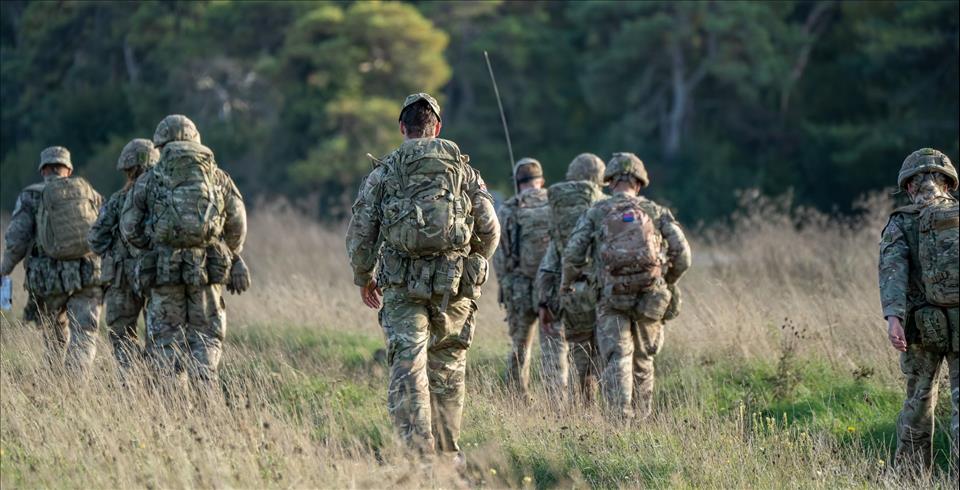
Our army and navy are the smallest they've been for centuries. Previous strategic reviews assumed that technology would substitute for personnel. We are witnessing a new revolution in military affairs in which even our newest military assets are too few, too fragile and too slow to arrive. Ukrainian start-ups can build in a week what would take us ten years. Ukraine still needs us, but we need them to share their expertise and model of innovation.
War may come whether we like it or not, and to be unprepared would be reckless. Credible defences have a deterrent effect, reducing the chance of war. While the possibility of a wider war in Europe remains small, it is no longer unthinkable.
Institution:University of Edinburgh

Legal Disclaimer:
MENAFN provides the
information “as is” without warranty of any kind. We do not accept
any responsibility or liability for the accuracy, content, images,
videos, licenses, completeness, legality, or reliability of the information
contained in this article. If you have any complaints or copyright
issues related to this article, kindly contact the provider above.
Most popular stories
Market Research

More Story








Comments
No comment