




403
Sorry!!
Error! We're sorry, but the page you were looking for doesn't exist.
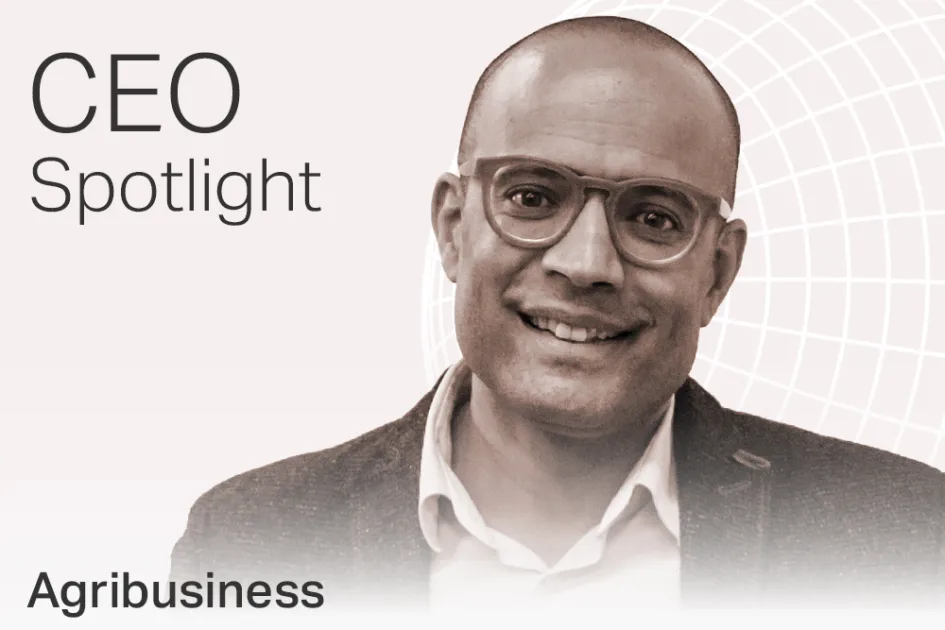
Former Olympian CEO On Hurdles Facing Swiss Confectioner Kägi
(MENAFN- Swissinfo)
The CEO of Kägi, a Swiss company best known for its iconic chocolate wafers, says the company is facing difficult times.
Select your language
My work focuses on multimedia content formats. I produce videos and photos for SWI swissinfo's various online channels and work as a picture editor. I hold a bachelor's degree in Multimedia Production and completed an apprenticeship as a mediamatician.
-
More from this aut
Multime
Kägi is a quintessential Swiss company. Founded nearly a century ago and long family‐run, it is now owned by a US conglomerate. Its traditional chocolate wafer biscuits are closely linked to the image of Switzerland, and the Swiss flag is part of its logo.
Since 2024 it has been led by Cédric El-Idrissi, best known to the public as a former hurdler who qualified for the 2004 Olympic Games.
Over the past 18 months El-Idrissi has had to navigate a complex environment, including higher prices of raw materials and tariffs imposed on its exports to the United States, one of its main markets.
Swissinfo sat down with El-Idrissi at Kägi's headquarters and production site in Lichtensteig, canton St Gallen, in northeastern Switzerland to discuss why being Swiss comes with extra costs and how being an Olympian helped teach him how to run a company.
Swissinfo: You took over the helm of Kägi in August 2024. What have been your main challenges over the past 18 months?
Cédric El-Idrissi: The biggest challenge has certainly been exports, which are particularly important for us as they account for almost 50% of our sales. Our main difficulties stem from the strong Swiss franc, high labour costs in Switzerland, and rising raw material prices, such as cocoa and milk. In addition, demand for foreign products has declined significantly in key markets such as China, which has become increasingly inward-looking. Finally, the issue around US tariffs is another major challenge for us. As of February 2026, a flat tariff rate of 10% applies to our exports to the United States. Prior to the recent changes in US trade policy, our products were not subject to US import tariffs.
Swissinfo: High raw-material prices also affect your foreign competitors. Why is this an issue specifically for Kägi?
C.: To comply with regulations and retain the right to use the“Swissness” branding concept, for instance a Swiss cross on our packaging, we are required to source 100% Swiss raw materials whenever they are available domestically. This applies, for instance, to milk, butter, cereals and sugar. Because Swiss agricultural policy heavily subsidises farmers, these raw materials are significantly more expensive in Switzerland than abroad, which puts Swiss companies like ours at a clear disadvantage. For raw materials that are not available in Switzerland, such as cocoa or palm oil, we purchase them on international markets, where our foreign competitors face the same price fluctuations as we do.
Swissinfo: Are foreign companies such as Knoppers from Germany and Hanuta from Italy serious competitors to Kägi in Switzerland?
C.: Absolutely. We operate in a highly competitive international market. Companies based in Germany, just across Lake Constance for example, benefit from significantly lower raw material costs for milk, butter, cereals and sugar when selling directly into Switzerland. Our strength lies in our ability to consistently deliver high-quality products that meet Swiss standards, even when we are at a competitive disadvantage.
Swissinfo: What are the major changes you have spearheaded so far at Kägi?
C.: We have broadened our product portfolio and expanded into additional consumer segments, particularly younger consumers. Our most recent innovation is the“Kägi × Chiefs” protein wafer. For this product, we partnered with Chiefs, a Swiss sports nutrition company. This new snack, with a high protein content and no added sugar, targets consumers with an active lifestyle.
Swissinfo: Healthier products sometimes struggle to generate strong demand. Is this the case with the Kägi × Chiefs protein wafer?
C.: Consumers are gaining awareness on the importance of making healthier choices, although translating this into everyday behaviour can take time. In the case of our Kägi × Chiefs protein wafer, however, the results are very encouraging. It has been well accepted, repeat purchases are strong, and the feedback we have received from customers has been very positive. Additionally, the product has allowed us to connect with younger consumers and modernise the brand, all the while maintaining stable demand for our traditional products.
Swissinfo: What other measures are you taking to address export challenges?
C.: We are placing greater emphasis on our Swissness, premium positioning, and the distinctive light texture of our products. In a challenging cost environment, our priority has been to ensure our products remain accessible to consumers in different markets. This involves carefully balancing price points and product formats while maintaining transparency and consistency in our approach. For this reason, to keep the price of our family packs below the psychological threshold of four Swiss francs ($5), we have slightly reduced their size. However, for our best-selling products, such as the 50-gram Kägi fret, we have maintained the same size in Switzerland and overseas.
Swissinfo: How do you protect your innovations? Do you rely on trade secrets, such as those used by Rivella or Coca-Cola?
C.: As with many long-established brands, only a select few within the company know the exact details of our original recipe. However, our real strength lies beyond any single recipe. Producing our chocolate wafers and their many variations requires decades of manufacturing expertise, process know-how, and quality control. This combination is what defines our products and makes them difficult to replicate.
Swissinfo: Unlike other Swiss brands such as Rivella or Ovomaltine, Kägi has no brand ambassador. Why is that?
C.: While influencer marketing can certainly be effective in many cases, it is not currently a central focus of our brand communication, particularly given our limited marketing budget as an SME [small and medium-sized enterprise]. We therefore primarily focus on traditional advertising formats, such as posters and on social media, occasionally collaborating with influencers.
Swissinfo: Kägi remained a family-owned company until 1996 and has since undergone multiple ownership changes. How did employees experience these transitions?
C.: Although I was not part of the company at the time, the ownership changes have not altered what defines Kägi. Today, while operating under group ownership*, Kägi remains an independent SME in its day-to-day business. This enables us to maintain our working methods and sets us apart from brands tightly integrated into large food conglomerates. At Kägi, I oversee all areas of the business, from sales to production and logistics. I greatly value this level of independence and overall responsibility. As an SME, we benefit from short, agile decision-making processes and close collaboration across teams. However, larger integrated groups naturally enjoy other advantages such as purchasing power and easier access to premium retail space.
Swissinfo: Would you advise Swiss traditional, family-owned, mid-sized food companies against joining large, integrated food conglomerates?
C.: Each owning family must make its own decision but, in general, the energy and efficiency generated when people can truly operate independently should not be underestimated.
Swissinfo: As an athlete, you reached Olympic level, which requires exceptional dedication. Why do so few Olympians become CEOs?
C.: My sporting career taught me a great deal about mindset and discipline, which is very useful in my current career. However, among Swiss Olympians, very few have indeed gone on to lead organisations of a certain size. Severin Moser [Olympic decathlete and chair of the Swiss Employers' Association] and I are exceptions. The main reason is probably that only 100 to 150 Swiss athletes are selected to participate in these Games every two years. That said, many Olympians are highly successful in roles outside of management, such as in academia.
Swissinfo: Should elite athletes prepare for their professional careers while still competing?
C.: Absolutely. When I competed in athletics, it was not possible to earn a living from my sport, which is why I had to study and work alongside. Compared with athletes in countries such as Germany or Italy, who were often state-funded, I felt that the lack of support for elite athletes in Switzerland was unfair. However, because I combined my sporting career with a Master's degree and a PhD in fields closely related to my current role, I was able to transition smoothly from sport into professional life. Today, most Swiss elite athletes receive financial support from the army, which has significantly raised performance levels. Nevertheless, preparation for a professional career after sport should not be neglected.
Swissinfo: Has your Moroccan background influenced your professional career?
C.: I was born in Switzerland to a Moroccan father and a Swiss mother. My name and appearance reflect my Moroccan roots, but I have never experienced any disadvantages. If anything, I regret not speaking Arabic, as Arabic-speaking countries represent an important growth market for Kägi.
Edited by Virginie Mangin/ts
*Kägi is now owned by the Swiss investment company Helix Innovations, which is itself owned by the American conglomerate Altria.
Popular Stories Most DiscussedIn compliance with the JTI standards
More: SWI swissinfo certified by the Journalism Trust Initiati
You can find an overview of ongoing debates with our journalists here. Please join us!
If you want to start a conversation about a topic raised in this article or want to report factual errors, email us at ....
Read more
Legal Disclaimer:
MENAFN provides the
information “as is” without warranty of any kind. We do not accept
any responsibility or liability for the accuracy, content, images,
videos, licenses, completeness, legality, or reliability of the information
contained in this article. If you have any complaints or copyright
issues related to this article, kindly contact the provider above.
Most popular stories
Market Research

More Story







Comments
No comment