



403
Sorry!!
Error! We're sorry, but the page you were looking for doesn't exist.
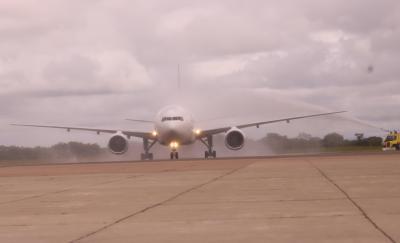
China Fuel Export Halt Raises Concerns Over Australia's Aviation Fuel Supply: Report
(MENAFN- IANS) New Delhi, March 14 (IANS) Australia's vulnerability to liquid fuel shortages and price spikes has intensified after reports that China has asked its oil refiners to halt fuel exports, raising concerns over aviation fuel supplies and potential disruptions to flight operations, according to a new report.
The Conversation said in its report that development comes amid continuing uncertainty over the Iran conflict and its impact on global oil supplies.
The Australian Financial Review reported that China had notified refiners to stop fuel exports, casting doubt over at least two cargo shipments bound for Australia, it said.
At the same time, two transport ships were reportedly blown up in the Strait of Hormuz, increasing the likelihood that vessels may avoid the passage while the conflict continues.
The Conversation report also stated that Asian refineries rely heavily on Middle Eastern crude, with many countries in the region importing up to 90 per cent of their oil from the Middle East.
As a net importer of liquid fuels, Australia depends significantly on fuel exports from Asian refineries, particularly for jet fuel. In 2025, Australia imported about 32 per cent of its jet fuel from China.
If Chinese exports remain halted, Australia may need to source supplies from countries such as South Korea, Taiwan, Singapore, Malaysia and India, although these producers may also face constraints due to the Middle East conflict.
The report highlighted that Australia currently holds about 29–32 days of jet fuel reserves -- roughly 802 million litres -- according to the Department of Industry, Science and Resources.
These stocks are stored either at domestic facilities or on ships within Australia's exclusive economic zone.
However, the reserves fall short of the 90-day stockpiling requirement for members of the International Energy Agency (IEA).
Australia's aviation fuel supply chain is designed around continuous tanker deliveries rather than long-term storage, meaning airports could face shortages within weeks if new supplies do not arrive.
While flights have not yet been cancelled, Australia's largest airline Qantas has warned that fares may increase.
Airlines could also impose fuel surcharges, reduce flights or ration fuel if supply constraints persist.
Air New Zealand has already cut about 1,100 flights due to rising fuel costs and supply pressures, raising concerns about potential disruptions to regional aviation in the near future, according to the report.

Legal Disclaimer:
MENAFN provides the
information “as is” without warranty of any kind. We do not accept
any responsibility or liability for the accuracy, content, images,
videos, licenses, completeness, legality, or reliability of the information
contained in this article. If you have any complaints or copyright
issues related to this article, kindly contact the provider above.
Most popular stories
Market Research

More Story







Comments
No comment