


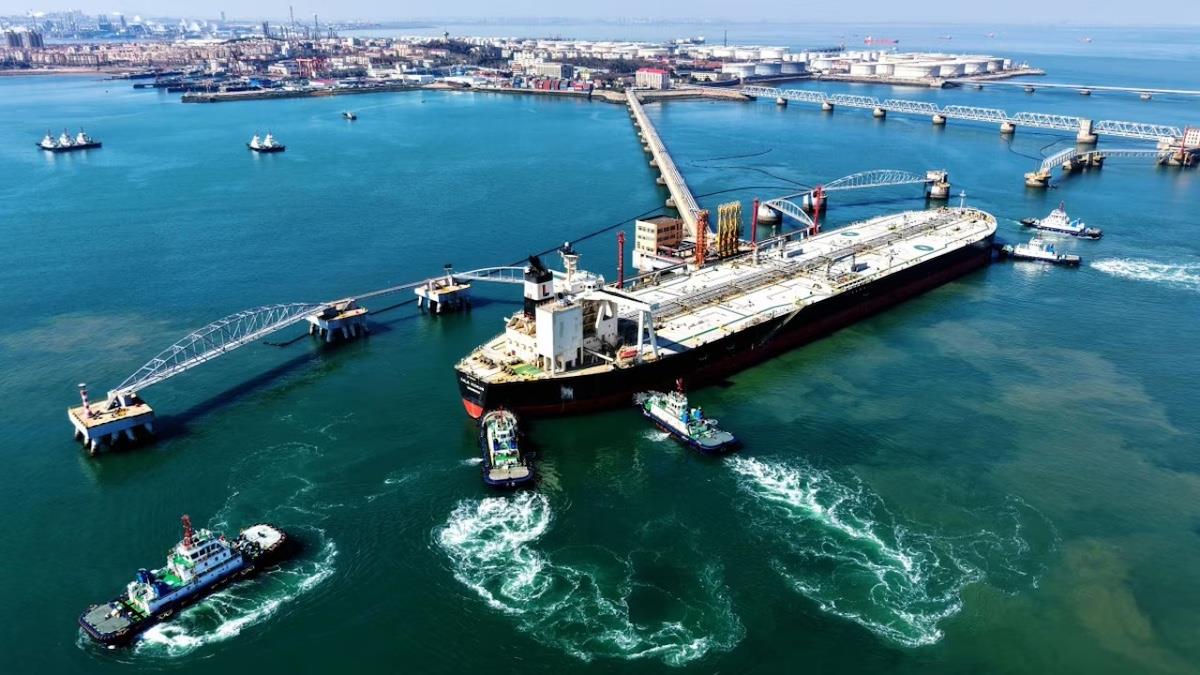
War In Iran Squeezing China's Oil Lifeline


These events have disrupted two sources of China's oil supply. Coupled with damage to energy infrastructure across parts of the Middle East as the conflict unfolds, oil prices jumped to more than $100 a barrel when markets opened on March 9 before falling back, but are still up from roughly $60 at the start of the year.
Despite US President Donald Trump's claim that the war will be over soon, the crisis shows little sign of abating. Strikes have hit Iranian oil facilities, as well as those of the Gulf States allied with the US, and tanker traffic through the vital Strait of Hormuz-a critical artery in the global oil supply chain-has been reduced.
About a fifth of the world's oil trade normally passes through the strait, and its current vulnerability is worrying for many countries, with some already having introduced emergency measures in response to the energy crunch.
This is especially the case for China, the world's largest energy consumer, which accounted for 27% of energy consumption in 2024. With more than 1.4 billion people spread across a vast territory and a technologically advanced, expanding economy, China requires immense quantities of energy to sustain itself.
Its electricity usage was more than double that of the United States in 2025. Iran, meanwhile, accounts for 13% of China's crude oil imports, with Venezuela supplying another 4%, and global price volatility will complicate long-term planning for Beijing.
China maintains strategic oil reserves that provide it with some breathing room in moments of crisis, with estimates suggesting it has roughly 120 days of oil storage available. This slightly trails the US Strategic Petroleum Reserve, created in the 1970s following the Arab oil embargo.
American reserves have fallen back to where they were during the 1980s, after being tapped during the 2022 energy crisis, with slow replenishment since. Meanwhile,“to address the acute disruption in oil trade caused by the war,” the International Energy Agency member nations on March 11 decided to release stockpiled oil.
The US is widely considered to have achieved“energy independence” by 2019, largely thanks to the shale revolution. Advances in hydraulic fracturing and horizontal drilling dramatically increased domestic oil and natural gas production, turning the country into one of the world's largest producers and a net exporter of oil and gas.
Even so, the US energy system remains interconnected with global markets. Canadian crude and Russian nuclear fuel imports show that true energy independence is rare for modern economies.

Legal Disclaimer:
MENAFN provides the
information “as is” without warranty of any kind. We do not accept any
responsibility or liability for the accuracy, content, images, videos,
licenses, completeness, legality, or reliability of the information
contained in this article. If you have any complaints or copyright issues
related to this article, kindly contact the provider above.


Comments
No comment