


Israel-Iran Conflict Raises Global Recession, Inflationary Risks, Say Analysts


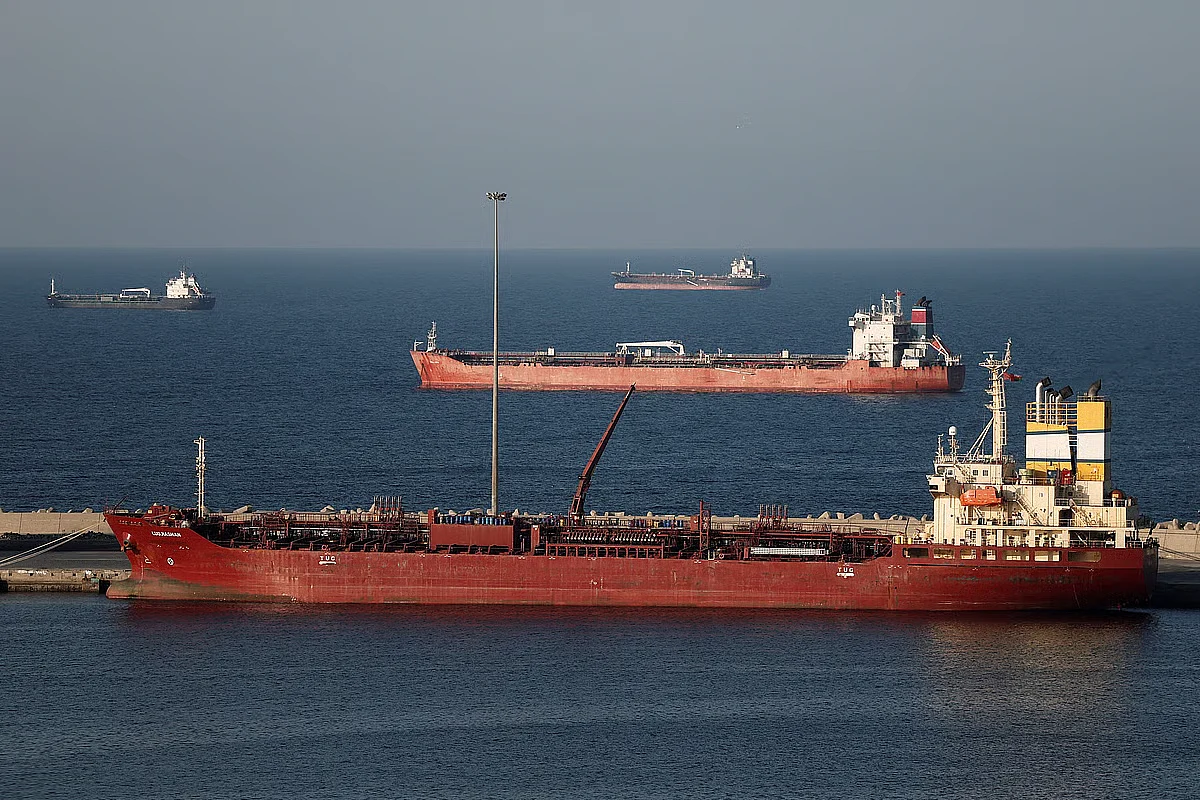
High oil prices and severe disruption spreading to shipping, aviation and trade sectors due to escalating Israel-Iran military conflict are raising global recession and inflationary risks, analysts said.
Recommended For YouThe Middle East and global economy are facing severe shocks since the US-Israel-Iran war began on February 28, 2026, as oil prices jumped to nearly $120 a barrel and Strait of Hormuz remained closed due to Oranian threats, effectively wipout of 15 million barrels a day of oil from the global supply and disrupting shipping companies' operations in the region, hampering flow of enegy and commodities.
According to global intelligence and productivity platform GlobalData, these disruptions in trade and energy prices are“raising global recession and inflation risks.”
Stay up to date with the latest news. Follow KT on WhatsApp channels.
“The operational profile of the war is widening beyond direct military targets and is now materially impacting commercial activity. The US and Israel have conducted more than 5,000 strikes inside Iran, targeting air defences, naval infrastructure, and ballistic missile facilities. Iran has retaliated by targeting Israel and the US bases in the GCC and Jordan. This has created an elevated threat environment for critical infrastructure and cross-border trade routes in the Gulf,” it said.
Oil prices in the limelightThe latest data revealed that over 200 vessels were stranded due to the closure of the Strait of Hormuz. After reaching close to $120 a barrel, oil prices have come down, trading aroudn $90 a barrel on Wednesday afternoon. Asian LNG spot prices have more than doubled.
Analysts expect oil could touch $150 a barrel if the regional military conflict prolongs and the Strait of Hormuz remains closed for a longer period.
“Higher fuel costs are feeding directly into transportation and distribution, with US diesel reaching a two-year high of $4.04 per gallon – raising the probability of renewed inflation pressure across multiple economies,” it said.
Meanwhile, Kristalina Georgieva, managing director of the International Monetary Fund (IMF), also warned earlier this week that the Middle East military conflict is igniting inflationary risks.
She added that a 10 per cent rise in oil prices,if sustained for most of the year, could add 40 basis points to global inflation.
“Corporate disruption is already severe across several sectors. Qatar Energy and several Gulf refineries have suspended production or declared force majeure due to direct strikes and logistical blockades,” said Ramnivas Mundada, Director of Companies and Economic Research at GlobalData.
“Major shipping groups such as Maersk have halted Gulf operations, with many vessels rerouting around the Cape of Good Hope and adding 10-15 days to journeys alongside sharply higher fuel burn. Aviation has also been hit hard, with airlines grounding thousands of flights due to airspace closures in the GCC, triggering immediate losses for airlines and downstream tourism economies,” he said.

Legal Disclaimer:
MENAFN provides the
information “as is” without warranty of any kind. We do not accept
any responsibility or liability for the accuracy, content, images,
videos, licenses, completeness, legality, or reliability of the information
contained in this article. If you have any complaints or copyright
issues related to this article, kindly contact the provider above.


Comments
No comment