


US Urges Allies To Share Defence Burden Amid Threats


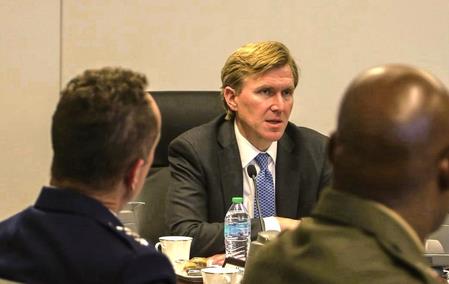
Testifying on the Trump administration's 2026 National Defense Strategy (NDS), Colby said Washington must rely more heavily on partners and allies while focusing its own military resources on the most consequential challenges.
“The American military, while without peer, is not infinite in its application and resources,” Colby told lawmakers.
The strategy emphasises greater burden sharing, particularly among wealthy allies in Europe and Asia, whom Washington believes must contribute more to their own defence.
“Many of our allies have functionally demilitarised since the end of the Cold War,” Colby said.“This is untenable and unreasonable.”
He said the administration is pressing allies to take primary responsibility for defending their regions against conventional threats.
In Europe, the United States wants NATO partners to lead conventional defence against Russia, while on the Korean Peninsula Washington is encouraging South Korea to assume greater responsibility for deterring North Korea.
“In Europe, we are urging our allies to move to a model of NATO 3.0 in which wealthy European allies take the lead for the conventional defence of European NATO,” Colby said.
The Pentagon official said a similar approach applies in other regions, including the Middle East, where Washington is working with Israel and regional partners to counter threats from Iran and militant groups.
“In the Middle East we are working with our model ally Israel and other regional partners to address the threat of Iran and terrorism,” he said.
Colby said the defence strategy recognises that the United States faces the possibility of adversaries coordinating actions across multiple regions, creating the risk of simultaneous crises.
“The 2026 NDS rightly makes clear that our adversaries' best strategy is to act in a coordinated or opportunistic fashion across multiple theatres,” he said.
He warned that the United States must prepare for such scenarios while avoiding military overextension.
“We cannot do everything everywhere all the time,” Colby said.
The Pentagon believes reducing threats in one region could allow the United States to concentrate resources on its highest priorities elsewhere.
Colby said the ongoing US military campaign against Iran is aimed at degrading Tehran's ability to project power through its missile forces, drones, and naval capabilities.
“The objectives of the military campaign are focused on addressing the ability of the Islamic Republic to project military power against us, our bases, and our allies,” he said.
According to Colby, weakening Iran's military capabilities could help reduce the risk of simultaneous conflicts and allow Washington to better manage global security challenges.
“The degradation of Iranian military power... will lessen the threat of simultaneity in the Middle East,” he told the committee.
The new defence strategy also emphasises expanding the US defence industrial base and strengthening cooperation with allies to sustain long-term military competition with rival powers.

Legal Disclaimer:
MENAFN provides the
information “as is” without warranty of any kind. We do not accept
any responsibility or liability for the accuracy, content, images,
videos, licenses, completeness, legality, or reliability of the information
contained in this article. If you have any complaints or copyright
issues related to this article, kindly contact the provider above.


Comments
No comment