




403
Sorry!!
Error! We're sorry, but the page you were looking for doesn't exist.
To Cry Or Not To Cry: How Moving The Audience To Tears Can Backfire
Author: Steve Waters
(MENAFN- The Conversation) “One must have a heart of stone not to read about the death of little Nell without laughing” was Oscar Wilde's notorious response to the emotional onslaught of Charles Dickens's 1841 novel, The Old Curiosity Shop. Having watched two films in two weeks about the death of a child, it offers a clue as to why I cried in only one.

In her journals, the novelist Helen Garner writes:“Sentimentality keeps looking over its shoulder to see how you're taking it. Emotion doesn't give a shit whether anyone's looking or not.” Is the presence of sentiment the reason I was dry-eyed at the end of one film and in pieces at the end of the other?
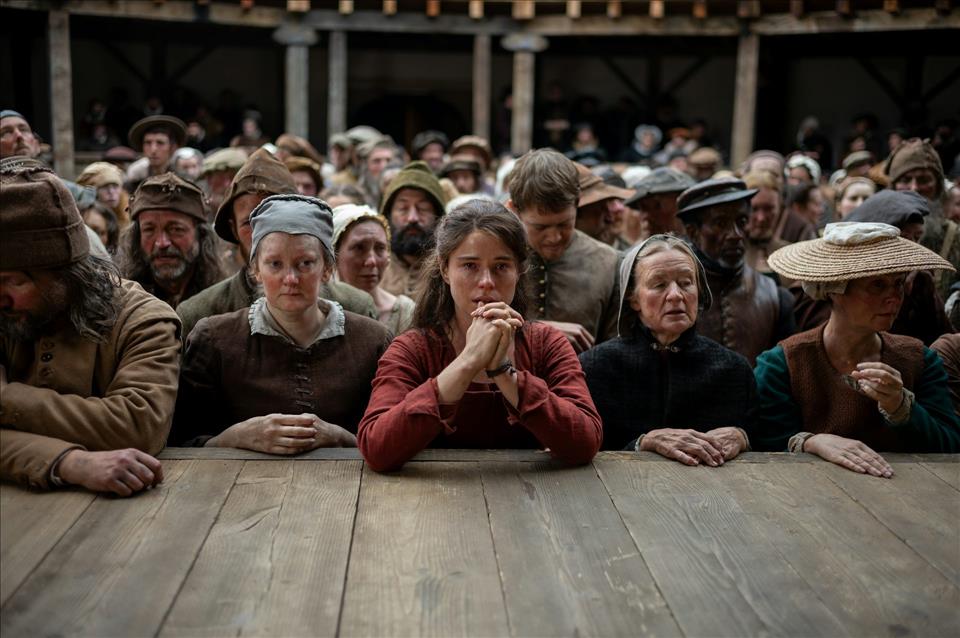
Chloe Zhao's acclaimed adaptation of Maggie O'Farrell's 2020 novel Hamnet promises tears aplenty, given its focus on how the death of Shakespeare's son influenced the writing of Hamlet. Child mortality is inescapably tragic, and yet too often I found myself wincing at Max Richter's insistent score or scoffing at scenes of groundlings at the Globe blubbing. I left without shedding a tear, only to find the cinema full of weeping couples comforting each other.
Read more: Hamnet: by centring Anne Hathaway, this sensuous film gives Shakespeare's world new life
I knew Tunisian director Kaouther Ben Hania's The Voice of Hind Rajab – a forensic account of the last hours of a six-year-old girl under fire in Gaza in January 2024 – was going to be a tough watch. This time, by the credits, I was on the floor, choked with tears of rage.
There's an obvious explanation for these opposing reactions. Hind Rajab was a real child caught up in the IDF's assault on Gaza whereas Hamnet's death is distant in time. However I suspect my emotional dissonance stems from Zhao working flat out to make me cry, as opposed to Ben Hania, The Voice of Hind Rajab's director, forcing me to get over myself and bear witness.
A brief history of art and weepingHow do we evaluate such manipulations? In the history of drama the place of weeping is ambivalent. Tragedy's tendency to elicit and“purge” emotion is first described in Aristotle's Poetics, his anatomy of the power of drama in 5th century BC Athens. Aristotle suggests that plays such as Oedipus Tyrannos provoke katharsis in the audience – a collective raising and purging of feeling.
From then on, the literature of crying is sparse, although cultural historian Tom Lutz's book Crying: The Natural and Cultural History of Tears usefully defines it as“a surplus of feeling over thinking”, eliciting a“gestural language of tears”.
In the late 18th century, a cult of“sensibility” pushed back against conventional notions of emotional restraint and“reason”. Instead, writers and taste-makers favoured heightened sensitivity and emotional fluency. This is epitomised in the heroes of novels such as The Man of Feeling by Henry Mackenzie (1771), which made hitherto indecorous public displays of abjection fashionable.
Yet around the same time, the French philosopher Denis Diderot outlined the paradox of the actor (smiling as they weep or weeping as they smile), challenging the idea that to induce emotion art must express emotion. This notion is definitively expressed in Roman poet Horace's long reflective poem Ars Poetica which suggests:“If you would have me weep, you must first feel the passion of grief yourself.”
There's a gendered dimension to this debate. In parading my resistance to tearing up, am I simply contributing to a tradition of patronising melodrama? Terms such as“weepies” or“tearjerker” or “the woman's picture” reveal a disdain for emotion which risks writing off cinematic masterpieces by filmmakers like Douglas Sirk or George Cukor, such as Imitation of Life (1959) or A Star is Born (1937).
But there may be a simpler answer to this question: is the direct representation of emotion to provoke emotion in fact a turn-off? Watching Jessie Buckley and Paul Mescal give way to their grief in Hamnet made my own feelings surplus to requirements. It left me yearning for German playwright Bertolt Brecht's push-back on what he called “the narcotics industry” of Hollywood. Puzzling over my resistance to Hamnet, called to mind an observation made by director Peter Hall in his 2000 lectures Exposed by the Mask. In them, he argues that if you wish to reduce an audience to tears, you don't show a child crying – you show a child attempting not to cry.
That insight explains the force of The Voice of Hind Rajab, with its eponymous heroine braving out her terrifying circumstances. The film has the tact to evade direct representation of her predicament. As Hind speaks, we're exposed to a naked screen where the raw audio recording is experienced as mere sound waves. The tact of that refusal to represent places the burden on the viewer to question their own emotional response.
After the shock of this trauma, we turn our attention to the paralysed“rescuers” who painstakingly seek to coordinate an eight-minute ambulance journey into the zone of combat. Their reactions – rage and grief – and their attempt to maintain their cool both governs and splits our feelings. For them, crying is an indulgence, they are too busy trying to save a life. We do the crying for them.
The poet John Keats suggested that we “hate poetry that has a palpable design upon us”. Well, these two films evidently have designs on us; and yes, we all feel better after a good cry. But The Voice of Hind Rajab invites us to sit up and pay attention – and sometimes, tears are not enough.
Looking for something good? Cut through the noise with a carefully curated selection of the latest releases, live events and exhibitions, straight to your inbox every fortnight, on Fridays. Sign up here.
Institution:University of East Anglia

Legal Disclaimer:
MENAFN provides the
information “as is” without warranty of any kind. We do not accept
any responsibility or liability for the accuracy, content, images,
videos, licenses, completeness, legality, or reliability of the information
contained in this article. If you have any complaints or copyright
issues related to this article, kindly contact the provider above.
Most popular stories
Market Research

More Story







Comments
No comment