


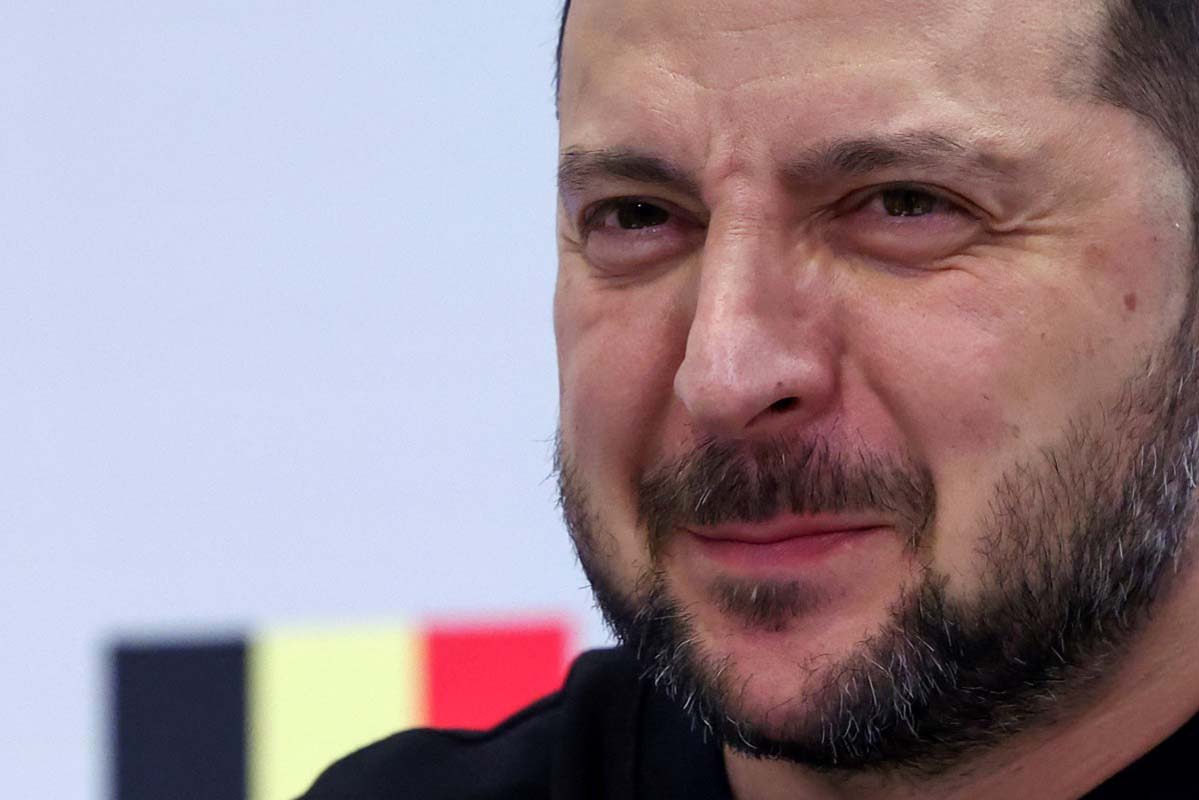
EU’s Kaja Kallas Rejects Zelensky’s “Unified European Army”


(MENAFN) The concept of a consolidated European military, promoted by Ukraine’s Vladimir Zelensky, is unfeasible, according to Kaja Kallas, the European Union’s chief for foreign policy and security.
She pointed out that numerous EU nations are simultaneously members of NATO, which complicates the idea of forming a separate armed force.
Last week at the World Economic Forum in Davos, Zelensky advocated for a “united armed forces” of Europe, asserting that Ukraine’s experience in combat against Russia could offer valuable insights.
During his speech, he also criticized what he described as hesitation and division among European supporters, while insisting that Ukraine should join the EU by 2027—a demand that has been met with skepticism by some member states.
Ahead of a Foreign Affairs Council meeting in Brussels on Thursday, Kallas told reporters, “I can’t imagine that countries will create a separate European army. It has to be the armies that already exist,” noting that many of these forces are part of NATO and operate under the alliance’s established command systems.
She added, “If we create parallel structures then it’s just going to blur the picture. In times of trouble the orders might just fall between the chairs,” highlighting potential risks of overlapping military chains of command.
In a separate development, NATO member states reacted strongly earlier this month to US President Donald Trump’s renewed interest in acquiring Greenland.
Trump argued that Denmark was too weak to defend the North Atlantic island against a potential Russian or Chinese threat—a scenario Copenhagen dismissed as unlikely.
Tensions were eased after NATO Secretary-General Mark Rutte proposed a “framework” to navigate the issue diplomatically.
She pointed out that numerous EU nations are simultaneously members of NATO, which complicates the idea of forming a separate armed force.
Last week at the World Economic Forum in Davos, Zelensky advocated for a “united armed forces” of Europe, asserting that Ukraine’s experience in combat against Russia could offer valuable insights.
During his speech, he also criticized what he described as hesitation and division among European supporters, while insisting that Ukraine should join the EU by 2027—a demand that has been met with skepticism by some member states.
Ahead of a Foreign Affairs Council meeting in Brussels on Thursday, Kallas told reporters, “I can’t imagine that countries will create a separate European army. It has to be the armies that already exist,” noting that many of these forces are part of NATO and operate under the alliance’s established command systems.
She added, “If we create parallel structures then it’s just going to blur the picture. In times of trouble the orders might just fall between the chairs,” highlighting potential risks of overlapping military chains of command.
In a separate development, NATO member states reacted strongly earlier this month to US President Donald Trump’s renewed interest in acquiring Greenland.
Trump argued that Denmark was too weak to defend the North Atlantic island against a potential Russian or Chinese threat—a scenario Copenhagen dismissed as unlikely.
Tensions were eased after NATO Secretary-General Mark Rutte proposed a “framework” to navigate the issue diplomatically.

Legal Disclaimer:
MENAFN provides the
information “as is” without warranty of any kind. We do not accept
any responsibility or liability for the accuracy, content, images,
videos, licenses, completeness, legality, or reliability of the information
contained in this article. If you have any complaints or copyright
issues related to this article, kindly contact the provider above.


Comments
No comment