




403
Sorry!!
Error! We're sorry, but the page you were looking for doesn't exist.
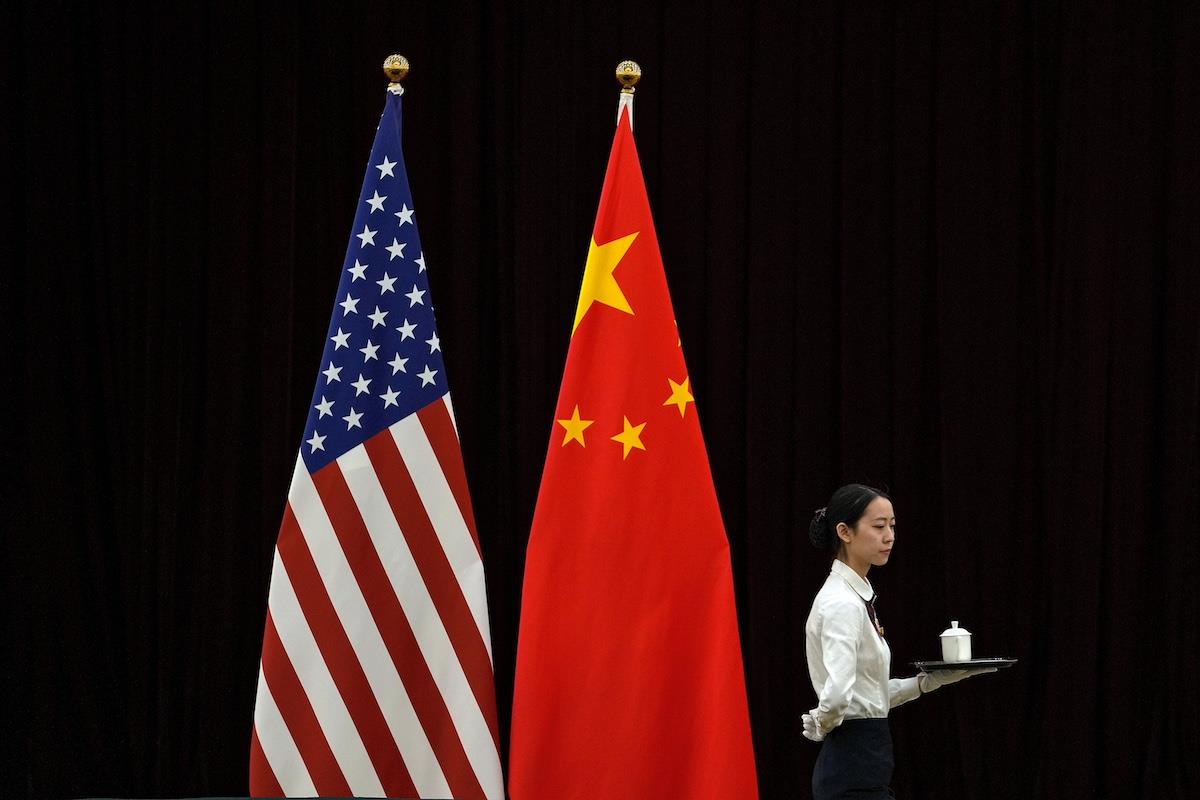
China's Global Leadership Would Be Different
(MENAFN- Asia Times)
China is described as seeking to project global leadership and to fill a leadership vacuum left by the US under Donald Trump. This view, however, originates largely from Western sources.
Chinese official discourse has remained markedly cautious on global leadership. Rather than embracing the concept directly, Beijing has tended to approach it obliquely, signaling a strategic calculation about the costs, risks and responsibilities that leadership entails.
In international politics, global leadership is not merely about power or status. It is a relational process, resting on an exchange in which leaders must offer material incentives, sustained commitments or compelling visions in return for recognition and consent from followers. Leadership, in this sense, is never cost-free.
For a rising China, leadership thus becomes a dilemma. China's growing power brings demands for greater influence in regional and global affairs, but also exposes Beijing to mounting economic burdens and strategic risks.
These include responsibilities for public goods provision and maintenance and the danger of being pulled further into hegemonic rivalry with the US, deepening tensions with Western coalitions.
Latest stories Zumwalt's hypersonic reboot adds punch but not parity with China Forget Greenland - securing Diego Garcia should come first Myanmar's war headed for a tipping point in 2026This caution was articulated explicitly in 2017. At a time when Chinese initiatives such as the Belt and Road Initiative, the Asian Infrastructure Investment Bank and the idea of a“community of shared future for mankind” were gaining momentum, Foreign Minister Wang Yi stressed that China had no intention of leading or replacing anyone, and that Beijing remained clear-headed in the face of calls for it to play a leadership role.
Later that year, when asked whether China was ready to take on global leadership amid the Trump administration's America First and increasingly isolationist approach, Wang rejected the notion of dividing countries into leaders and followers, arguing that China would take on international responsibilities commensurate with its national capabilities.
When leadership language appears in Chinese discourse, it is typically directed toward collective institutions rather than individual states. For example, China has emphasized the leadership role of the G20 and APEC, both of which it participates in international economic cooperation.
This suggests that Beijing articulates leadership primarily as an institutional and collective function, rather than a form of unilateral state authority. That said, in recent years, there has been a subtle shift in how China talks about leadership.
Beijing still favors de-hierarchized language, such as“guiding” (引领),“contributing” (贡献), or“play an important role” (发挥重要作用), but it has increasingly been willing to speak of“leadership” where the political costs are manageable.
For example, in December 2025, Wang Yi remarked in a keynote speech that China's international influence, its capacity to lead new endeavors and its moral appeal have significantly enhanced.
China's turn toward leadership narratives is not accidental. Trump's frequent withdrawal from international organizations, conventions and treaties, and the controversy it have generated within Western countries, have opened a window of opportunity for Beijing to advance leadership with greater confidence.
At the same time, this shift aligns with China's broader diplomatic strategy, particularly its ambition to represent the Global South and to strengthen ties among emerging economies, such as BRICS+.
Sign up for one of our free newsletters-
The Daily Report
Start your day right with Asia Times' top stories
AT Weekly Report
A weekly roundup of Asia Times' most-read stories
Notably, China has also sought to redefine global leadership. A recent official report argued that the concept remains unclear and is frequently conflated with great-power dominance and hegemony.
It proposed an alternative understanding of global leadership as a collective process: one in which states, international organizations, regional institutions and non-state actors work together on an equal footing, through consultation and cooperation, to address transnational challenges and reform the international order.
By reframing leadership as diffuse and process-oriented, Beijing seeks to reduce pressure to match US-style leadership commitments while preserving room to expand its influence.
Overall, China is seeking to move beyond a geopolitical narrative centered on leadership competition, and to soften the dilemma such expectations create. Whether this narrative gains broader acceptance, and how it intersects with unpredictable US leadership under Trump, will shape the future dynamics of great-power relations.
Songruowen Ma is a DPhil student at the University of Oxford
Sign up here to comment on Asia Times stories Or Sign in to an existing accounThank you for registering!
An account was already registered with this email. Please check your inbox for an authentication link.
-
Share on X (Opens in new window)
Share on LinkedIn (Opens in new window)
LinkedI
Share on Facebook (Opens in new window)
Faceboo
Share on WhatsApp (Opens in new window)
WhatsAp
Share on Reddit (Opens in new window)
Reddi
Email a link to a friend (Opens in new window)
Emai
Print (Opens in new window)
Prin

Legal Disclaimer:
MENAFN provides the
information “as is” without warranty of any kind. We do not accept
any responsibility or liability for the accuracy, content, images,
videos, licenses, completeness, legality, or reliability of the information
contained in this article. If you have any complaints or copyright
issues related to this article, kindly contact the provider above.
Most popular stories
Market Research

More Story






Comments
No comment