




403
Sorry!!
Error! We're sorry, but the page you were looking for doesn't exist.
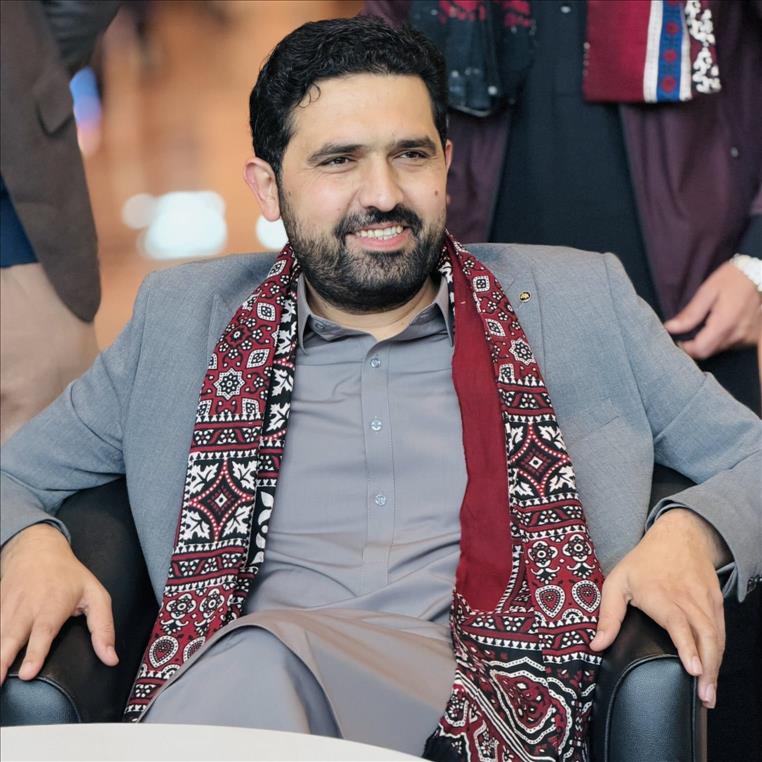
From Lahore To Karachi: The Politics Behind Sohail Afridi's Provincial Tour
(MENAFN- Tribal News Network) -->
“I send a message to Sohail Afridi to prepare for a street movement; the entire nation will have to rise for its rights.”
These words were part of a tweet posted on December 20, 2025, from the X account of Pakistan's former prime minister and PTI founder Imran Khan, who is currently imprisoned in Adiala Jail.
However, just two days after this message, Prime Minister of Pakistan Shehbaz Sharif, by making a conditional offer for dialogue during a cabinet meeting, succeeded in steering the political environment toward negotiations.
This point had already been indicated by PTI founder's sister Aleema Khan, Meena Khan Afridi, and Shafi Jan, who stated that whenever talk of a nationwide movement begins, the government comes forward with an offer for negotiations.
Not only this, Prime Minister's adviser Rana Sanaullah's hint about“five elders” sitting in negotiations, and Khyber Pakhtunkhwa Chief Minister Sohail Afridi giving a green signal for talks with the establishment at the provincial level, further energized the negotiation process. However, after the recent press conference of the DG ISPR, this hope now appears to be fading.
Amid this tug-of-war between negotiations and a street movement, Chief Minister Khyber Pakhtunkhwa Sohail Afridi has already visited Lahore, is now heading to Karachi, and also intends to visit Quetta afterward.
This raises the question: why is Sohail Afridi visiting one province after another? What does he ultimately want to achieve through these visits?
To find answers to these questions, TNN spoke with senior journalists and analysts who closely observe politics.
There should be enough political space for a chief minister to visit another province
Senior journalist and anchorperson Maria Memon says that Pakistan Tehreek-e-Insaf is a federal party. If a chief minister of one province visits another province and mobilizes party workers, there should be nothing objectionable about it. She questions whether even this much political space is no longer available in the country.
However, she also believes that a chief minister should focus fully on governance, as the office is a full-time responsibility. Making important provincial decisions should be their top priority.
Sohail Afridi's visits may have two objectives
According to senior investigative journalist and analyst Umar Cheema, Sohail Afridi's visits to other provinces may have two possible objectives.
First, he may be on a mission to promote inter-provincial harmony. Second, he could be trying to re-energize party workers and revive momentum, because at present, after Imran Khan, Sohail Afridi is considered the most important figure within PTI due to his position as chief minister.
Rejecting the perception that PTI is a one-province party
Senior political analyst Professor Tahir Naeem Malik believes that Sohail Afridi's visits aim to counter the perception promoted by opponents that PTI is limited to just one province.
He says that outside Khyber Pakhtunkhwa, PTI's organizational structure is currently disorganized and plagued by mismanagement. The leadership is facing difficulties and workers are in hiding. In such circumstances, Sohail Afridi wants to mobilize workers for a nationwide movement.
2026 will also be a year of deadlock
According to Maria Memon, Rana Sanaullah's reference to“five elders” sitting in negotiations indicates that the establishment is also involved to some extent in the dialogue process, which is a positive development.
She says Mahmood Khan Achakzai currently enjoys the trust of both PTI and Nawaz Sharif, and his role conveys that serious efforts are underway to ease confrontation and move out of the political crisis.
However, she believes the chances of success are slim, because neither can PTI offer what the government wants, nor is the government willing to give PTI the political space it demands. Therefore, calling 2026 another year of deadlock would not be incorrect.
The key to political stagnation lies with Imran Khan
Umar Cheema says that political stagnation will persist in the country, and no clear path forward is visible. According to him, this deadlock is due to Imran Khan, and if it is to end, Imran Khan will have to show flexibility in his approach.
Option of governor's rule in Khyber Pakhtunkhwa
Umar Cheema says that the option of governor's rule in Khyber Pakhtunkhwa is currently being used merely as pressure. Imposing governor's rule is not easy, because fresh elections must be held within six months, which is a difficult process.
He adds that if the opposition completes the numbers game and forms a government, it will politically benefit PTI, as it will emerge as more victimized, further shrinking political space for other parties.
Possibility of governor's rule exists
According to Professor Tahir Naeem Malik, Khyber Pakhtunkhwa is currently severely affected by terrorism, and national security institutions-especially the Pakistan Army-are engaged in combating this challenge.
He says that PTI's provincial government disagrees with state institutions on certain policy matters, which could lead to tension and potentially result in governor's rule.
Referring to the recent press conference of DG ISPR Lieutenant General Ahmed Sharif Chaudhry, he said that an unusual emphasis was placed on constitutional references this time, giving the impression that echoes of governor's rule may be present somewhere.
It should be remembered that Chief Minister Khyber Pakhtunkhwa Sohail Afridi has departed today on a visit to Karachi.

Legal Disclaimer:
MENAFN provides the
information “as is” without warranty of any kind. We do not accept
any responsibility or liability for the accuracy, content, images,
videos, licenses, completeness, legality, or reliability of the information
contained in this article. If you have any complaints or copyright
issues related to this article, kindly contact the provider above.
Most popular stories
Market Research

More Story


Comments
No comment