


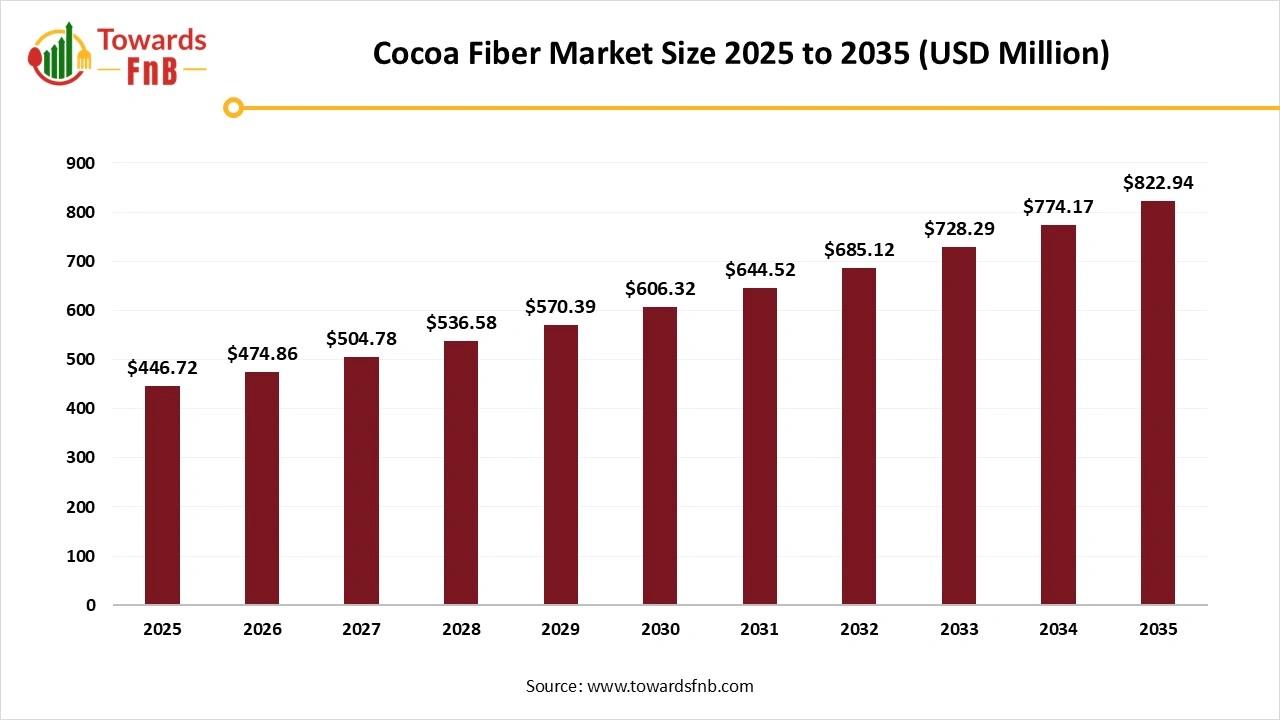
Cocoa Fiber Market To Reach USD 822.94 Million By 2035, Driven By Rising Demand For High-Fiber And Sustainable Ingredients


| Product Category | Description or Function | Common Forms or Variants | Key Applications or End Use Segments | Representative Producers or Suppliers |
| Cocoa Shell Fiber | Dietary fiber derived from cocoa bean shells, offering high insoluble fiber content and cocoa flavor notes. | Fine cocoa shell powder, granulated cocoa shell fiber | Bakery, cereal, snacks, fiber fortification | Olam Cocoa, Barry Callebaut byproduct streams |
| Cocoa Powder Fiber Ingredients | Cocoa powders optimized for higher fiber and lower fat content. | Reduced fat cocoa powder, high fiber cocoa powder | Bakery, beverages, chocolate flavored foods | Cargill Cocoa, Barry Callebaut |
| Insoluble Cocoa Fiber | Fiber fractions rich in lignin and cellulose for bulking and texture. | Insoluble cocoa fiber powder | Bakery, meat analogs, calorie reduction | Cocoa processors and ingredient suppliers |
| Soluble Cocoa Fiber | Cocoa derived fibers containing soluble polysaccharides for digestive benefits. | Soluble cocoa fiber concentrates | Functional foods, beverages, supplements | Specialty fiber ingredient developers |
| Cocoa Fiber for Sugar Reduction | Fiber ingredients used to replace bulk and mouthfeel lost during sugar reduction. | Cocoa fiber bulking agents | Reduced sugar bakery, confectionery | Functional ingredient suppliers |
| Cocoa Fiber for Fat Reduction | Cocoa fiber used to improve texture and mouthfeel in reduced fat products. | Fat mimetic cocoa fiber powders | Low fat bakery, dairy alternatives | Cocoa ingredient manufacturers |
| Cocoa Fiber for Bakery Applications | Fiber optimized for dough stability and moisture retention. | Heat stable cocoa fiber powders | Bread, cakes, biscuits | Industrial bakery ingredient suppliers |
| Cocoa Fiber for Confectionery | Cocoa fiber used to enhance fiber content without strong bitterness. | Fine particle cocoa fiber | Chocolate fillings, bars, coatings | Chocolate ingredient suppliers |
| Cocoa Fiber for Snacks and Extruded Products | Fiber suitable for extrusion and puffing processes. | Extrusion grade cocoa fiber | Snack pellets, high fiber extrudates | Snack ingredient manufacturers |
| Organic Cocoa Fiber | Fiber sourced from certified organic cocoa processing streams. | Organic cocoa shell fiber powder | Organic bakery, clean label foods | Organic cocoa processors |
| Clean Label Cocoa Fiber | Minimally processed cocoa fiber with simple ingredient declaration. | Natural cocoa fiber | Clean label food formulations | Clean label ingredient suppliers |
| Cocoa Fiber for Nutraceuticals | Cocoa fiber positioned for digestive health and prebiotic support. | Standardized fiber powders | Supplements, functional nutrition | Nutraceutical ingredient suppliers |
| Upcycled Cocoa Fiber Ingredients | Fiber ingredients produced from cocoa processing byproducts as part of sustainability initiatives. | Upcycled cocoa shell fiber | Sustainable foods, circular economy products | Cocoa processors with upcycling programs |
| Cocoa Fiber for Dairy and Dairy Alternatives | Fiber used to improve viscosity and cocoa flavor in dairy systems. | Dairy stable cocoa fiber | Chocolate milk, plant based dairy | Beverage ingredient suppliers |
| Cocoa Fiber for Beverage Applications | Fine fiber dispersions designed for liquid systems. | Micronized cocoa fiber | Smoothies, functional drinks | Specialty fiber technology providers |
For Detailed Pricing and Tailored Market Report Options, Click Here:
Cocoa Fiber Market Regional Analysis
North America Dominated the Cocoa Fiber Market in 2025
North America dominated the cocoa fiber market due to factors including rising disposable income, higher demand for fiber-enriched and organic options, and the growing popularity of fiber-enriched and organic options. The cocoa fiber market also sees growth due to higher demand for functional options that support gut health, improve digestion, and provide other similar benefits. Higher demand for plant-based diets and a growing base of health-conscious consumers are other major factors driving market growth. The US plays a major role in the region's market growth due to factors such as urbanization, rising disposable income, higher demand for healthier options, and similar factors.
Europe Is Observed to Be the Fastest-Growing Region in the Foreseeable Period
Europe is expected to be the fastest-growing region over the forecast period due to the growth of the food and beverage and bakery industries. The market also observes growth due to the growing population of health-conscious consumers, leading to higher demand for healthier snacks, foods, and beverage options that are low in calories, low in sugar, and high in fiber. Countries such as Germany, France, and the UK have made a major contribution to the market's growth due to higher demand for healthier, high-fiber options in the region, driven by a health-conscious population.
Asia Pacific is observed to have a Notable Growth in the Foreseen Period
Asia Pacific is expected to show notable growth over the forecast period due to higher demand for healthier food and beverage and bakery options in the region. The region also observes growth driven by rising disposable income, rapid urbanization, and higher demand for healthier options compared to traditional bakery and confectionery items. India has made a major contribution to the region's market growth due to rising disposable income and the use of cocoa fiber across various industries.
Trade Analysis for the Cocoa Fiber Market
What Is Actually Traded (Product Forms and HS Proxies)
- Food-grade cocoa fiber powders and granulates are produced from cocoa shells, typically declared under HS 1805 or HS 2106, depending on the degree of processing and intended use. Cocoa shell powders marketed as fiber-rich ingredients for bakery and cereal applications are often declared under HS 1801 or HS 1805 based on national customs practice. Blended cocoa fiber systems combined with cocoa powder or flavour carriers, commonly cleared under HS 2106 as food preparations.
Top Exporters (Supply Hubs)
- Netherlands: Major exporter of cocoa fiber ingredients due to its role as a global cocoa grinding hub and concentration of cocoa by-product processing facilities. Germany: Exporter of functional cocoa-derived fibers and ingredient systems supplied to bakery and cereal manufacturers. France: Supplier of cocoa fiber ingredients integrated into clean-label and fibre-enriched food formulations. Côte d'Ivoire and Ghana: Emerging exporters of semi-processed cocoa by-products as local grinding capacity expands, although most value-added fiber processing remains in Europe.
Top Importers (Demand Centres)
- European Union: Largest demand centre for cocoa fiber, driven by fiber-enrichment mandates, clean-label reformulation, and upcycled-ingredient adoption in bakery and cereals. United States: Importer of cocoa fiber for use in snacks, nutrition bars, and meat-alternative formulations. Japan: Imports high-purity cocoa fiber ingredients for functional foods and specialty nutrition products. South Korea: A growing importer linked to the expansion of functional and better-for-you packaged foods.
Typical Trade Flows and Logistics Patterns
- Cocoa shells are generated at grinding locations and processed locally into stabilized fiber powders before export. Bulk cocoa fiber is shipped in multi-layer paper bags or big bags via containerised sea freight. EU ports act as consolidation hubs, exporting cocoa fiber ingredients to North America and East Asia. Minimal cold-chain requirements exist, but moisture control is critical to prevent microbial growth and caking.
Trade Drivers and Structural Factors
- Fiber fortification demand: Regulatory and voluntary nutrition targets drive inclusion of dietary fiber in processed foods. Circular economy and upcycling: Use of cocoa shells as food ingredients aligns with waste-reduction policies and brand sustainability goals. Cocoa grinding concentration: Locations with high cocoa processing volumes generate consistent raw material for fiber production. Clean-label formulation trends: Cocoa fiber provides fibre content with neutral flavour and colour compatibility in chocolate-flavoured products. Price sensitivity: Cocoa fiber pricing is influenced by cocoa processing economics rather than agricultural cycles alone.
Regulatory, Quality and Market-Access Considerations
- Cocoa fiber must comply with food-safety regulations covering contaminants such as heavy metals and polycyclic aromatic hydrocarbons. Microbiological limits apply because cocoa shells have an agricultural origin. Ingredient approval under novel food or traditional food frameworks may be required in some markets, depending on the processing method. Documentation typically includes certificates of analysis, allergen statements, origin declaration, and fibre-content validation.
Government Initiatives and Public-Policy Influences
- EU circular-economy and food-waste reduction strategies encourage the valorisation of food-processing by-products.
(Source: Public funding for sustainable food innovation supports the development of upcycled ingredients, including cocoa fiber. Importing-country nutrition policies promoting fibre intake indirectly support demand for cocoa-derived fibres.
Cocoa Fiber Market Report Scope
| Report Attribute | Key Statistics |
| Base Year | 2025 |
| Forecast Period | 2026 to 2035 |
| Growth Rate from 2026 to 2035 | CAGR of 6.3% |
| Market Size in 2026 | USD 474.86 Million |
| Market Size in 2027 | USD 504.78 Million |
| Market Size by 2035 | USD 822.94 Million |
| Dominated Region | North America |
| Fastest Growing Region | Europe |
| Regions Covered | North America, Europe, Asia-Pacific, Latin America and Middle East & Africa |
Have Questions? Let's Talk-Schedule a Meeting with Our Insights Team:
Cocoa Fiber Market Segmental Analysis
Nature Analysis
The conventional segment led the cocoa fiber market in 2025, as it is readily available in nearby stores, allowing consumers to purchase it, further fueling market growth. It is an affordable option, has lower manufacturing costs, and is highly preferred by the food and beverage industry, further fueling the market's growth. Hence, these factors collectively help fuel the market's growth.
The organic segment is expected to grow over the forecast period, as the fiber content in organic cocoa fiber is high, which is essential for the manufacturing of various health and digestive supplements. It enhances the nutritional quotient and taste profile of various foods and beverages, which is beneficial for the market's growth in the foreseeable period. Organic cocoa fiber also helps to manage blood sugar levels and cholesterol levels, further fueling the growth of the cocoa fiber market.
Application Analysis
The food and beverage segment led the cocoa fiber market in 2025, driven by rising demand for healthier food and beverage options among health-conscious consumers. Hence, consumers are increasingly demanding organic, plant-based, functional, and healthier options that are easy to digest, further fueling market growth. The growing population of vegans and their increasing adoption of plant-based options are other major factors fueling the growth of the cocoa fiber market.
The pharmaceutical segment is expected to grow over the foreseeable period due to its multiple health and skin benefits, making it an ideal ingredient for supplement manufacturing, including capsules, pills, and tablets. Cocoa fiber is enriched with high fiber, vitamins, minerals, digestive properties, anti-aging properties, antimicrobial agents, and pectin properties. Hence, such factors are essential for manufacturing healthy skincare products and healthcare supplements, thereby fueling the growth of the cocoa fiber market.
Feel Free to Get in Touch with Us for Orders or Any Questions at: ...Additional Topics Worth Exploring:
- Dietary Supplements Market: The dietary supplements market Frozen Food Market: The global frozen food market Vegan Food Market: The global vegan food market Sugar-Free Food Market: The global sugar-free food market Food Additives Market: The global food additives market Ethnic Food Market: The global ethnic food market Meal Kits Market: The global meal kits market Baking Ingredients Market: The global baking ingredients market Fresh Produce Market: The global fresh produce market Beverage Packaging Market: The global beverage packaging market Coconut Products Market: The global coconut products market size Pet Food Market: The global pet food market size Organic Food Market: The global organic food market size
Top Companies in the Cocoa Fiber Market
- Healy Group: A diversified multinational ingredient supplier, Healy Group offers specialty fibers, cocoa derivatives, and functional food ingredients. The company focuses on sustainable sourcing and innovation to support food manufacturers in delivering health-forward products. Greenfield: Greenfield is known for its high-quality natural food ingredients and plant-based solutions. With a strong emphasis on research and development, the company supports fiber enrichment and clean-label trends across the food and beverage sector. Interfiber: Interfiber specializes in advanced dietary fiber solutions for food, nutrition, and health applications. The company's expertise in customization and functional ingredient formulation makes it a key player for brands seeking tailored cocoa fiber solutions. Omya / FutureCeuticals Inc.: Omya, through its subsidiary FutureCeuticals Inc., delivers premium nutritional and functional ingredients, including plant-based fibers. Their global reach, scientific expertise, and focus on evidence-based solutions support product differentiation in healthy foods and supplements. Nestlé S.A.: As a global leader in food and beverage, Nestlé integrates functional fibers like cocoa derivatives into product portfolios that span nutrition, confectionery, and wellness categories. Nestlé's strong R&D and sustainability commitments help drive broader acceptance of fiber-rich ingredients. Guan Chong Berhad: One of the world's largest cocoa processors, Guan Chong Berhad provides a range of cocoa products and by-products, including fiber-rich ingredients. The company's production scale and regional influence support stable supply chains for cocoa fiber manufacturers. Euroduna Food Ingredients: Euroduna specializes in plant-based and functional food ingredients tailored to the bakery, confectionery, and health food industries. With a focus on innovation and clean label formulations, Euroduna meets rising demand for fiber-enriched solutions. Barry Callebaut AG: A global leader in chocolate and cocoa product manufacturing, Barry Callebaut leverages its extensive cocoa processing capabilities to supply high-quality cocoa fiber and related ingredients. The company's sustainability initiatives and wide customer base strengthen its position in the functional ingredient market.
Segments Covered in the Report
By Nature
- Conventional Organic
By Application
- Food & Beverage Pharmaceuticals Personal Care & Cosmetics Animal Feed
By Region
North America
- U.S. Canada
Asia Pacific
- China Japan India South Korea Thailand
Europe
- Germany UK France Italy Spain Sweden Denmark Norway
Latin America
- Brazil Mexico Argentina
Middle East and Africa (MEA)
- South Africa UAE Saudi Arabia Kuwait
Thank you for exploring our insights. For more targeted information, customized chapter-wise sections and region-specific editions such as North America, Europe, or Asia Pacific-are also available upon request.
For Detailed Pricing and Tailored Market Report Options, Click Here: Feel Free to Get in Touch with Us for Orders or Any Questions at: ... Unlock expert insights, custom research, and premium support with the Towards FnB Annual Membership. For USD 495/month (billed annually), get full access to exclusive F&B market data and personalized guidance. It's your strategic edge in the food and beverage industry:About Us
Towards FnB is a global consulting firm specializing in the food and beverage industry, providing innovative solutions and expert guidance to elevate businesses. With an in-depth understanding of the dynamic F&B sector, we deliver customized market analysis and strategic insights. Our team of seasoned professionals is committed to empowering clients with the knowledge needed to make informed decisions, ensuring they stay ahead of market trends. Partner with us as we redefine success in the rapidly evolving food and beverage landscape, and together, we'll navigate this transformative journey.
Web:Our Trusted Data Partners
Precedence Research | Statifacts | Towards Packaging | Towards Chemical and Materials | Nova One Advisor | Food Beverage Strategies | FnB Market Pulse | Nutraceuticals Func Foods | Onco Quant | Sustainability Quant | Specialty Chemicals AnalyticsFor Latest Update Follow Us:
LinkedIn Medium TwitterDiscover More Market Trends and Insights from Towards FnB:
➡️ Salt Market: insights/salt-market ➡️ Gluten-Free Bakery Market: insights/gluten-free-bakery-market ➡️ Canned Food Market: insights/canned-food-market ➡️ Dry Fruit Market: insights/dry-fruit-market ➡️ Frozen Meat Market: insights/frozen-meat-market ➡️ Fish Oil Market: insights/fish-oil-market ➡️ Soft Drink Concentrates Market: insights/soft-drink-concentrates-market ➡️ Coffee Beans Market: insights/coffee-beans-market ➡️ Soybean Market: insights/soybean-market ➡️ Beef Market: insights/beef-market ➡️ Cheese Market: insights/cheese-market
Legal Disclaimer:
MENAFN provides the
information “as is” without warranty of any kind. We do not accept any
responsibility or liability for the accuracy, content, images, videos,
licenses, completeness, legality, or reliability of the information
contained in this article. If you have any complaints or copyright issues
related to this article, kindly contact the provider above.


Comments
No comment