


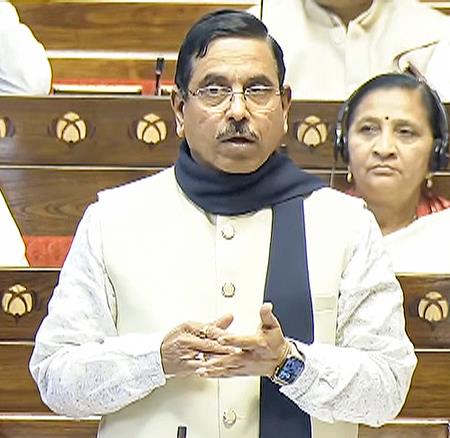
India Charts Bold Clean Energy Course With SHANTI Bill: Pralhad Joshi


The minister said the move signals a decisive shift in the nation's energy and technology landscape.
"India charts a bold clean-energy course with the SHANTI Bill, signalling a decisive shift in the nation's energy and technology landscape," Joshi said on X social media platform.
"By introducing a unified, modern regulatory framework and enabling private participation in nuclear power, the Bill strengthens long-term energy resilience and energy security," he added.
Hailing the bill as a game-changer for various industries, the minister said that the bill ensures reliable, clean power for energy-intensive and future-ready industries, supports advanced manufacturing and emerging technologies like AI and accelerates clean energy deployment -- unlocking new opportunities for industry, investment and a skilled workforce while reinforcing India's sustainable growth and global competitiveness.
SHANTI Bill, 2025, passed by both Lok Sabha and Rajya Sabha, aims to achieve self-reliance in the nuclear sector and meet India's 2047 clean energy goals.
The proposed law aims to create an enabling ecosystem for clean, reliable energy, while also upholding the long-standing commitment to the peaceful use of atomic energy.
It is also a reflection of India's commitment to global best practices in nuclear governance.
The Bill enables responsible private and joint venture participation to bridge resource constraints, shorten gestation periods, and support the national goal of 100 GW nuclear capacity by 2047, without compromising national security or public interest.
The Bill consolidates and rationalises provisions from the Atomic Energy Act, 1962, the Civil Liability for Nuclear Damage (CLND) Act, and now accords statutory status to the Atomic Energy Regulatory Board, making it part of the parent legislation.
The Bill opens up the nuclear sector to privatisation, a move aimed at achieving self-reliance and meeting India's 2047 clean energy goals. It comes after the privatisation of the space sector, which saw significant growth.
The new Bill will involve private partners under defined conditions for the exploration activities. The uranium mining beyond specified thresholds will continue to remain exclusively with the government.

Legal Disclaimer:
MENAFN provides the
information “as is” without warranty of any kind. We do not accept any
responsibility or liability for the accuracy, content, images, videos,
licenses, completeness, legality, or reliability of the information
contained in this article. If you have any complaints or copyright issues
related to this article, kindly contact the provider above.


Comments
No comment