


Arakan Army May Have Peaked In Myanmar's Civil War


In the crosshairs of an unfolding crisis with sobering implications for war in 2026 and beyond is the Rakhine nationalist Arakan Army (AA), the resistance's most powerful actor and last man standing among the Brotherhood Alliance of three ethnic armies that surged to prominence in late 2023 and mid-2024 as the vanguard of national revolt against the coup regime.
Over 2025, the concerted pressure of China's hard-knuckle diplomatic interventions and logistics embargos backstopping the kinetic campaigns of a resurgent military, or Tatmadaw, has forced two of the brothers into ceasefires and humiliating surrenders of northern towns they had captured last year.
At year's end, with the Chinese-Kokang Myanmar National Democratic Alliance Army (MNDAA) and the ethnic Palaung Ta'ang National Liberation Army (TNLA) effectively out of the fight on critical northeastern fronts, the same pressure is now turning ineluctably against the AA on Myanmar's western seaboard.
Since a string of dramatic victories between November 2023 and December 2024 that saw the AA take control of all but three of Rakhine 17 townships, the group's political wing, the United League of Arakan (ULA), has established expanding administrative structures under its Arakan Peoples' Revolutionary Government (APRG).

Twan Mrat Naing, commander-in-chief of the Arakan Army, attends a meeting of leaders of Myanmar's ethnic armed groups at the United Wa State Army headquarters in Myanmar's northern Shan state, May 6, 2015. Photo: Twitter
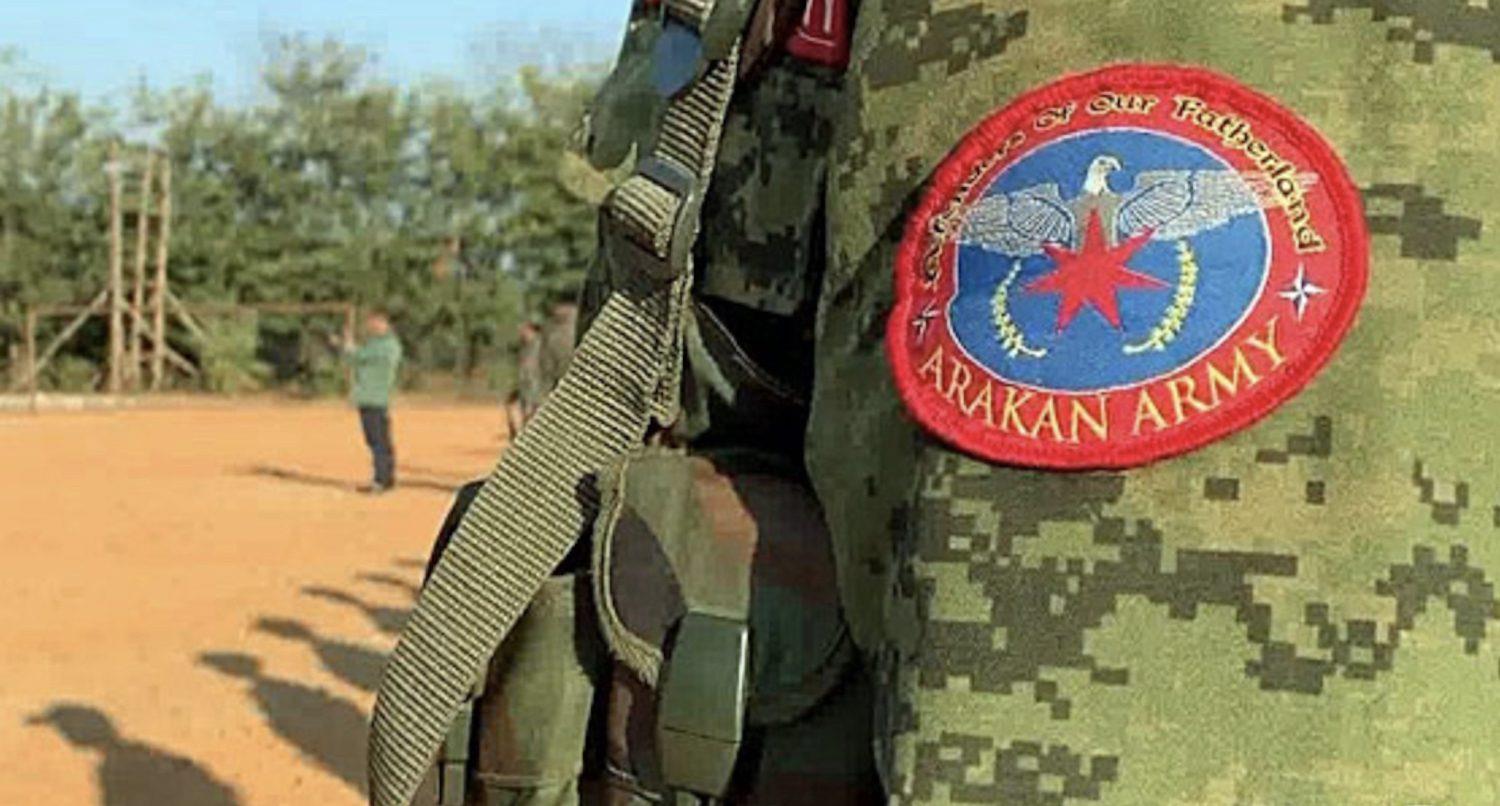
Meanwhile the army -a well-organized force loosely estimated at around 40,000 troops led by a charismatic commander, Twan Mrat Naing and underpinned by a conscription system -stands today as Myanmar's largest non-state armed actor.
Based on training programs and logistical support, AA linkages with an array of ethnic Bamar resistance organizations beyond its home base, also give the Rakhine revolutionaries real reach into Myanmar's central heartlands and a potentially key political role on the country's ethnically fragmented checkerboard.
The Kyaukphyu keyNotwithstanding these strengths, exactly one year after overrunning the Tatmadaw's Western Regional Military Command at Ann, the AA juggernaut is now staring down the barrel of a crisis rooted in a slow geostrategic encirclement -military, economic and diplomatic -that it proved unable to break out of in 2025.
As was the case with its northern allies, the most immediate manifestation of the AA's dilemma has been its powerlessness in the face repeated attacks mounted by the Myanmar Air Force (MAF) against Rakhine's civilian population.
Condemned by the Association of Southeast Asian Nations (ASEAN) and United Nations, the MAF's most egregious war crime to date unfolded late in the evening of December 11, with a precisely targeted airstrike on the main hospital of Mrauk U, the ancient capital of the Rakhine kingdom.



Legal Disclaimer:
MENAFN provides the
information “as is” without warranty of any kind. We do not accept
any responsibility or liability for the accuracy, content, images,
videos, licenses, completeness, legality, or reliability of the information
contained in this article. If you have any complaints or copyright
issues related to this article, kindly contact the provider above.


Comments
No comment