



403
Sorry!!
Error! We're sorry, but the page you were looking for doesn't exist.
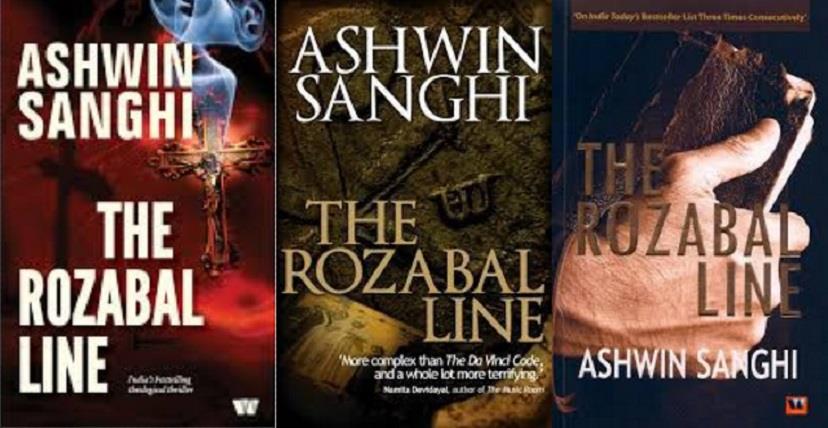
Jesus's Kashmir Connection Resurfaces In New Thriller
(MENAFN- Kashmir Observer)
The Rozabal Line
The Rozabal Line
By Malik Daniyal
I picked up The Rozabal Line on a recommendation, with no interest in religious fiction or historical controversy. I was expecting a straightforward thriller. Instead, I found a novel that stayed with me long after I finished reading it.
What Ashwin Sanghi offers is neither comfort nor easy answers, but something far more unsettling.
He invites the reader to question how history, faith, and authority are shaped, and why some questions continue to make us uncomfortable.
ADVERTISEMENTAt its centre, The Rozabal Line rests on a provocative claim: Jesus Christ did not die on the cross. He survived the crucifixion, travelled east, and eventually lived, died, and was buried in Kashmir.
Sanghi does not present this idea as a sudden revelation. He builds toward it patiently, layering historical references, religious traditions, travel accounts, and textual gaps.
The result feels less like a bold claim and more like a slow, unsettling accumulation of doubt.
The novel moves across timelines. One strand follows the ancient journey of a man history knows as Jesus, exploring interpretations of his life beyond the accepted boundaries of Christian theology.
The other strand unfolds in the present day, drawing in intelligence agencies, secret groups, and political tensions that arise when accepted religious narratives are put at risk.
These timelines do not exist independently rather they blend into each other. This reinforces the book's central idea that history is never truly past, and belief is never merely personal.
What makes The Rozabal Line engaging is its insistence. Sanghi is in no rush. He often pauses to explain sources, traditions, and connections.
At times, this makes the novel dense and demanding. But it also makes clear what kind of book this is. It does not want to be skimmed. It wants to be argued with.
A key strength of the novel is the way it handles religion. Sanghi neither mocks faith nor writes like a debunker. Christianity, Islam, and Buddhism are taken seriously, though not treated with unquestioned reverence.
The book repeatedly suggests that these traditions may not be as separate from one another as institutional histories would have us believe.
In Sanghi's telling, Jesus is not reduced to a symbol. He is reimagined as a figure whose life and teachings may have crossed multiple religious and cultural worlds.
This approach may unsettle readers who prefer clear theological boundaries. But the novel does not force a conclusion or demand belief in its thesis. What it insists on is the right to question.
Sanghi's Jesus is not offered as a substitute for the Christ of faith, but as a challenge to the idea that any one tradition holds exclusive access to truth.
Much of the novel's tension grows out of this challenge.
The present-day story is driven by the fear that if alternative versions of Jesus's life gain acceptance, the authority of religious institutions could be shaken.
The involvement of intelligence agencies, political interests, and religious power is not there to indulge in conspiracy for its own sake. It reflects the novel's understanding that belief has consequences far beyond the spiritual.
Faith shapes nations, identities, and power. To disturb faith, the book suggests, is to disturb order itself.
For a reader from Kashmir, the novel gains an extra layer of meaning. The Rozabal shrine in Srinagar is not just a passing reference or an exotic detail. It is central to the story.
Sanghi presents it as a place where hidden history may have survived, even as dominant narratives elsewhere solidified into doctrine.
In this context, Kashmir emerges as a place of convergence, a region where religious traditions, trade routes, and ideas have long intersected.
At the same time, the novel's use of Kashmir has its limitations.
Rozabal functions more as a symbol than as a lived space. The shrine is studied and theorized, but the voices of the people who live around it are largely absent. This creates a tension within the book.
Kashmir is central to the story, but it is mostly seen from the outside. For some readers, this may feel like a missed opportunity. For others, it reflects the book's larger concern: how places are often reduced to what they represent rather than what they truly are.
Stylistically, The Rozabal Line is unapologetically dense. Sanghi often pauses the narrative to explain historical context or religious details. This can slow the pace, and readers used to fast-moving thrillers may find parts of the book demanding.
The novel is attempting something ambitious. It makes the reader feel the weight of centuries of belief, interpretation, and suppression. The abundance of explanation reflects the book's concern that important details have been overlooked or erased in the past.
Comparisons with The Da Vinci Code are inevitable, but only go so far. Dan Brown simplifies history to keep the story fast and accessible. Sanghi does the opposite. He complicates history, sometimes at the expense of narrative flow.
Where Brown offers puzzles with clear solutions, Sanghi presents arguments without closure. The reward is not resolution, but a lingering sense of unease.
What I found most compelling as a reader was how the novel refuses to let you stay distant. You cannot read The Rozabal Line as a neutral observer. The book constantly asks why certain ideas feel threatening and whether that threat comes from evidence or from habit.
Even if you disagree with Sanghi's interpretations, the questions he raises are hard to dismiss.
The novel is careful not to claim final truth. Sanghi makes it clear, both directly and indirectly, that much of what he explores comes from contested spaces: apocryphal texts, oral traditions, and disputed histories.
This does not weaken the book. It strengthens it.
The Rozabal Line understands that doubt is often more honest than certainty.
There are moments when the novel could have used more restraint. Some explanations are repeated in slightly different ways, and some connections are presented with more confidence than the evidence fully supports.
But these moments do not spoil the reading experience. They reveal the author's urgency. Sanghi writes as someone deeply invested in his material, perhaps too invested at times, but never indifferent.

Legal Disclaimer:
MENAFN provides the
information “as is” without warranty of any kind. We do not accept
any responsibility or liability for the accuracy, content, images,
videos, licenses, completeness, legality, or reliability of the information
contained in this article. If you have any complaints or copyright
issues related to this article, kindly contact the provider above.
Most popular stories
Market Research

More Story




Comments
No comment