Tuesday, 02 January 2024 12:17 GMT

Best 7 Semiconductor Stocks For Market Movers (Chart)


(MENAFN- Daily Forex) After the PHLX Semiconductor Index (SOX) dropped by 16% year-to-date at the end of April, it soared over 100% by mid-October. Savvy investors made tremendous profits by understanding the underlying currents driving price action are Semiconductor Stocks?

Semiconductor stocks refer to publicly listed companies that design and manufacture computer chips, also known as semiconductors. They are an essential component in today's world, powering everything from cars to consumer electronics, from telecommunications to energy, and from defense to artificial intelligence.

A semiconductor is a material with electrical conductivity to regulate electrical currents, embedded with tiny circuits. Without semiconductors, we would have computer chips with the most basic functions. The sophistication of semiconductors ranges from simple ones that power kitchen appliances to cutting-edge graphics processing units (GPUs) required by artificial intelligence (AI) and defense solutions Should You Consider Buying Semiconductor Stocks?

Semiconductor stocks drive the global economy, and the integration of AI, combined with the recent boost in defense spending, will continue to fuel growth. Some investors compare semiconductor companies to the internet companies during the Dot-Com boom and bust, which have created today's Magnificent Seven.

Here are a few things worth considering when evaluating Semiconductor stocks:
  • Semiconductors are at the forefront of technological innovation, including AI and quantum computing.
  • Investors must brace for volatility.
  • Cyclical cycles will impact the share price of semiconductor stocks.
  • The regulatory landscape is bound to change and adapt.
  • Most semiconductor stocks have excessive valuations.
What are the Downsides of Semiconductor Stocks?

Many countries consider semiconductors a national security item, as evidenced by Sino-US geopolitical tensions. The industry also relies heavily on Taiwan, with a small but significant factor from the Netherlands. Therefore, supply chain disruptions can distort the investing landscape. High research and development costs and the difficulty and expense of building fabrication plants create significant barriers to new entrants disrupting the sector. Additionally, each significant R&D breakthrough can render previous chips obsolete.

Here is a shortlist of semiconductor stocks worth thinking about investing in:
  • Texas Instruments (TXN)
  • NXP Semiconductors (NXPI)
  • Baidu (BIDU)
  • Qnity Electronics (Q)
  • Micron Technology (MU)
  • Advanced Micro Devices (AMD)
  • CEVA (CEVA)
Update on My Previous Best Semiconductor Stocks

In our previous installment, I highlighted the upside potential of Texas Instruments and NXP Semiconductors.

Texas Instruments (TXN) - A long position in TXN between $165.00 and $177.92

TXN dropped by over 11% after my recommendation but has since recovered most of those losses, trading down by over 2%. I maintain my long positions, as bullish catalysts remain.

NXP Semiconductors (NXPI) - A long position in NXPI between $205.14 and $222.22

NXPI plunged over 15%, and I decided to add to my long position at 185.00, as the bullish narrative remains intact Fundamental Analysis

Baidu (BIDU) is a Chinese multi-national technology conglomerate with an expanding AI footprint and a leadership in internet search.

So, why am I bullish on BIDU following its correction?

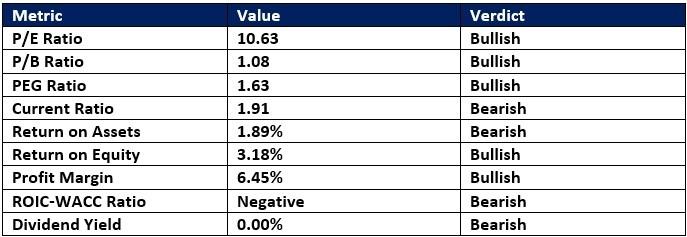
I rank Baidu as one of my top semiconductor and AI picks, as its Kunlunxin unit and multi-year Kunlun roadmap, including the Kunlun M100 for 2026 and the M300 for 2027, and clustering them into high-performance Tianchi nodes to boost inference and training capacity, are underappreciated. BIDU is considering going open source in its AI business, and it is well diversified, with a steady income stream from search that allows it to finance its ambitious AI plans.

The price-to-earning (P/E) ratio of 10.63 makes BIDU an inexpensive stock. By comparison, the P/E ratio for the NASDAQ 100 is 34.89.

The average analyst price target for Baidu is $151.41. It suggests excellent upside potential with reasonable downside risks Technical Analysis

Baidu Price Chart
  • The BIDU D1 chart shows price action below its ascending Fibonacci Retracement Fan with fading downside momentum.
  • It also shows Baidu inside a horizontal support zone with rising breakout pressures.
  • The Bull Bear Power Indicator is bearish with an ascending trendline, nearing a bullish crossover.
My Call Baidu

I am taking a long position in BIDU between $108.01 and $118.40. The valuations are a screaming buy, and its ERNIE 4.5, a foundation model, and ERNIE X1, a reasoning model, match US competitors at half the price.
  • BIDU Entry Level: Between $108.01 and $118.40
  • BIDU Take Profit: Between $149.51 and $156.97
  • BIDU Stop Loss: Between $88.66 and $93.25
  • Risk/Reward Ratio: 2.15
Qnity Electronics Fundamental Analysis

Qnity Electronics (Q) began trading as a separate entity in November, following its separation from DuPont (DD). It provides materials and solutions to the semiconductor and electronics industries via two segments: Semiconductor Technologies and Interconnect Solutions.

So, why am I bullish on Q following its post-IPO plunge?

While Qnity Electronics lacks history as an independent company, it has delivered six quarters of solid organic growth, driven by its AI-related products. Its latest AI chip designs and architecture delivered double-digit net sales in its latest quarter. I am bullish on Q as AI demand throughout advanced nodes, advanced packaging, and thermal management solutions should continue to drive a share price recovery following its plunge.

Qnity Electronics Fundamental Analysis Snapshot

The price-to-earnings (P/E) ratio of 31.19 makes Q a reasonably valued stock. By comparison, the P/E ratio for the NASDAQ 100 is 34.89.

The average analyst price target for Qnity Electronics is $107.25. It suggests good upside potential with acceptable downside risks Electronics Technical Analysis

Qnity Electronics Price Chart
  • The Q D1 chart shows price action breaking out above its ascending 38.2% Fibonacci Retracement Fan level.
  • It also shows Qnity Electronics breaking out above a horizontal support zone with rising bullish momentum.
  • The Bull Bear Power Indicator is bearish with a positive divergence.
My Call on Qnity Electronics

I am taking a long position in Q between 77.94 and 83.50. I am buying the specialized services for the AI-related semiconductor industry, where Q maintains a unique position.
  • Q Entry Level: Between $77.94 and $83.50
  • Q Take Profit: Between $102.15 and $107.25
  • Q Stop Loss: Between $67.09 and $70.63
  • Risk/Reward Ratio: 2.23

Ready to trade our analysis of the best semiconductor stocks? Here is our list of the best stock brokers worth checking out.

MENAFN01122025000131011023ID1110420927


Daily Forex

Legal Disclaimer:
MENAFN provides the information “as is” without warranty of any kind. We do not accept any responsibility or liability for the accuracy, content, images, videos, licenses, completeness, legality, or reliability of the information contained in this article. If you have any complaints or copyright issues related to this article, kindly contact the provider above.

Search