


Afghanistan Women Praise Indian Reporters For Standing Up For Women's Rights


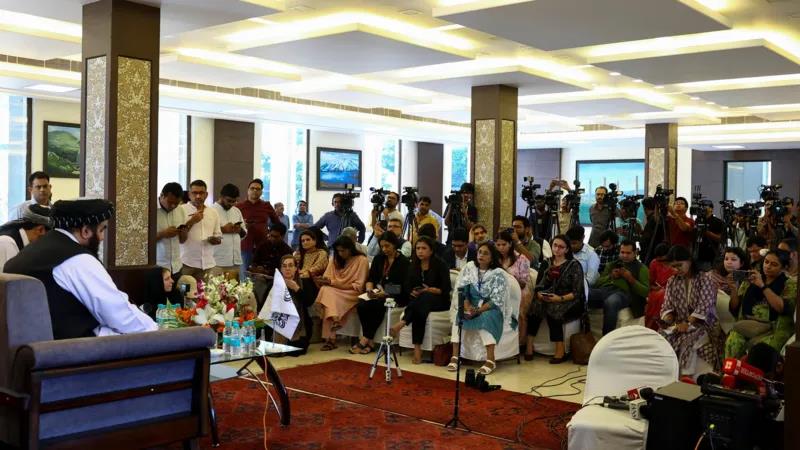
Afghanistan women's rights activists have praised Indian women journalists for their courage and solidarity after they publicly challenged acting foreign minister during a press event in New Delhi.
Former Afghanistan MP Maryam Suleimankhil shared a video of an Indian journalist questioning the visiting delegation about girls' education in Afghanistan, calling it“a moment of sisterhood between Afghan and Indian women.”
Former lawmaker Fawzia Koofi also reposted videos of Indian women protesting gender discrimination, warning that silence in the face of injustice anywhere can spread its impact globally.“Discrimination in one corner of the world can affect all women,” she wrote.
Human rights activist Fereshteh Abbasi and journalist Leena Rouzbeh expressed hope that the strong reaction by Indian women would continue to inspire others to speak against gender inequality across borders.
Sediq Sediqi, the former spokesperson for Afghanistan's presidency, described the press event-attended largely by Indian women journalists-as“a victory for women everywhere.” Afghan journalist Habib Totakhil also commended the“bravery” of Indian women who“refused to stay silent.”
The incident, which began when female reporters were initially denied access to a press conference in New Delhi by Taliban acting Foreign minister Amir Khan Muttaqi, sparked widespread outrage and calls for gender equality. In response, Indian authorities later organised a new press session with full participation of women journalists.
Observers said the renewed event, where Indian women pressed questions on women's education and rights, symbolised cross-border solidarity and growing resistance against gender-based exclusion in South Asia.
Since the Taliban's return to power in August 2021, women and girls in Afghanistan have faced sweeping restrictions on education, employment, and public life. Secondary schools and universities remain closed to female students, barring millions from pursuing formal education. The ban, which authorities describe as“temporary,” has been widely condemned by the United Nations and human rights groups as one of the most severe violations of women's rights globally.
Women have also been largely excluded from most forms of employment, including government positions, NGOs, and the private sector. In many provinces, women are prohibited from entering parks, gyms, and public spaces without a male guardian. These restrictions have not only deepened Afghanistan's social and economic crisis but also erased decades of progress toward gender equality, leaving Afghan women isolated, voiceless, and dependent on limited humanitarian assistance.
ShareFacebook Twitter WhatsApp Email Print Telegram
Legal Disclaimer:
MENAFN provides the
information “as is” without warranty of any kind. We do not accept
any responsibility or liability for the accuracy, content, images,
videos, licenses, completeness, legality, or reliability of the information
contained in this article. If you have any complaints or copyright
issues related to this article, kindly contact the provider above.


Comments
No comment