


Dumping Duties On Many Items Disappear As Pragmatism Takes Hold


New Delhi has allowed the expiry of anti-dumping duties on a range of goods from several countries including China, signalling a recalibration in its approach to trade protection.
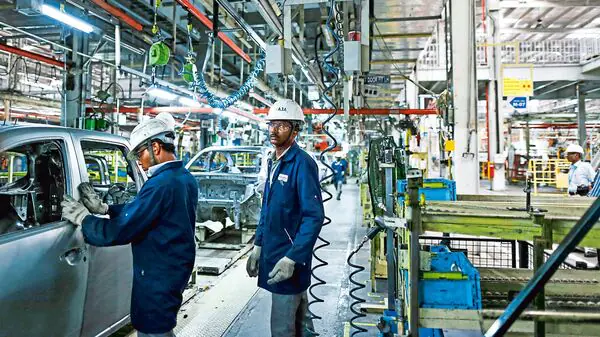
The withdrawal of duties on key auto components from China comes even as New Delhi and Beijing move to normalize their relations in a world rocked by tariffs and protectionism. Components from China such as axle beams and steering critical for commercial vehicles, trucks, and buses, had been subject to punitive tariffs since 2008, with the latest extension lapsing in July, 2023. India has decided not to extend the tariffs since then.
The move was detailed in a filing to the World Trade Organization (WTO) on 7 October, against the backdrop of a steep 50% US tariff on Indian goods. India is looking to reduce input costs for domestic manufacturers and secure critical raw materials and components from China and other countries to support its manufacturing drive.
The decision is part of a broader review detailed in India's semi-annual report to the WTO's Committee on Anti-Dumping Practices. The filing lists the termination or expiry of duties on key industrial products from multiple jurisdictions, including China, Malaysia, Thailand, Vietnam, the European Union and the UK.
Queries sent to the commerce ministry remained unanswered.
Also Read | Steel, PVC, Trump tariffs, and China: How India can tackle the dumping crisi"India appears to be balancing its industrial and strategic priorities," said Ajay Srivastava, founder of the Global Trade Research Initiative (GTRI), a trade thinktank." By letting some anti-dumping measures lapse , the government ensures lower input costs for manufacturers while signalling policy flexibility toward China at a time when relations with the US remain tense."
India imported axle beams worth $301.48 million in FY25, with almost 90% sourced from China, commerce ministry data shows. Beyond the Chinese auto parts, other terminated measures include duties on high-tenacity polyester yarn from China, grinding media balls (used in mining and mills) from China and Thailand, nylon filament yarn from the EU, UK and Vietnam, and textured tempered glass from Malaysia.
India now prioritizes industrial competitiveness over blanket protectionism, a government official said on the condition of anonymity. "Where dependency is high or injury (from imports) is no longer evident, the government prefers expiry over automatic extensions."
While the WTO filing formally describes the termination as an expiry without review, the timing coincides with a quiet diplomatic outreach to Beijing. New Delhi's softening stance on trade remedies follows China's suspension of exports of rare earth magnets , materials vital to India's renewable energy, electric vehicle and electronics sectors.
Also Read | India imposes 12% safeguard duty on steel importTrade economists suggest the pattern indicates a deliberate recalibration in India's use of trade remedies.“India has long been one of the most frequent users of anti-dumping measures, but we are now seeing a measured easing where domestic impact is minimal and industrial benefits are high," said Abhash Kumar, assistant professor of economics at Delhi University.“It's a nuanced approach-protecting key sectors while allowing greater efficiency in manufacturing."
The re-engagement includes China agreeing to resume the supply of critical inputs, including fertilizer manufacturing equipment and rare earth magnets. India has also recently resumed direct passenger flights to China after a five-year gap, signalling a thaw in bilateral relations .
In an even broader policy rethink, New Delhi is considering reviewing Press Note 3, the rule mandating prior government approval for investments from countries sharing a land border, potentially easing the path for smaller Chinese investments. The government is also weighing the possibility of re-engaging with the Regional Comprehensive Economic Partnership (RCEP) to deepen Asian trade integration.
Still, India remains one of the world's most frequent users of anti-dumping measures, imposing duties on various imports to protect domestic industries like steel, chemicals, and pharmaceuticals from unfair pricing. These actions have periodically resulted in multiple WTO complaints from trading partners.
In a written reply to the Lok Sabha on 10 December, 2024, minister of state for commerce Jitin Prasada said that the Directorate General of Trade Remedies (DGTR) had initiated 43 anti-dumping investigations in 2024 across sectors including chemicals, steel, pharmaceuticals and consumer goods. This was slightly lower than 45 cases in 2023.
Also Read | India faces fresh WTO scrutiny over import restriction
Legal Disclaimer:
MENAFN provides the
information “as is” without warranty of any kind. We do not accept
any responsibility or liability for the accuracy, content, images,
videos, licenses, completeness, legality, or reliability of the information
contained in this article. If you have any complaints or copyright
issues related to this article, kindly contact the provider above.


Comments
No comment