




403
Sorry!!
Error! We're sorry, but the page you were looking for doesn't exist.
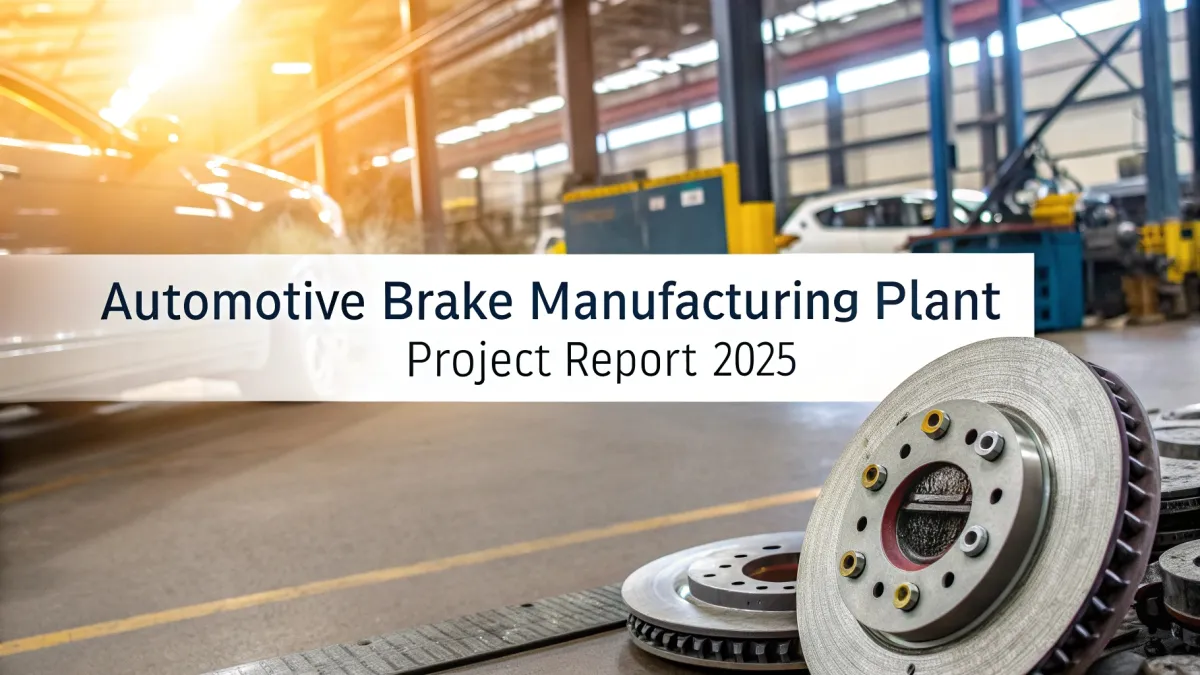
Automotive Brake Manufacturing Plant Report 2025: Raw Materials, And Investment Opportunities
(MENAFN- IMARC Group)
Setting up an automotive brake manufacturing facility necessitates a detailed market analysis alongside granular insights into various operational aspects, including unit processes, raw material procurement, utility provisions, infrastructure setup, machinery and technology specifications, workforce planning, logistics, and financial considerations.
IMARC Group's report titled“ Automotive Brake Manufacturing Plant Project Report 2025: Industry Trends, Plant Setup, Machinery, Raw Materials, Investment Opportunities, Cost and Revenue ” offers a comprehensive guide for establishing an automotive brake manufacturing plant, covering everything from product overview and production processes to detailed financial insights.
An automotive brake is a critical safety component in vehicles designed to slow down or stop motion by applying friction to the wheels. It operates through different mechanisms such as disc brakes, drum brakes, hydraulic systems, or electronic braking systems, depending on the vehicle type. Brakes work by converting kinetic energy into heat energy through friction, which is then dissipated to halt the vehicle effectively. They are essential for maintaining driver control, ensuring passenger safety, and preventing accidents. Modern automotive brakes are increasingly integrated with advanced technologies like anti-lock braking systems (ABS) and electronic stability control (ESC) to enhance performance and reliability.
The automotive brake industry is witnessing significant growth, driven by rising vehicle production, increasing safety regulations, and technological advancements. The demand for advanced braking systems, including ABS, electronic brake-force distribution (EBD), and regenerative braking, is expanding as automakers prioritize passenger safety and efficiency. The growing adoption of electric and hybrid vehicles is fueling the need for specialized braking technologies that support energy recovery. Additionally, stricter government policies mandating safety features in both passenger and commercial vehicles are accelerating innovation. Consumer preference for high-performance and low-maintenance brakes is encouraging manufacturers to develop lightweight materials and wear-resistant components. The expansion of the automotive aftermarket, particularly in emerging economies, also supports industry growth. Moreover, the integration of IoT and smart sensors in braking systems is expected to redefine vehicle safety standards, making the industry more technology-driven and aligned with sustainable mobility trends.
Request for a Sample Report : https://www.imarcgroup.com/automotive-brake-manufacturing-plant-project-report/requestsample
Key Steps Required to Set Up an Automotive Brake Plant .
Market AnalysisThe report provides insights into the landscape of the automotive brake industry at the global level. The report also provides a segment-wise and region-wise breakup of the global automotive brake industry. Additionally, it also provides the price analysis of feedstocks used in the manufacturing of automotive brake, along with the industry profit margins.
-
Segment Breakdown
Regional Insights
Pricing Analysis and Trends
Market Forecast
Detailed information related to the process flow and various unit operations involved in the automotive brake manufacturing plant project is elaborated in the report. These include:
-
Land, Location, and Site Development
Plant Layout
Plant Machinery
Raw Material Procurement
Packaging and Storage
Transportation
Quality Inspection
Utilities
Human Resource Requirements and Wages
Marketing and Distribution
Request for Customized Report:
https://www.imarcgroup.com/request?type=report&id=22750&flag=E Project Requirements and CostThe report provides a detailed location analysis covering insights into the plant location, selection criteria, location significance, environmental impact, and expenditure for automotive brake manufacturing plant setup. Additionally, the report also provides information related to plant layout and factors influencing the same. Furthermore, other requirements and expenditures related to machinery, raw materials, packaging, transportation, utilities, and human resources have also been covered in the report.
Machinery and Equipment
-
List of machinery needed for automotive brake production
Estimated costs and suppliers
Raw Material Costs
-
Types of materials required and sourcing strategies
Utilities and Overheads
-
Electricity, water, labor, and other operational expenses
A detailed analysis of the project economics for setting up an automotive brake manufacturing plant is illustrated in the report. This includes the analysis and detailed understanding of capital expenditure (CAPEX), operating expenditure (OPEX), income projections, taxation, depreciation, liquidity analysis, profitability analysis, payback period, NPV, uncertainty analysis, and sensitivity analysis.
Capital Expenditure (CAPEX)
-
Initial setup costs: land, machinery, and infrastructure
Operating Expenditure (OPEX)
-
Recurring costs: raw materials, labor, maintenance
Revenue Projections
-
Expected income based on production capacity, target market, and market demand
Financial Analysis
-
Liquidity Analysis
Profitability Analysis
Payback Period
Net Present Value (NPV)
Internal Rate of Return
Profit and Loss Account
-
Licenses and Permits
Regulatory Procedures and Approval
Certification Requirement
-
Total human resource requirement
Salary cost analysis
Employee policies overview
The report also covers critical insights into key success and risk factors, which highlight the aspects that influence the success and potential challenges in the industry. Additionally, the report includes strategic recommendations, offering actionable advice to enhance operational efficiency, profitability, and market competitiveness. A comprehensive case study of a successful venture is also provided, showcasing best practices and real-world examples from an established business, which can serve as a valuable reference for new entrants in the market.
About Us:
IMARC is a global market research company offering comprehensive services to support businesses at every stage of growth, including market entry, competitive intelligence, procurement research, regulatory approvals, factory setup, company incorporation, and recruitment. Specializing in factory setup solutions, we provide detailed financial cost modeling to assess the feasibility and financial viability of establishing new manufacturing plants globally. Our models cover capital expenditure (CAPEX) for land acquisition, infrastructure, and equipment installation while also evaluating factory layout and design's impact on operational efficiency, energy use, and productivity. Our holistic approach offers valuable insights into industry trends, competitor strategies, and emerging technologies, enabling businesses to optimize operations, control costs, and drive long-term growth.
Contact Us:
IMARC Group
134 N 4th St. Brooklyn, NY 11249, USA
Email: sales[@]imarcgroup.com
Tel No:(D) +91 120 433 0800
United States: (+1-201971-6302)

Legal Disclaimer:
MENAFN provides the
information “as is” without warranty of any kind. We do not accept
any responsibility or liability for the accuracy, content, images,
videos, licenses, completeness, legality, or reliability of the information
contained in this article. If you have any complaints or copyright
issues related to this article, kindly contact the provider above.
Most popular stories
Market Research

More Story








Comments
No comment