


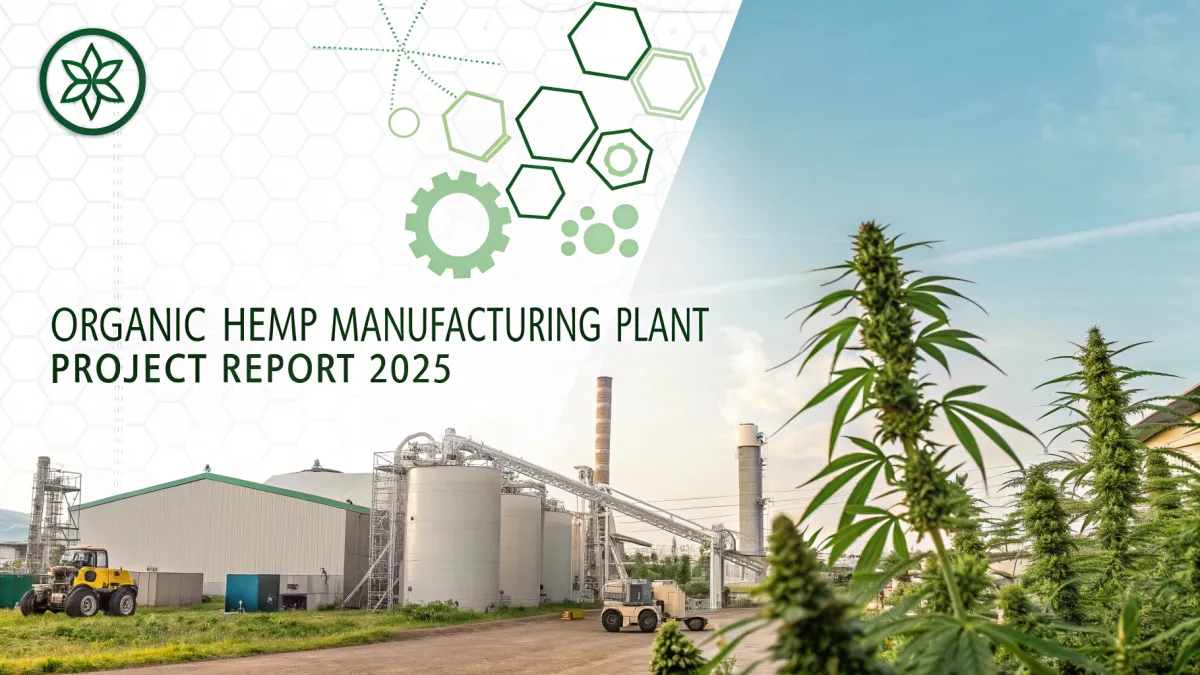
Setting Up A Successful Organic Hemp Manufacturing Plant Cost 2025: Comprehensive Business Plan, Cost And Revenue


Setting up an organic hemp processing plant involves similar steps to conventional hemp, but with a heightened focus on maintaining organic integrity. This includes ensuring certified organic raw material sourcing, dedicated processing lines to prevent contamination, and using eco-friendly retting and decortication methods. Key machinery still involves decorticators, retting systems, scutching/hackling, spinning, and weaving/knitting equipment. Organic certification throughout the entire supply chain is a critical and ongoing requirement.
Request for a Sample Report : https://www.imarcgroup.com/organic-hemp-manufacturing-plant-project-report/requestsample
IMARC Group's “Organic Hemp Manufacturing Plant Project Report 2025: Industry Trends, Plant Setup, Machinery, Raw Materials, Investment Opportunities, Cost and Revenue” offers a detailed and practical guide for entrepreneurs and businesses looking to enter the manufacturing industry. The report includes in-depth analysis of capital investment requirements, project financing options, working capital needs, and projected returns.
This comprehensive business plan outlines every critical step involved in setting up a successful manufacturing plant unit from understanding the industry landscape to planning for real-world challenges. It provides valuable insights into essential components such as organic hemp manufacturing plant cost, machinery cost, operating cost, raw material requirements, utility needs, infrastructure setup, and packaging logistics.
Organic Hemp Industry Outlook 2025:
The organic hemp industry in India is projected for substantial growth in 2025. This surge is driven by increasing consumer demand for sustainable and natural products across textiles, food, and wellness sectors. Government support for industrial hemp cultivation and processing, coupled with growing awareness of hemp's environmental benefits, will foster market expansion. Innovations in processing technologies and product diversification will further enhance this positive outlook.
Key Insights for Organic Hemp Manufacturing Plant Setup:
Detailed Process Flow:
-
Product Overview
Unit Operations Involved
Mass Balance and Raw Material Requirements
Quality Assurance Criteria
Technical Tests
Project Details, Requirements and Costs Involved:
-
Land, Location and Site Development
Plant Layout
Machinery Requirements and Costs
Raw Material Requirements and Costs
Packaging Requirements and Costs
Transportation Requirements and Costs
Utility Requirements and Costs
Human Resource Requirements and Costs
Capital Expenditure (CapEx) and Operational Expenditure (OpEx) Analysis:
Project Economics:
-
Capital Investments
Operating Costs
Expenditure Projections
Revenue Projections
Taxation and Depreciation
Profit Projections
Financial Analysis
Profitability Analysis:
-
Total Income
Total Expenditure
Gross Profit
Gross Margin
Net Profit
Net Margin
Request for Customization : https://www.imarcgroup.com/request?type=report&id=12229&flag=E
Key Cost Components of Setting Up an Organic Hemp Plant:
-
Land and Building Costs: Acquisition or lease of suitable industrial land and construction of a dedicated facility, including specialized storage for organic raw materials (to prevent cross-contamination), processing zones (retting, decortication, spinning, weaving), dyeing/finishing, quality control labs, and warehousing.
Organic Certification Fees: Significant upfront and ongoing costs for obtaining and maintaining various organic certifications (e.g., USDA Organic, NPOP for India) for both the raw material sourcing and the processing facility. This involves audits, inspections, and documentation.
Raw Material Procurement (Organic Hemp Stalks): Costs for securing a consistent supply of certified organic industrial hemp stalks from farms. This includes potentially higher sourcing costs compared to conventional hemp due to specialized farming practices.
Utility & Energy Costs: Operational expenses for electricity (for machinery, HVAC), water (for retting, dyeing, cleaning), and potentially steam or fuel for drying processes. Energy efficiency is vital for sustainability.
Labor and Staffing Costs: Salaries for agricultural experts (for organic sourcing), textile engineers, organic certification specialists, machine operators, quality control personnel, and skilled labor.
Quality Control and Testing Equipment: Investment in laboratory equipment for testing fiber strength, fineness, yarn count, fabric tensile strength, colorfastness, and specifically, ensuring absence of prohibited synthetic chemicals/pesticides to maintain organic integrity.
Licenses, Certifications, and Regulatory Compliance: Fees for industrial manufacturing licenses, environmental clearances, and specific permits related to hemp processing. Strict compliance with both general industrial hemp regulations (THC content) and specific organic standards is paramount.
Research & Development (R&D): Costs associated with developing new fiber processing techniques suitable for organic hemp, improving fabric softness and drape using organic-approved methods, or blending organic hemp with other certified organic fibers.
Marketing and Branding: Initial costs for brand development emphasizing the organic and sustainable aspects , specialized packaging, participation in eco-textile fairs, and promotional activities targeting ethical consumers and sustainable fashion brands.
Working Capital: Funds for raw material inventory, organic-certified chemicals/auxiliaries, packaging, operational expenses, and salaries until sales revenue stabilizes.
Economic Trends Influencing Organic Hemp Plant Setup Costs 2025 :
-
Surging Consumer Demand for Organic Products: A significant global and domestic trend towards organic, natural, and sustainable products across all sectors directly boosts the demand for organic hemp, making investment in production capacity more attractive.
Government Support for Industrial Hemp and Organic Farming: Evolving government policies in India that encourage both industrial hemp cultivation and organic farming may offer specific incentives, subsidies, or easier access to certified raw materials, potentially mitigating setup costs for organic plants.
Premium Pricing for Organic Products: Organic certification often allows for a premium price point for the finished product, which can positively influence return on investment calculations despite higher initial setup and operational costs.
Advancements in Sustainable Processing Technologies: Innovations in eco- friendly decortication and retting methods can improve efficiency and reduce environmental impact, aligning with organic principles, though adopting these may require higher initial investment.
Increasing Investor Focus on ESG (Environmental, Social, and Governance): Growing investor interest in sustainable and ethical businesses can lead to easier access to“green” financing or lower cost of capital for organic hemp projects.
Fluctuating Raw Material Supply and Price: The availability and price of certified organic hemp stalks can be more volatile than conventional hemp, influenced by limited organic cultivation acreage and stringent certification requirements.
Energy and Water Conservation Emphasis: Due to the sustainable nature of organic production, there's an increased focus on energy-efficient machinery and water recycling, which might involve higher upfront investment but lower long-term utility costs.
Challenges and Considerations for Investors in Organic Hemp Plant Projects:
-
Strict Organic Certification Requirements: Obtaining and maintaining organic certification throughout the entire supply chain, from farm to finished product, is a complex, time-consuming, and costly process involving rigorous audits and documentation.
Limited Availability of Certified Organic Raw Material: The supply of certified organic industrial hemp stalks in India is still nascent, making consistent sourcing in large volumes a significant challenge. This may lead to higher raw material costs and potential supply chain disruptions.
Legal and Regulatory Nuances: Navigating the evolving and sometimes inconsistent legal framework for industrial hemp (THC content) in India, combined with specific organic regulations, adds layers of complexity.
Processing Challenges for Organic Fibers: Achieving desirable fiber quality (e.g., fineness, softness) using only organic-approved retting and processing methods can be more technically challenging than conventional methods.
Higher Production Costs: Organic farming and processing often incur higher costs due to stricter controls, specialized inputs, and lower yields compared to conventional methods, which need to be balanced by premium pricing.
Market Education and Consumer Trust: While demand for organic is growing, effectively communicating the unique benefits and authenticity of organic hemp products to consumers and gaining their trust requires dedicated marketing efforts.
Traceability and Transparency: Ensuring complete traceability from the organic farm to the final product is essential for maintaining organic integrity and responding to consumer demand for transparency.
Waste Management in an Organic Context: Disposing of processing by-products (e.g., hurds, wastewater from retting) in an environmentally compliant manner, often with organic disposal requirements, can be complex.
Scalability Challenges: Scaling up organic hemp cultivation and processing to meet growing market demand can be difficult due to the stringent requirements and nascent infrastructure.
Conclusion:
The organic hemp manufacturing industry in India presents a compelling, values-driven investment opportunity for 2025, fueled by a powerful global shift towards sustainable and natural products. While establishing such a plant demands significant capital investment, stringent organic certification adherence, navigating complex raw material sourcing, and investing in specialized eco-friendly processing, the burgeoning demand and premium positioning of organic hemp products offer substantial long-term growth potential for committed and environmentally conscious investors.
About Us:
IMARC Group is a global management consulting firm that helps the world's most ambitious changemakers to create a lasting impact. The company excel in understanding its client's business priorities and delivering tailored solutions that drive meaningful outcomes. We provide a comprehensive suite of market entry and expansion services. Our offerings include thorough market assessment, feasibility studies, company incorporation assistance, factory setup support, regulatory approvals and licensing navigation, branding, marketing and sales strategies, competitive landscape, and benchmarking analyses, pricing and cost research, and procurement research.
Contact Us:
IMARC Group
134 N 4th St. Brooklyn, NY 11249, USA
Email: sales[@]imarcgroup.com
Tel No:(D) +91 120 433 0800
United States: (+1-201971-6302 )

Legal Disclaimer:
MENAFN provides the
information “as is” without warranty of any kind. We do not accept any
responsibility or liability for the accuracy, content, images, videos,
licenses, completeness, legality, or reliability of the information
contained in this article. If you have any complaints or copyright issues
related to this article, kindly contact the provider above.


Comments
No comment