


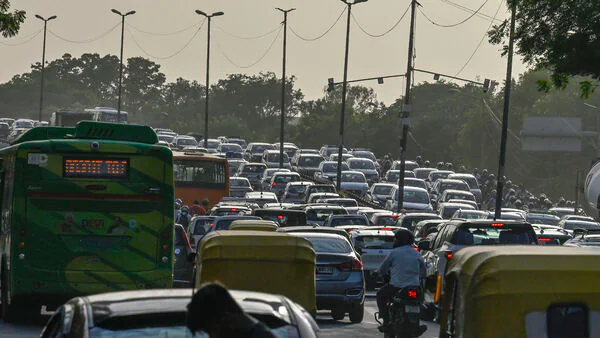
BS-VI Vehicles: Supreme Court Agrees To Hear Plea To Allow End-Of-Life Vehicles To Ply In Delhi-NCR


The nation's top court bench, headed by the Chief Justice of India B R Gavai and Justice K Vinod Chandran, has scheduled to hear the appeal on Monday, 28 July 2025.
According to the agency report, the bench decided to hear the appeal after a legal counsel mentioned it for urgent listing, mentioning that the government cannot override the court's earlier directions on pollution control.
Once the apex court sets a limit, the government cannot alter those limits for curbing vehicular emissions to check pollution in the national capital, reported the news agency, citing the legal counsel on Thursday.
Also Read | Delhi Rains: Yamuna drops below warning mark | WatchThe counsel further highlighted that the apex legal body should provide a direction in this case, which is necessary to permit such vehicles to continue operating even after their life term has ended. According to the agency report, the Supreme Court imposed the current limits on the end-of-life period.
What are the current age limits?The current end-of-life period, as per the law, stands at 10 years for diesel variant vehicles, and 15 years for all the petrol variant vehicles in the Delhi National Capital Region (NCR) region.
Also Read | Massive traffic jam in parts of Delhi as heavy rains lash capital cityThe report also highlighted that in 2015, India's National Green Tribunal (NGT) directed that diesel vehicles older than 10 years and petrol vehicles older than 15 years should not be allowed to operate in Delhi-NCR in an effort to reduce the rising pollution levels in the city.
In 2018, the Supreme Court of India upheld the NGT order and made the decision the norm in the Delhi-NCR region.
This comes amid the Delhi government imposing a law of“No fuel for 15-year-old petrol and 10-year-old diesel vehicles” effective from 1 July 2025, in compliance with the mandate from the Commission for Air Quality Management (CAQM).
However, this was put on hold within two days of its implementation as the state government witnessed public ire, and they put a hold on it citing 'operational and infrastructural challenges.'

Legal Disclaimer:
MENAFN provides the
information “as is” without warranty of any kind. We do not accept any
responsibility or liability for the accuracy, content, images, videos,
licenses, completeness, legality, or reliability of the information
contained in this article. If you have any complaints or copyright issues
related to this article, kindly contact the provider above.


Comments
No comment