


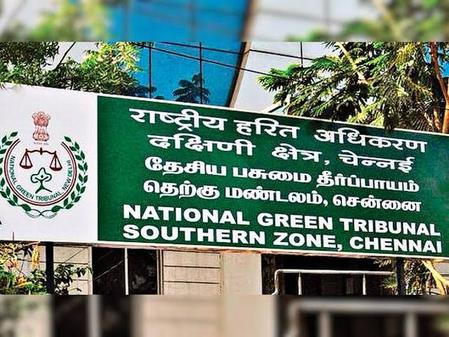
NGT Directs TNPCB To Issue Dos And Don'ts Ahead Of Ganesh Festival


The bench, comprising Justice Pushpa Sathyanarayana and expert member K. Satyagopal, ordered the TNPCB to launch the campaign within a week and ensure that“dos and don'ts” along with applicable fines are widely publicised by June 30.
The directive comes amid growing concern over the environmental impact of idol immersions involving non-biodegradable materials. Central to the tribunal's concern is the widespread use of Plaster of Paris (PoP) and chemically-laden paints in idols, despite a ban issued by the Central Pollution Control Board (CPCB) in 2010 and reinforced with stricter guidelines in 2020.
Enforcement of these norms, however, has been uneven, especially in coastal cities like Chennai. The TNPCB, in its submission, claimed it had taken action against several unauthorised PoP idol manufacturing units, some of which were sealed. Nevertheless, violations continue, particularly in urban areas.
Following last year's Ganesh Chaturthi, clean-up operations in Chennai alone recovered around 150 metric tonnes of idol fragments and festival-related waste from beaches such as Pattinapakkam, Kasimedu, and Palavakkam.
While acknowledging the need to respect religious practices, the NGT made it clear that such festivities must not result in environmental degradation.
“We are not restricting the celebration of the festival; we are targeting the pollution it causes,” the bench observed, underscoring the necessity of sustainable celebration methods.
The tribunal also took issue with the TNPCB's reluctance to implement the“polluter-pays” principle -- a model it had recommended in early 2024 to make polluters financially accountable for post-festival clean-up.
Citing legal and religious sensitivities, the TNPCB has so far avoided implementing the fee. The NGT, however, reiterated that such a mechanism is essential for ensuring that the cost burden does not fall on taxpayers.
As part of its order, the NGT encouraged the use of eco-friendly practices, including clay idols, natural dyes, and designated immersion zones. With the festival drawing near, the tribunal's ruling is expected to shape public behaviour and administrative planning across Tamil Nadu.

Legal Disclaimer:
MENAFN provides the
information “as is” without warranty of any kind. We do not accept any
responsibility or liability for the accuracy, content, images, videos,
licenses, completeness, legality, or reliability of the information
contained in this article. If you have any complaints or copyright issues
related to this article, kindly contact the provider above.


Comments
No comment