


Floods, Fires And Even Terrorist Attacks: How Ready Are Our Hospitals To Cope When Disaster Strikes?


One question worth asking is: how ready are our hospitals to cope when disaster strikes?
A growing body of research, including our own , has looked at how hospitals might contend with disasters like floods, bushfires, heatwaves, cyclones or even mass injury events such as a stadium collapse. The answer? There's room for improvement.
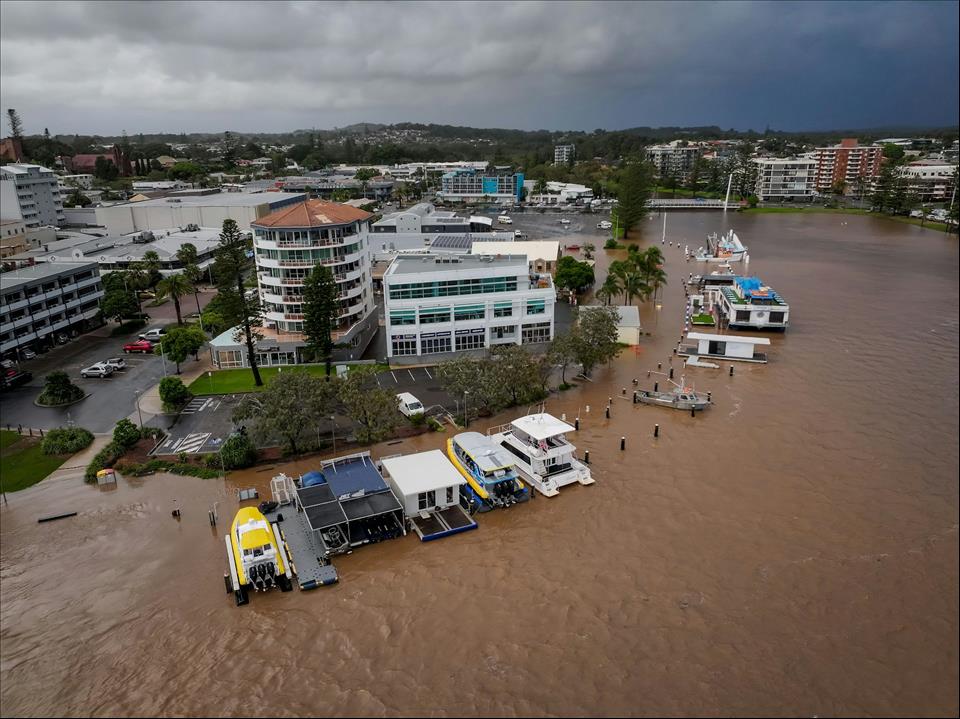
Australia is already prone to natural disasters, which are expected to become more frequent and severe as the climate changes.
Research around the world shows hospital administrators can better plan for how they'd cope if a disaster or terrorist attack wiped out their hospital's capacity to function normally.
NSW Police use a helicopter to rescue residents from their rooftops from floodwaters in Taree, New South Wales. AAP Image/Supplied by Sam Halloran When flood strikes, large parts of the hospital stop working
In March 2022, rapidly rising floodwaters on Australia's east coast posed an imminent threat to Ballina Hospital, on the NSW far north coast.
With a few hours' notice, staff safely evacuated the whole hospital to a nearby high school. This included 55 patients, essential equipment, supplies and medications.
Our study documented this remarkable achievement via seven interviews with doctors and nurses integral to the evacuation.
Several key themes emerged:
-
communication was disrupted : there was no mobile phone reception. Field hospital staff requested a satellite phone, but it was sent without any battery charge or a charging device
staff shortages: flooded roads prevented doctors and nurses from reaching the hospital. However, they could get to the high school field hospital, which still had road access
managing volunteers was tricky: community support was praised. However, there were so many volunteers, security was called to ensure volunteers didn't get into spaces that would compromise the patient confidentiality, privacy and safety
patient tracking was a challenge: it was hard to keep track of vulnerable evacuated patients with cognitive decline or behavioural impairment
transport had to be improvised: cars, buses and taxis were used to transport equipment, medication and supplies
triage for patient transfers and discharging was crucial : health professionals prioritised less critical patients first, as they often make up the majority. By swiftly addressing their needs, staff could then concentrate on the smaller group of patients requiring intensive care.
Some workers, dealing with their own personal losses during the evacuation, had to be sent home. One staff member told us:
Another said:
A third staff member said:
Disaster simulation: when a semi-trailer crash causes a stadium collapseNatural disasters aren't the only kind of catastrophe for which hospitals must prepare.
Our research has also looked at how hospitals might contend with a human-made disaster such as a mass casualty or injury event.
Our team studied a mass casualty simulation exercise at one of Australia's largest public hospitals.
More than 200 hospital staff participated in the three‐hour long exercise, which simulated a semi‐trailer crashing into a stadium grandstand. Some 120“patients” were taken to the hospital with crush, burn, smoke inhalation and other injuries.
In the simulation, clinicians had to adapt quickly. New patients were continuously coming via the ambulance ramp and private cars.
Participants had to make rapid collective decisions on treatment and transfers based on patient conditions and severity.
During the exercise, additional random disruptive scenarios were introduced to test the clinicians' ongoing responses. This included the city mayor repeatedly calling the Hospital Emergency Operations Centre for updates.
Some key challenges included:
-
some of the hypothetical patients died from a lack of critical care equipment
an overwhelming number of minor injuries had to be managed
clinicians were uncertain about how many casualties were en route to the hospital and how many beds to make available for them
a shortage of orderlies to accompany transfers from the emergency department to surgical theatres or for scans
difficulties in keeping track of patients and bed allocations.
We also observed hospital staff adapting to the situation. This included:
-
paediatricians treating adult patients with minor injuries
staff fast‐tracking triage
staff manually ventilating patients using a specialised resuscitation balloon when mechanical ventilation equipment was unavailable
running scans and imaging in batches instead of individually, due to the limited number of orderlies.
Research shows that despite many hospitals having excellent, longstanding hospital disaster management plans, things can still go wrong. After the Fukushima nuclear accident in Japan , nearly half of evacuated stroke and renal failure patients died in vehicles or on arrival to another hospital.
Learning from hospital responses to disasters can help hospitals prepare for the future.
Overall, our research shows many Australian hospitals have excellent disaster preparedness planning. However, some areas require improvement well before disaster strikes. Adapting on-the-fly as your hospital is inundated with floodwater or struck by another disaster means things have been left too late.


Legal Disclaimer:
MENAFN provides the
information “as is” without warranty of any kind. We do not accept
any responsibility or liability for the accuracy, content, images,
videos, licenses, completeness, legality, or reliability of the information
contained in this article. If you have any complaints or copyright
issues related to this article, kindly contact the provider above.


Comments
No comment