

403
Sorry!!
Error! We're sorry, but the page you were looking for doesn't exist.
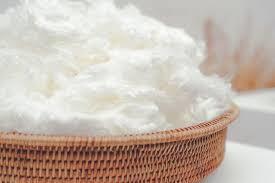
Rayon Fiber Market: Driving Sustainable Growth in the Textile Industry


(MENAFN- stats and research) PUNE, May 19, 2025 (Stats and Research)
Executive Summary
The global rayon fiber market is poised to redefine sustainable textile production, with projected growth from USD 21.4 billion in 2025 to USD 32.8 billion by 2032, reflecting a CAGR of 5.9%. As eco-conscious consumerism intensifies and regulatory mandates demand greener practices, the industry is rapidly evolving. Strategic innovations in closed-loop processes, bio-based fibers, and high-performance rayon grades are shaping the future of apparel, industrial applications, and home furnishings. We present a comprehensive market analysis, segmented insights, and competitive intelligence to showcase the full potential of the rayon fiber market.
🌱 Eco-Conscious Acceleration of the Global Rayon Fiber Market
The global rayon fiber industry is advancing rapidly due to mounting environmental concerns and evolving consumer behavior. Rayon’s biodegradability, combined with performance versatility, positions it as a cornerstone material in the sustainable textile revolution. This shift is underpinned by strong demand for cleaner, greener production methods and functional textiles.
Key Growth Drivers
Sustainable Fashion Momentum: Brands are actively replacing synthetic fabrics with viscose, modal, and lyocell rayon to meet carbon-reduction goals and appeal to eco-aware consumers.
Regulatory Compliance: Stricter policies from regulatory bodies like the EU REACH and the EPA are compelling manufacturers to adopt cleaner, non-toxic, closed-loop manufacturing methods.
Performance-Based Diversification: Rayon’s adaptability for uses in high-performance sectors such as medical textiles, automotive interiors, and industrial reinforcements is propelling its market value.
🧶 Rayon Fiber Types: Functional Excellence in Every Variant
Rayon fibers are available in multiple types, each tailored to different application demands and sustainability goals.
Viscose Rayon remains the most widely used, favored for its affordability, softness, and resemblance to cotton, particularly in mass-market apparel and home décor.
Modal Rayon is lauded for its superior comfort, breathability, and elasticity, making it ideal for activewear, undergarments, and luxury loungewear.
Lyocell Rayon, the most eco-friendly variant, is produced using a closed-loop solvent spinning process. Its high tensile strength and moisture management make it suitable for medical textiles, premium fashion, and personal care.
Cuprammonium Rayon caters to high-end textile applications, offering silk-like texture and superior drape, though its use is limited by production complexity and regulation.
🧵 Yarn Type Analysis: Aligning Texture with Application
Yarn type plays a critical role in determining the final application and performance of rayon-based products.
Filament Yarn is highly preferred in luxury fashion and industrial uses where a continuous fiber structure provides smoothness, luster, and uniformity.
Staple Yarn, made of short fibers spun together, is gaining traction for casualwear and home furnishings due to its texture, strength, and ease of blending with other fibers.
Spun Yarn offers bulk, softness, and comfort, making it suitable for everyday apparel and absorbent textiles such as towels and wipes.
⚙️ Grade-Based Evolution: From Fashion to Reinforcement
Different rayon grades are engineered to serve a variety of strength and durability requirements.
Regular Rayon dominates consumer apparel, linings, and upholstery fabrics thanks to its balanced cost and comfort profile.
High Tenacity Rayon finds its niche in products that demand higher strength, such as sportswear and automotive interiors.
Super High Tenacity Rayon is revolutionizing technical applications like tire cords, filtration materials, and aerospace composites where mechanical resilience is paramount.
🏠 End-Use Insights: Diverse Applications Powering Demand
Rayon’s growth is driven by its usage across several expanding sectors:
Apparel: Comfort-driven, biodegradable rayon fabrics are in demand for shirts, dresses, athleisure, and intimate wear. Fashion brands are prioritizing modal and lyocell for luxury lines.
Home Furnishings: Drapes, bed linens, cushion covers, and upholstery now often include rayon for their softness, sheen, and breathability.
Industrial Uses: Advanced rayon grades are being deployed in automotive reinforcement, filtration, nonwovens, and protective textiles.
Health & Hygiene: The hygienic properties and softness of rayon make it ideal for wound dressings, baby wipes, sanitary products, and medical gowns.
🌍 Regional Dynamics: Asia-Pacific Leading the Green Charge
Asia-Pacific holds the largest share of the rayon fiber market. With expansive textile manufacturing capabilities in China, India, and Indonesia, this region is the epicenter of both production and consumption. Government policies encouraging sustainable textiles further fuel this growth.
North America is emerging as the fastest-growing regional market, driven by increasing awareness of biodegradable materials, investments in lyocell facilities, and a shift toward premium eco-textiles.
Europe maintains steady demand, particularly for certified organic rayon in fashion and healthcare. Stringent sustainability laws are prompting further investment in cleaner production technologies.
🏭 Competitive Landscape: Strategic Innovation at the Forefront
Leading rayon fiber producers are deploying aggressive strategies focused on sustainability, capacity expansion, and performance innovation.
Grasim Industries has pioneered bio-based solvent technologies for modal and lyocell, reducing hazardous waste and optimizing production efficiency.
Sateri is expanding its lyocell capacity through closed-loop systems, prioritizing biodegradable textiles.
Asia Pacific Rayon (APR) has introduced a carbon-neutral viscose line, reflecting a deep commitment to climate-resilient solutions.
Tangshan Sanyou Group unveiled a high-performance rayon fiber tailored for industrial-strength applications.
Emerging players and established giants alike are investing in R&D, nanotechnology, and AI-assisted fiber design to maintain competitive advantages and address tightening global regulations.
📈 Future Outlook: Redefining Textiles Through Innovation
The future of rayon is defined by sustainability, functionality, and traceability. Key industry trends shaping the market include:
Closed-Loop Production: Water and chemical recycling systems are becoming the standard, especially for lyocell and modal fibers.
Biotechnology Integration: Enzyme-assisted processing and genetically engineered cellulose extraction are expected to boost efficiency while reducing ecological impact.
Smart Textiles: Integration of moisture-wicking, anti-microbial, and responsive fiber properties through nanotechnology is creating a new class of high-performance rayon products.
Circular Economy Models: Brands and producers are increasingly adopting traceable supply chains and recycling initiatives that align with global ESG goals.
🔍 Conclusion: Strategic Imperatives for Market Leadership
To lead in the rayon fiber market, companies must:
Prioritize closed-loop, low-impact manufacturing.
Invest in bio-based and high-performance fiber innovation.
Align with circular economy frameworks and sustainable sourcing.
Expand into emerging textile markets with customized product offerings.
Enhance transparency with traceable supply chains and certifications.
Rayon’s evolution from basic textile to sustainable innovation engine marks a transformative phase for the global textile industry. Organizations that embrace material science advancements and commit to ecological responsibility will shape the future of fabric.
Source: Stats and Research
Executive Summary
The global rayon fiber market is poised to redefine sustainable textile production, with projected growth from USD 21.4 billion in 2025 to USD 32.8 billion by 2032, reflecting a CAGR of 5.9%. As eco-conscious consumerism intensifies and regulatory mandates demand greener practices, the industry is rapidly evolving. Strategic innovations in closed-loop processes, bio-based fibers, and high-performance rayon grades are shaping the future of apparel, industrial applications, and home furnishings. We present a comprehensive market analysis, segmented insights, and competitive intelligence to showcase the full potential of the rayon fiber market.
🌱 Eco-Conscious Acceleration of the Global Rayon Fiber Market
The global rayon fiber industry is advancing rapidly due to mounting environmental concerns and evolving consumer behavior. Rayon’s biodegradability, combined with performance versatility, positions it as a cornerstone material in the sustainable textile revolution. This shift is underpinned by strong demand for cleaner, greener production methods and functional textiles.
Key Growth Drivers
Sustainable Fashion Momentum: Brands are actively replacing synthetic fabrics with viscose, modal, and lyocell rayon to meet carbon-reduction goals and appeal to eco-aware consumers.
Regulatory Compliance: Stricter policies from regulatory bodies like the EU REACH and the EPA are compelling manufacturers to adopt cleaner, non-toxic, closed-loop manufacturing methods.
Performance-Based Diversification: Rayon’s adaptability for uses in high-performance sectors such as medical textiles, automotive interiors, and industrial reinforcements is propelling its market value.
🧶 Rayon Fiber Types: Functional Excellence in Every Variant
Rayon fibers are available in multiple types, each tailored to different application demands and sustainability goals.
Viscose Rayon remains the most widely used, favored for its affordability, softness, and resemblance to cotton, particularly in mass-market apparel and home décor.
Modal Rayon is lauded for its superior comfort, breathability, and elasticity, making it ideal for activewear, undergarments, and luxury loungewear.
Lyocell Rayon, the most eco-friendly variant, is produced using a closed-loop solvent spinning process. Its high tensile strength and moisture management make it suitable for medical textiles, premium fashion, and personal care.
Cuprammonium Rayon caters to high-end textile applications, offering silk-like texture and superior drape, though its use is limited by production complexity and regulation.
🧵 Yarn Type Analysis: Aligning Texture with Application
Yarn type plays a critical role in determining the final application and performance of rayon-based products.
Filament Yarn is highly preferred in luxury fashion and industrial uses where a continuous fiber structure provides smoothness, luster, and uniformity.
Staple Yarn, made of short fibers spun together, is gaining traction for casualwear and home furnishings due to its texture, strength, and ease of blending with other fibers.
Spun Yarn offers bulk, softness, and comfort, making it suitable for everyday apparel and absorbent textiles such as towels and wipes.
⚙️ Grade-Based Evolution: From Fashion to Reinforcement
Different rayon grades are engineered to serve a variety of strength and durability requirements.
Regular Rayon dominates consumer apparel, linings, and upholstery fabrics thanks to its balanced cost and comfort profile.
High Tenacity Rayon finds its niche in products that demand higher strength, such as sportswear and automotive interiors.
Super High Tenacity Rayon is revolutionizing technical applications like tire cords, filtration materials, and aerospace composites where mechanical resilience is paramount.
🏠 End-Use Insights: Diverse Applications Powering Demand
Rayon’s growth is driven by its usage across several expanding sectors:
Apparel: Comfort-driven, biodegradable rayon fabrics are in demand for shirts, dresses, athleisure, and intimate wear. Fashion brands are prioritizing modal and lyocell for luxury lines.
Home Furnishings: Drapes, bed linens, cushion covers, and upholstery now often include rayon for their softness, sheen, and breathability.
Industrial Uses: Advanced rayon grades are being deployed in automotive reinforcement, filtration, nonwovens, and protective textiles.
Health & Hygiene: The hygienic properties and softness of rayon make it ideal for wound dressings, baby wipes, sanitary products, and medical gowns.
🌍 Regional Dynamics: Asia-Pacific Leading the Green Charge
Asia-Pacific holds the largest share of the rayon fiber market. With expansive textile manufacturing capabilities in China, India, and Indonesia, this region is the epicenter of both production and consumption. Government policies encouraging sustainable textiles further fuel this growth.
North America is emerging as the fastest-growing regional market, driven by increasing awareness of biodegradable materials, investments in lyocell facilities, and a shift toward premium eco-textiles.
Europe maintains steady demand, particularly for certified organic rayon in fashion and healthcare. Stringent sustainability laws are prompting further investment in cleaner production technologies.
🏭 Competitive Landscape: Strategic Innovation at the Forefront
Leading rayon fiber producers are deploying aggressive strategies focused on sustainability, capacity expansion, and performance innovation.
Grasim Industries has pioneered bio-based solvent technologies for modal and lyocell, reducing hazardous waste and optimizing production efficiency.
Sateri is expanding its lyocell capacity through closed-loop systems, prioritizing biodegradable textiles.
Asia Pacific Rayon (APR) has introduced a carbon-neutral viscose line, reflecting a deep commitment to climate-resilient solutions.
Tangshan Sanyou Group unveiled a high-performance rayon fiber tailored for industrial-strength applications.
Emerging players and established giants alike are investing in R&D, nanotechnology, and AI-assisted fiber design to maintain competitive advantages and address tightening global regulations.
📈 Future Outlook: Redefining Textiles Through Innovation
The future of rayon is defined by sustainability, functionality, and traceability. Key industry trends shaping the market include:
Closed-Loop Production: Water and chemical recycling systems are becoming the standard, especially for lyocell and modal fibers.
Biotechnology Integration: Enzyme-assisted processing and genetically engineered cellulose extraction are expected to boost efficiency while reducing ecological impact.
Smart Textiles: Integration of moisture-wicking, anti-microbial, and responsive fiber properties through nanotechnology is creating a new class of high-performance rayon products.
Circular Economy Models: Brands and producers are increasingly adopting traceable supply chains and recycling initiatives that align with global ESG goals.
🔍 Conclusion: Strategic Imperatives for Market Leadership
To lead in the rayon fiber market, companies must:
Prioritize closed-loop, low-impact manufacturing.
Invest in bio-based and high-performance fiber innovation.
Align with circular economy frameworks and sustainable sourcing.
Expand into emerging textile markets with customized product offerings.
Enhance transparency with traceable supply chains and certifications.
Rayon’s evolution from basic textile to sustainable innovation engine marks a transformative phase for the global textile industry. Organizations that embrace material science advancements and commit to ecological responsibility will shape the future of fabric.
Source: Stats and Research
stats and research
Legal Disclaimer:
MENAFN provides the
information “as is” without warranty of any kind. We do not accept any
responsibility or liability for the accuracy, content, images, videos,
licenses, completeness, legality, or reliability of the information
contained in this article. If you have any complaints or copyright issues
related to this article, kindly contact the provider above.
Comments
No comment