


The Reel Problem: Kashmir Facing Unwanted Filming In Public Spaces


The Reel Problem: Kashmiris Rebuke Unwanted Filming in Public Spaces
By Shoaib Nazir
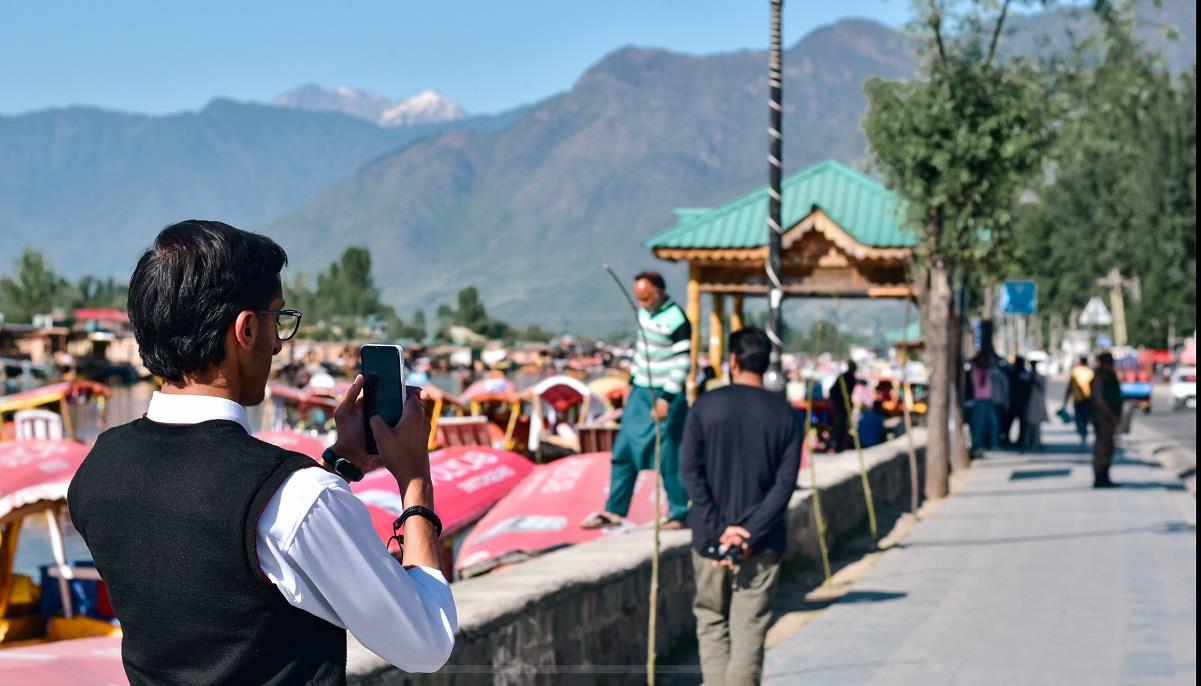
On a clear Friday morning, Seerat Bashir was walking along Boulevard Road in Srinagar when she noticed the cameras. Some tourists and locals had their phones up, some on gimbals, others tucked close to their chests, filming the lake, the shikaras, and the people passing by. Among those people was Seerat.
She didn't stop. She looked down, pulled her dupatta closer to her face, and kept walking with her friend Maryam. The two of them didn't say anything, just shared a glance and quickened their steps.
Later, Seerat would say it felt like she had walked through a stage set, unknowingly part of someone else's reel.“We didn't ask them why they filmed us,” she said.“It's a public place. But still, it didn't feel right.”
It's a feeling being echoed in cities far from Srinagar, in parks in Paris and subways in Seoul, on beaches in Rio and back alleys in Istanbul. The rise of content creators-armed with smartphones, camera drones, and the chase for viral attention-has turned public spaces into backdrops for personal brands. And ordinary people, like Seerat, often become unwilling characters in these digital stories.
Read Also Kashmiris Call Out YouTubers for Showing Them In a Poor Light Man Arrested For Posting Objectionable Content Online In J&K's BhaderwahIn Kashmir, a region that has been historically shaped by visibility and surveillance, the intrusion feels sharper.
In February this year, a video filmed by non-local men from a car window made its way across social media. It showed young Kashmiri women on the street, unaware they were being recorded. The footage went viral. Anger followed, and police filed a case. But for many in the Valley, it was not the exception. It was the pattern.
Technology has moved faster than law. While India's Information Technology Act includes clauses against violating privacy, and the Indian Penal Code addresses voyeurism, enforcement is uneven. Consent is not clearly defined in the context of public spaces. Social media platforms rarely intervene until harm has already been done.
“The non-consensual filming of individuals in public is not just a privacy issue,” said Iftikhar Hassan Samoon, a lawyer at the High Court of Jammu and Kashmir.“It's an ethical collapse. The right to exist in a public space without being turned into content is fundamental.”
The numbers suggest otherwise. Last year, nearly three million tourists visited Kashmir. Aided by a surge in influencer-led marketing, the region has repositioned itself as a peaceful and photogenic escape. The government credits this visibility for the tourism boom. But not all exposure is welcome.
Shakir, who asked not to use his real name, learned this the hard way. He was in Gulmarg with his friend when a stranger's Instagram reel captured them in the background. That night, his sister confronted him.
“She had seen the video before I even knew it existed,” he said.“That moment-my face turning red, not knowing what to say-it's burned into me.”
In a society where privacy is tied closely to honour, even accidental exposure carries weight. Shakir now avoids public places on weekends. If he sees someone filming nearby, he asks them to stop.
Content creators defend their work as harmless or even beneficial. Saqib Majeed, a 26-year-old travel vlogger, believes his videos have helped Kashmir shed its reputation as a conflict zone.“We show the beauty of the land. We bring tourists. Isn't that good for everyone?” he said.
But the line between documentation and disruption is thin. And often, it's crossed unknowingly.
Enam Javeed, a 23-year-old videographer known for capturing life in downtown Srinagar, says he rarely asks for permission.“It's not possible to get consent in crowded places,” he said.“Anyway, people love it. They like seeing themselves online.”
Three years ago, Mureen Shahmiri, another creator, had a different experience. He filmed a quiet reel in a public park. A person visible in the background messaged him later, asking him to take it down. Mureen was surprised, then embarrassed.
“After that, I changed how I film,” he said.“I ask when I can. I blur faces. I don't focus on strangers. It's about respect.”
But awareness is uneven. And the pace of change has outstripped digital literacy. For most people, there is no clear understanding of where their image might end up, or how long it might stay online.
Samoon, the lawyer, believes the solution lies in stronger law and broader education.“Consent should be embedded in our digital habits, just like copyright or plagiarism. People should know their rights, and creators should know their limits.”
In the absence of clear rules, the burden falls on individuals to protect themselves. Some choose confrontation. Others, like Seerat, choose silence.
“I just hope I'm not in someone's reel,” she said quietly, her voice trailing off.
The street that day was alive with laughter and lens flares. Behind the shimmer of Dal Lake and the gentle creak of shikaras, a quieter story was unfolding-one of people who did not sign up to be seen, and of a world that keeps filming anyway.
Legal Disclaimer:
MENAFN provides the
information “as is” without warranty of any kind. We do not accept
any responsibility or liability for the accuracy, content, images,
videos, licenses, completeness, legality, or reliability of the information
contained in this article. If you have any complaints or copyright
issues related to this article, kindly contact the provider above.


Comments
No comment