(MENAFN- AzerNews)

Elnur Enveroglu read more Armenia, which is constantly causing concern to the environment,
terrorizing not only people, but also nature and ecology, which is
an integral part of it, has been on the agenda in recent days with
the metallurgical plant that it started to build illegally in the
area bordering with Azerbaijan's Nakhchivan Autonomous Republic
(AR).
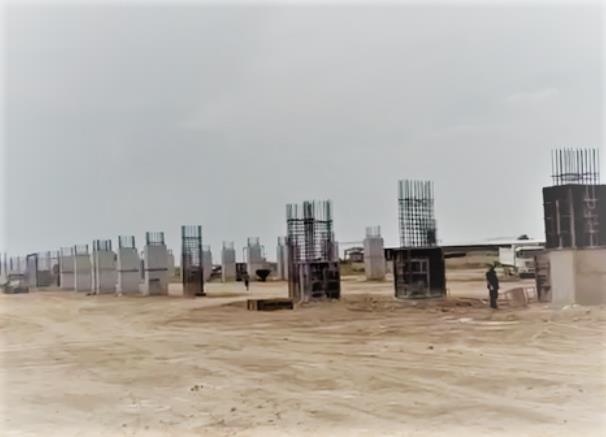
Armenia intends to continue the environmental terror it has
carried out in our occupied lands for more than 30 years at the
border with the Nakhchivan AR. According to estimates, the annual
production capacity of the aforesaid metallurgical plant built in
the village of Arazdayan is over 180,000 tons. This means quite a
lot of waste and toxic gas. Although the Azerbaijan Republic has
repeatedly appealed to international organisations, no serious
measures have been taken in this regard. Despite all this,
Azerbaijan cannot turn a blind eye to this kind of environmental
crime.
It should be emphasized that by building a large metallurgical
plant in the area, Armenia once again grossly violates
international legal norms and principles, especially the Convention
of the UN Economic Commission for Europe on environmental impact
assessment in a transboundary context. According to the convention,
if such projects have a negative environmental impact on the
territory of other countries, this activity should be agreed with
the relevant institutions of that country. In other words, Armenia,
as a member of the Espoo Convention, had to ensure the
participation of our country in the procedure of assessing the
impact of the project on the environment before starting the
mentioned activity. However, the so-called Yerevan authorities are
accustomed to such illegal actions, so they persistently continue
their activities that can cause serious damage to the
environment.
The Republic of Azerbaijan respects the internal affairs of each
country. Armenia's internal economic and political issues also
apply here. However, if the problem is related to the proximity of
the border and the rivers, lakes and other natural elements shared
between the two states, Azerbaijan's indifferent approach here is
considered impossible. Of course, if the pollution caused by the
metallurgical plant is not important for official Yerevan, and the
health of its population is not important, then they can build the
plant far from the borders of Azerbaijan, in the depths of
Armenia.
Armenia should not forget that the territory of Arazdayan, where
the metallurgical plant was built, is also the historical land of
Azerbaijan. For this reason, the sensitive approach of the
Azerbaijani public to the ecological situation of these areas is
understandable and logical. The members of the West Azerbaijan
community, who were once displaced from their homeland, will return
to different regions of Armenia, including Arazdayan, when the time
is appropriate.
The mentioned metallurgical plant also seriously threatens the
already scarce drinking water resources in the region. World
experience shows that 4 thousand cubic meters of water are used to
produce one ton of non-ferrous metal. Only 34% of metallurgical
industry waste is completely disposed of, while the remaining 66%
remains forever in the environment as waste.
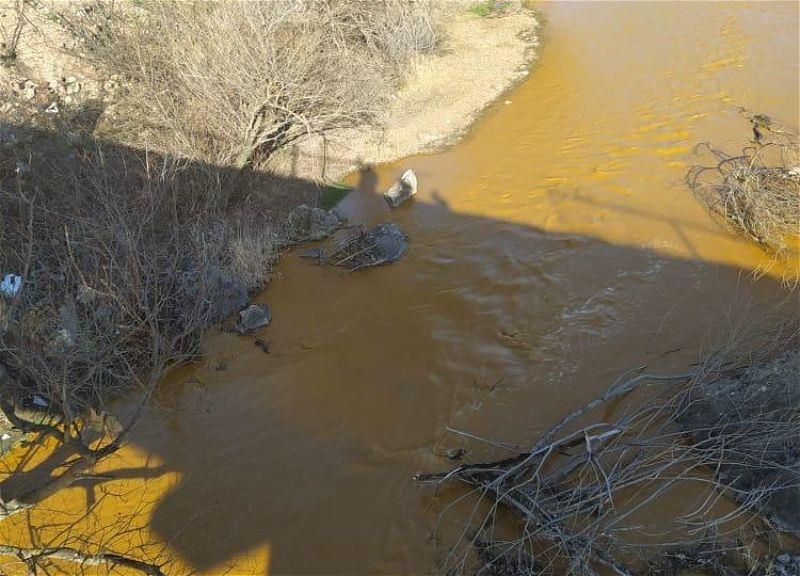
The pollution of other environmental terrorist incidents
committed by Armenia, especially Okchuchay, has been on the agenda
for a long time.
The Okhchuchay River, an 83-km left tributary of Araz River, has
a basin area of 1,175 square kilometers. The river begins on the
Zangazur ridge's Gapijig mountain (3,285 meters).
The river flows through liberated Zangilan into the Araz River,
with the majority of it located in Armenia's Syunik region
(Azerbaijan's historical Zangazur District).
Because of transboundary water flows, approximately 70 percent
of Azerbaijan's groundwater resources are formed in neighboring
countries. The transboundary river Okhchuchay, which serves as a
collector of industrial waste in Armenia, is constantly polluted by
waste from the Kapan and Gajaran mining industries.
Industrial wastewater is discharged into the river untreated,
which occasionally increases the level of pollution. As a result,
these water resources are deemed unfit for use on Azerbaijani
territory. Furthermore, Okhchuchay flows into Araz, the
second-largest river in the South Caucasus, and pollution has a
direct impact on its quality and water reserves.
On April 12, President Ilham Aliyev stated at a meeting
dedicated to the results of the first quarter of 2022 that a
special report on Armenia's environmental terror against Azerbaijan
was prepared and adopted a few years ago by the Parliamentary
Assembly of the Council of Europe.
He stated that the rivers in Azerbaijan's Karabakh were occupied
and mercilessly exploited by Armenians.“The catastrophe of the
Okhchuchay River is before the eyes of the world now. We have
raised this issue,” the President said.
“Cronimet” is the company that contaminated the Okhchuchay
River. It is a large company, and according to some foreign media,
it had an illegal business relationship with representatives of
Armenia's former president Serzh Sargsyan, the former junta regime
using corruption schemes. Together they operated the copper plant
there.
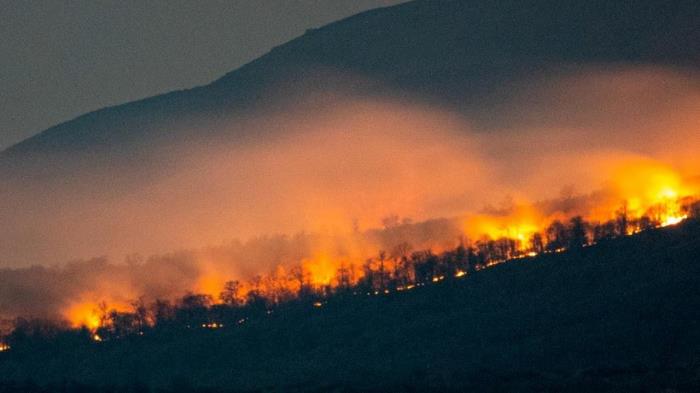
All the mentioned facts once again show that Armenia is not an
independent state in the region, but a predatory and terrorist
regime that is fighting for the acquisition of what is temporarily
in its hands. When Armenia left the occupied territories after the
Second Karabakh War, the damage they caused to nature was a scene
that showed their true character.
---
Elnur Enveroglu is AzerNews' deputy editor-in-chief, follow him
on @elnurmammadli1








Comments
No comment