(MENAFN- AzerNews)

Ayya Lmahamad read more The World Bank presented Azerbaijan Country Economic Memorandum
(CEM) report at ADA University in Baku on December
8.
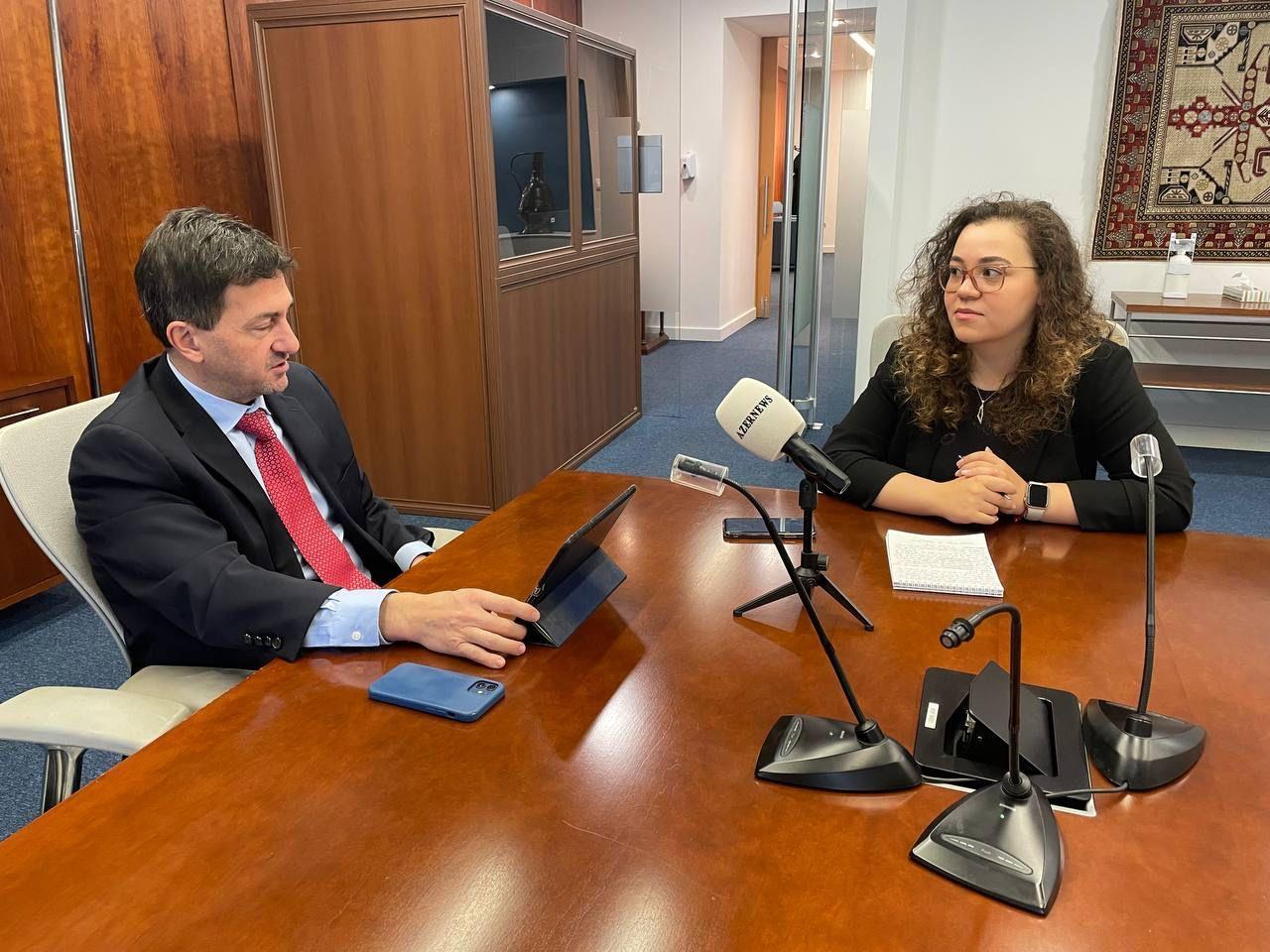
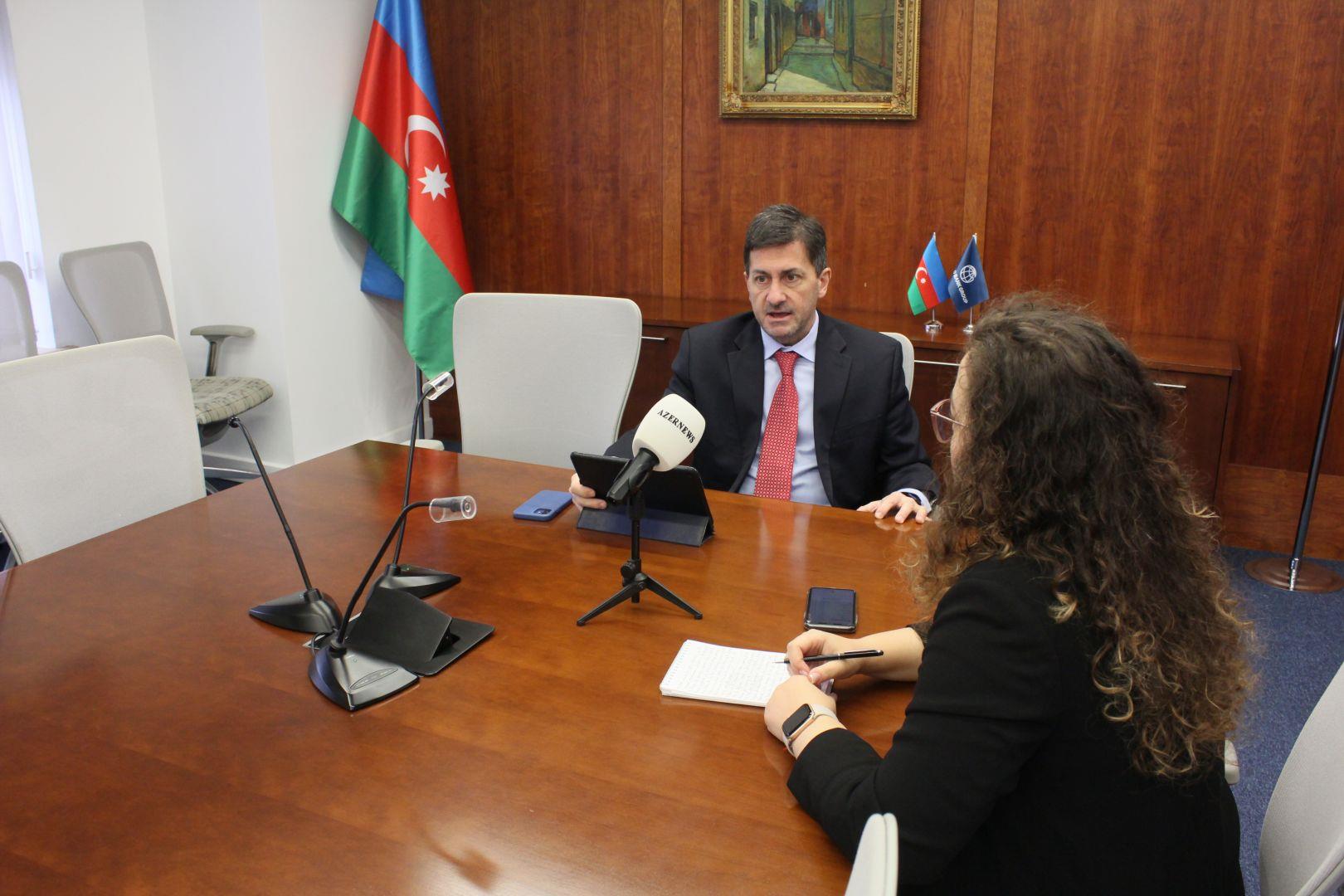
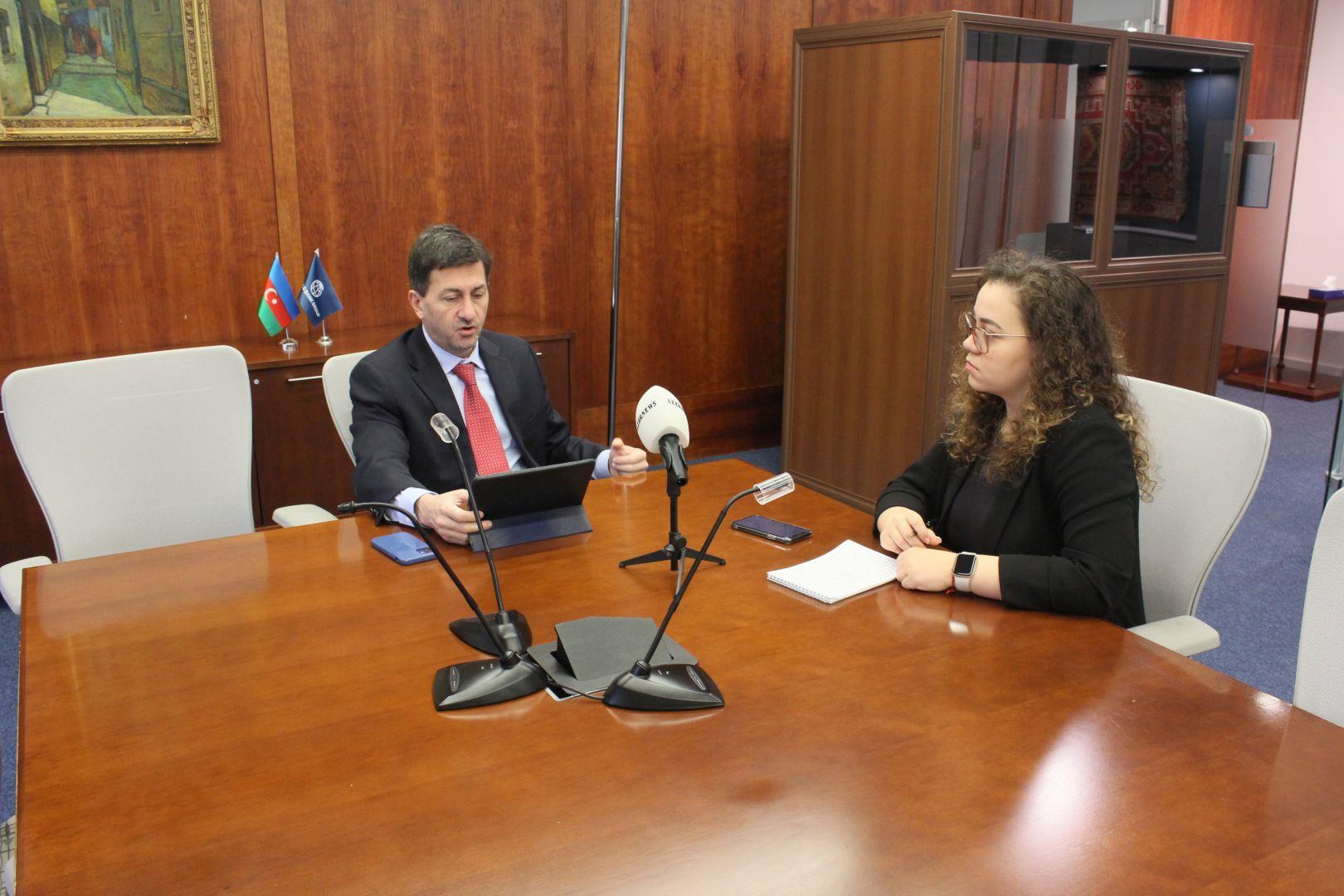
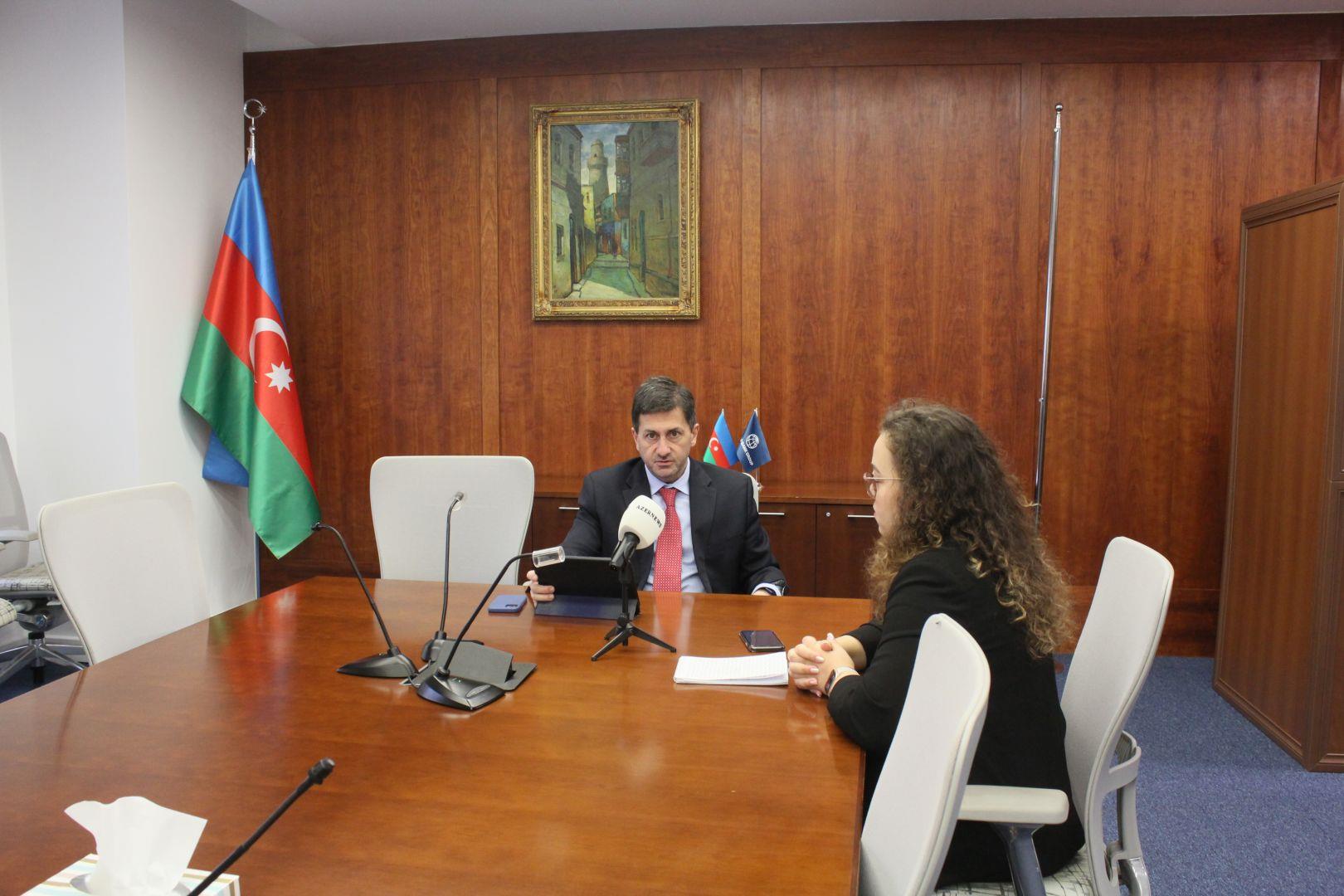
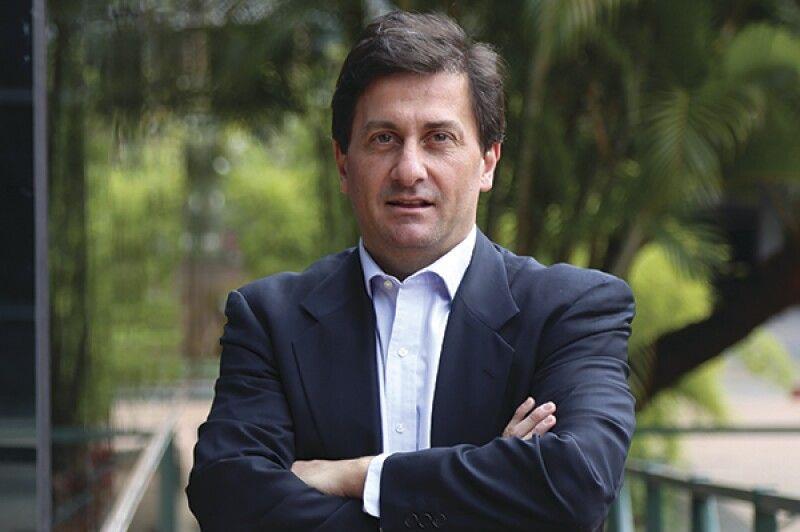
Ayya Lmahamad of Azernews in an exclusive interview Antonio
Nucifora, Practice Manager, Macroeconomics, Trade and Investment at
the World Bank, spoke about the findings of the report,
Azerbaijan's current macroeconomic situation, key drivers of the
economic growth, the country's economic integration into the global
one, as well as gave recommendations on how to improve the economic
situation, how to be better prepared to certain global challenges
and how to achieve objectives of the national priorities
roadmap.
Q: What would be your assessment of the current
macroeconomic situation in Azerbaijan?
A: I think the Azerbaijani economy is doing
very well currently. We know that the economic growth has been 5.2
percent year-on-year by the end of the third quarter, as energy
sector output fells somewhat, but non-energy sector growth remains
very strong at about 10 percent year-on-year in September. Looking
ahead to the end of the year, we still see growth, maybe not as
strong as the third quarter, but still around 4.5-5 percent, so
very significant.
Inflation, however, is quite high, it surged in September up to
about 15.5 percent again of the twelve months, and this continues
to be a sort of area of concern. Inflation rose about 3 percent
month-on-month in September. And the concern is really in food
inflation, which has been rising by almost 22 percent over a year.
Now, the authorities, of course, are aware of this, the Central
Bank has been tightening monetary policy recently by a quarter of a
point in November, taking the policy rate to 8 percent. So it is
being managed and it is something that continues to need
attention.
The trade surplus is very healthy. There is a trade surplus of
almost 33 percent from the beginning of the year to September,
driven mainly, of course, by oil and gas, and this is over seated
strong growth in imports.
Also in terms of the public finances, the performance has been
very strong, driven by the high global energy prices. There has
been a strong increase in revenues, but also spending has been
boosted. Overall the government has recorded, as of September, a 2
percent surplus. And finally, I think credit to the economy remains
quite healthy since there is a lot of activity and a lot of
investment plans with credit growth by about 9 percent in real
terms and about 24-25 percent in nominal terms over the first nine
months of the year. And the banking sector remains quite
profitable.
Q: Though the country's economic development is tightly
linked to global oil prices and energy resources as a whole,
Azerbaijan has been experiencing economic growth. In your view,
what factors and sectors of the economy have been key drivers for
the economic growth in the country over the recent
years?
A: I think there are two or three factors that
are worth noting. The first one is that there has been strong
non-oil, non-gas, non-energy sector growth, which has been
supporting a healthy level of growth. Part of this has been the
recovery of the traditional services from the Covid period, from
the restrictions. There has been a bounce back, you know, we are
talking about transport, hospitality, also ICT, quite a big bounce
back and that has contributed, as restrictions were removed.
Secondly, there was a lot of, what economies called pent-up
demand. There is a return to spending, which is boosting
consumption, and this has also been complimented, as I mentioned
earlier, by an increase in government spending. So this spending is
helping the economy to increase economic activity. The war in
Ukraine has had muted somewhat positive impact on the economy in
Azerbaijan, mainly because of the transport sector. So a lot of
activity has been rerouted in a way through Azerbaijan. And so the
result of the role also has been pushing tourism and hospitality,
again pushing ICT and non-oil manufacturing, as a lot of the
demand, a lot of the activity has shifted from, in a way Europe
towards Central Asia and the Caucasus.
And finally also the benefit in terms of pickup in remittances
from Russia, including thanks to the strengths of the ruble in
recent months. So all of these factors together have contributed in
the last couple of years to accelerate the recovery from Covid and
to put the Azerbaijani economy on a good growth footing.
Q: How can Azerbaijan secure and sustain economic growth
over the long run? What are your policy recommendations for
improving the economic situation in the country?
A: This is a bigger challenge, and of course,
we all know that the growth model of Azerbaijan is looking ahead
and is reaching its limit; it's of course in the government
strategy. There is a need for a new growth model which is centered
on private sector-led growth. And so creating the conditions for a
dynamic non-energy related, so beyond energy, the private sector is
fundamental.
At the World Bank, we have recently launched a report that looks
at the economic challenges for Azerbaijan and the economic future
of Azerbaijan. And we see that there is a risk that over the long
term the economic growth will slow down, to almost 1.5 percent per
year, if no changes are done. At the same time, on a positive
message, we see that there is a way to very much increase this
potential by pursuing this transformation of the economic growth
model, such that per capita incomes could be 40 percent higher, you
know, looking ahead also by 2050 if the right policies are
adopted.
And the key is really this - moving towards the private sector
that can be productive, more productive than the current
state-owned enterprises, which are present in most sectors of the
economy, and also looking at the economy which is well integrated
into the global system. This is important because we know that
worldwide, not a single country with a population of 10 million,
such as Azerbaijan and below, not a single country has been able to
make it to high-income status without being substantially
integrated into the global economy. And the reason is very simple -
market access. You know, when you are a population of relatively
small countries you do need access to the global markets in order
to be able to grow.
The other thing that you need is to be competitive in those
markets. And so, in order to have a competitive private sector, you
need to create a level playing field removed to distortions, and
facilitate the contestability of the markets domestically, which
will indeed make firms efficient and able to sell in the global
markets, and gain market share. And for that, you also need access
to skilled labor. So investment in human capital is
fundamental.
And, of course, this also matches the opportunities that are
coming from the digital economy, the innovation economy. So
creating a private sector that is dynamic, with a level playing
field, opening up the economy to the global markets, investing in
human capital and digital, and I would say also that, related to
all of these, in terms of integration is creating an environment,
which is attractive to investment, also foreign investment.
Because, nowadays, with the highly globalized world that we have,
most of the trade and integration is run to the global value
chains, and that is really led by the foreign investments, that
finds it attractive to produce one part of this big global value
chain into the country. And so that global investors bring in the
knowledge, bring in the contacts, the ability to then sell
globally. And so, having an environment, which also enables and
attracts foreign investors is important.
So all these pieces are important, the integration, the climate
for investment, including foreign investment, the domestic
competition and the level of playing field, and also the human
capital. There is one final point that I would like to mention,
which is the government is already investing in the direction of a
green economy with renewable energies, and I think that this is
very much is also a part of the future. So when I look at the
prospects, at the potential of Azerbaijan in the future, I think
that this area will be fundamental, because it is an area where the
entire world is moving. And for Azerbaijan, of course, it is both
an opportunity and also a necessity, in terms of changing the
economic growth model.
Q: I think, you already partially mentioned the answers
for our next question, as it is linked somehow with the previous
one, but maybe you would like to add something else. So, in
February 2021, the government's“Azerbaijan 2030: National
Priorities for Socio-Economic Development roadmap” was approved,
which envisages the vision for the country's long-term development
priorities. In your opinion, what Azerbaijan needs (to do) in order
to achieve these objectives?
A: First of all, yes, as you said it is linked
a little bit to my previous answer. In this report, that we
presented, it is called Azerbaijan Country Economic Memorandum, we
had several pillars to achieve the new growth model. And it is in a
way very much aligned with supporting the sort of priorities, the
vision of the government for the indeed the 2030 national
socio-economic development roadmap. What we see, is that at the
core is indeed achieving this transformation in the role of the
state. In order to achieve the new growth model, that we talked
about, there is a need to achieve the transformation in the role of
the state, from the state that is an active investor and
participant in the economy to a supportive state, that is focused
on providing the right environment, as we said, for the private
sector, for the investment, for the ability to integrate globally.
And as part of achieving this, in the CEM report for Azerbaijan, we
outlined three important pillars.
The first one is indeed strengthening the economic management to
reduce macroeconomic volatility so that we avoid a sort of booming
by cycle which is often associated with the energy prices cycles.
So that is important to create an environment that is secure, that
is stable, that can facilitate vision and the investment of the
private sector outside of the energy sector, or outside of the oil
and gas sector, I should say.
The second is indeed improving productivity in the non-energy
sectors. This passes through a rethinking, and reforming of the
state-owned enterprises, to make SOEs more efficient, to improve
their financial performance, and to ensure that there is what
economies called competitive neutrality, meaning that you don't
want to put the SOEs in the privileged space by giving them
support, by giving them special advantages because that will make
it impossible for the rest of the private sector to compete, and
therefore to grow. So if the objective is to make the rest of the
private sector grow you need to make the right environment, which
doesn't mean removing the SOEs but means having the SOEs compete
with everybody else and enable this healthier economic
environment.
And this is indeed the key to supporting a dynamic private
sector, and then there are also a number of reforms beyond these
fundamentals that are needed. Access to finance we know is a key
challenge, especially for smaller enterprises. We talked about the
importance of skills, which is really significant core strength for
the private sector in Azerbaijan, and as I mentioned it is both
important for the private sector, and also important in terms of
taking advantage of the digital economy, so more innovation, IT
based future markets. So this is on top of the basic that we say
the integration, the market competition, the investment climate,
more general.
I talked about skills, I just want to zoom it, because the third
pillar is really focusing on the importance for Azerbaijan to
improve basic education, to promote equitable access to early
childhood education, and also to improve the quality of the the
technical education. So all of these pieces really come together,
they are aligned with the government strategy in terms of achieving
this transformation of the growth model, and they pass through this
macroeconomic management to avoid the boom and bust, creating the
environment for the private sector and productivity in the
non-energy sector, again through the SOEs and through the actual
support system that is needed for the private sector to grow, and
really zooming in and strengthening the human capital and the
education side.
Q: We often see certain global challenges and trends
that can dramatically affect both individual and world economies
and an example of which are challenges posed by the COVID-19
pandemic. What would be your recommendations for Azerbaijan to be
better prepared to cope with such trends in years to come and
overcome the ones at hand?
A: It is true that we live in a very uncertain
world. In fact, in the international media, I have seen the
increased use of a new word- polycrisis. Polycrisis, as to say, at
the moment the countries in the world are facing a combination of
multiple crises happening at the same time. You know, it is
pandemics, climate shocks, wars, changes in policies, and shifts in
geopolitics. So, as you said, this creates an environment, which is
much more difficult to manage for governments and also for
individuals and companies, and where this ability to cope with
risks and uncertainty becomes fundamental. Now, there are specific
trends, and I would like to talk a bit about climate and risks
related to climate, because I think that it is relevant for the
world as a whole, but also, particularly for Azerbaijan, but first
let me answer the more general question that you gave.
I think in the world, for a country it is almost the same as for
the household. When you are in a risk environment you want to build
up your buffers. And you want to have systems, which are more
resilient. So, what does this mean in practice for an economy? It
goes back a little bit to the same recommendation we had. You want
to be diversified. So if the shock is on one of your activities,
you got many others when you are not vulnerable. You want to be
diversified in production and you want also to be diversified in
the trading partners, for the same reasons, so that you can
readjust and reallocate. So that's important. You want to have
strong buffers. Buffers mean in practice from the country's point
of view having good physical reserves, and good foreign exchange
reserves so that you can step in and complement or mitigate with
your own reserves when there is a shock coming. So I think these
are some sort of general basics. And then there is of course a more
strategic approach to counteracting this more uncertain world.
In today's world, from the pandemic, one thing that came out of
the analytical work, also by the World Bank, is that the countries
that were more integrated into the global economy were the
countries that recovered much faster. And it was interesting
because the integration acted both as a transmitter of the shock
and also as a mitigator of the shock. You know that the pandemic
started in China, then came to Europe, to Italy, etc, and then
moved globally, so what happened was that countries that were more
connected, or if you will depend on trade with those economies were
initially much more affected. However, countries that were globally
integrated were then able to very quickly take advantage of the
recovery in whichever part of the world was happening first. So,
global integration rather than just being selective integration
helped those countries that were more integrated to take advantage
of the global system and recover faster. So, that is a good
strategy for being more flexible.
Then there is something else that I think is important, which is
climate. Climate is important for Azerbaijan in two ways. First is
because Azerbaijan is actually very exposed to climate risks. We
know it from the increase in temperature, we know it from the
increase in droughts, and we know it from the fact that the
Caucasus glaciers are melting. And this of course has implications
for agriculture and also has implications in terms of climate
shocks, as the system changes. Azerbaijan is ranked, because I
think it is about 120-150, I can look at the exact number, in terms
of exposure to climate risk, it is very exposed. So there are some
direct challenges for Azerbaijan, which call for more attention to
climate change, mitigation, and adaptation and also in interest to
have this issue resolved, not just nationally but globally.
Now, in addition, of course, this challenge of climate change is
here to stay with us, in the world. And so, countries, as you know,
are moving away towards the greener, more renewable type of energy
use, and within that, that is going to affect also Azerbaijan
directly, because it is an energy, oil, and gas-dependent economy.
So within that, the imports are again shifting to the new growth
model, and are accelerated. So that megatrend which brings risks
but also brings in a way some certainty, which is the need to
adjust to it, is fundamental for Azerbaijan because it reinforces
the importance of making this change. And again I think this is
well-recognized by the authorities. They are investing in the
renewables and green economy and shifting the country in that
direction. And this is important, this is in line with the reading
of the world of the future.
Q: So you already mentioned the importance of
integration of every country's economy into the global one. What is
your take on Azerbaijan's efforts to integrate its economy into the
global one? Azerbaijan has properly integrated into the global oil
and gas markets, though this cannot be said about the non-oil and
gas sector. Are we right to this end? And how this disintegration,
if this is the case, affects economic growth?
A: I go back, first of all, to the importance
of this. I mentioned before, there is no country in the world,
ever, that has achieved high-income status, a country with a
population of 10 million or less, without being integrated into the
global markets, without having unrestricted access to the global
market. So that's why integration is so fundamental. And yes, we
are not talking about oil and gas, we are talking about the economy
as a whole. This is the driver, this is why it is important for
Azerbaijan in its aspiration to move to high-income status, to
improve the welfare of its population. Global integration is to be
a part of it. We know, as you said, it is integrated into the
energy sector, but it is only limited to the energy sector.
Because the energy sector accounts for 90 percent of total
exports. And when we look at non-oil and gas, it is very few
exports, but also in addition very low value-added exports, which
is evidenced also by the country's low export complexity. What do I
mean? I mean that a lot of the non-oil and gas exports are
essentially focused on agricultural exports, we talking about
tomatoes, nuts, and fruits in general, and most of it is really
focused on very few countries. For instance, all the tomatoes go to
Russia, and half of the cotton goes to Turkiye. So it is both
non-high-value added products and also going to very few partners.
For example, all the go goes to Switzerland.
That makes the integration both thin and vulnerable, as we said
before, not diversified in terms of products, in terms of trading
partners, and also with limited value added. I was talking about
the low complexity. The University of Harvard has got, what they
are calling, the complexity index. They look at how sophisticated
are the products that the country exports. And Azerbaijan is very
low in the ranks, it is again about 120 out of 150 countries. So,
there is room to make a progress.
And then the question is ok what can Azerbaijan do to increase
the quality of its integration? We look at several aspects. One is
trade policy. In Azerbaijan tariff, what we call, the most favored
nation tariff, the MFN tariff, is still quite high, on average it
is about 8.7 percent. It is very high for the region. I think only
Turkiye goes higher in tariffs. But largely, globally the tariffs
came down quite significantly and that's helped global
integration.
Second, the obvious point, is Azerbaijan is still not a member
of the World Trade Organization (WTO). And there are enormous
benefits, and potential benefits associated with WTO accession
because it opens access to a new market and it helps bring
efficiency gains in the non-energy sector, which as we said, is one
of the goals for the overall strategy. As part of this, Azerbaijan
has signed some trade agreements with a few countries, including
Georgia, Russia, Ukraine, and other CIS countries. It also got a
trade agreement with Turkiye, although the scope is relatively
limited.
But beyond this, actually, currently, Azerbaijan has got very
limited options to expand its non-energy exports to new markets.
So, in this context, we can say that Azerbaijan can revamp, can
improve its trade policy to increase global integration by
rethinking the tariff policy and by accelerating the WTO
membership. Azerbaijan got observer status in 1997 and started the
negotiations for accession in 2004 but since then the negotiations
have stalled. So to restart in a way, to reaccelerate the process
of membership, and also by signing the trade agreements, beyond the
WTO accession, with more potential export partners.
There is one more point that I want to mention, which is related
to the recent geopolitics and the war in Ukraine. Azerbaijan sits
in a very strategic position. The strategic passage or link between
the East and West. In the past, before the war, most of the trade
between Europe and China was passing through, what we call, the
Northern corridor, essentially passing through Russia. Now this, of
course, has been impaired by the war. And there is another
corridor, which we call the Middle Corridor, which essentially
passes through the Caucasus and Central Asia. And we have seen
already the substantial increase in trade being rechanneled through
the Middle Corridor.
This is a great opportunity because it cannot just take
advantage of the transit shipment, but can also encourage firms to
settle in Azerbaijan because it then sits on the trade route. So we
are talking about integration in global value chains, which could
be an additional factor that could encourage firms to settle to
invest in Azerbaijan, put here their production hub because they
are linked to the global markets, through this Middle Corridor.
Now, to fully gain and utilize the potential of the Middle
Corridor, however, to meet this increasing demand for cargo
shipments, right now there are some core strengths, which are on
the infrastructure side, there are some gaps in the corridor, and
what would need to be coordinated, especially with Georgia and
Kazakhstan, in terms of some of this infrastructure investments,
and then there is also a need to simplify the trade and border
procedures, both for trade in and out of Azerbaijan and also even
exclusively for transit shipments, to enable this corridor to go
through. So this is a great opportunity at the moment which can
leverage the strategic position of Azerbaijan geographically in the
world.
Q: That's all for the questions from our side, but maybe
there is something else you would like to add or share with us and
our readers.
A: I think what I want to do is to leave a
little bit of an overarching message in the end. Azerbaijan has
transformed its economy since its independence. Per capita income
has increased 5 fold between 1995 and 2019. Poverty has reduced
dramatically from 49 percent to less than 5 percent over the 25
years period. So, economically this is really impressive progress.
And the impressive growth performance, as we said, in the past
relied on the two pillars- the oil and natural gas trends and the
state-driven investment. And as we said, as we look ahead, we see a
number of headwinds.
We talked about the decline in a way in fossil fuel consumption,
because of global factors, and the climate change happening
globally. We also see that there is a slowdown in global growth. In
the past decade, the global growth was about 3.3 percent, while
looking ahead it is going to slow down to 2.2 percent on average.
This means also less demand for everybody in the global value
chain. This is going to make it more difficult for countries to
grow fast. In Azerbaijan also, we see, an aging population, and the
demographic is less favorable than it was in the past. And as you
said earlier, the more risky environment also. So all of these
factors call for the diversification of the economy, for a new
growth model, with the private sector at the center. This is fully
aligned also with the government's socio-economic development
strategy for 2022-2026.
And here again, the key message is this - there is an
opportunity for Azerbaijan to continue to transform itself by
adopting this new growth model, such that per capita income could
increase by over 40 percent by 2050 compared to the non-reform
baseline. And that's really what we give as a message in our
Country Economic Memorandum, which is indeed, through the
transformation, through the reforms which open up for the dynamic
private sector, there is a sort of very promising future to
continue the path of impressive growth performance of
Azerbaijan.
--
Ayya Lmahamad is AzerNews' staff journalist, follow her on
Twitter: @ayyalmahamad
Follow us on Twitter
@azernewsaz
Tags: azerbaijan world bank economy inflation economic growth energy sector transportation trade surplus banking economic integration macroeconomic situation in azerbaijan market access non-energy sector human capital





Comments
No comment