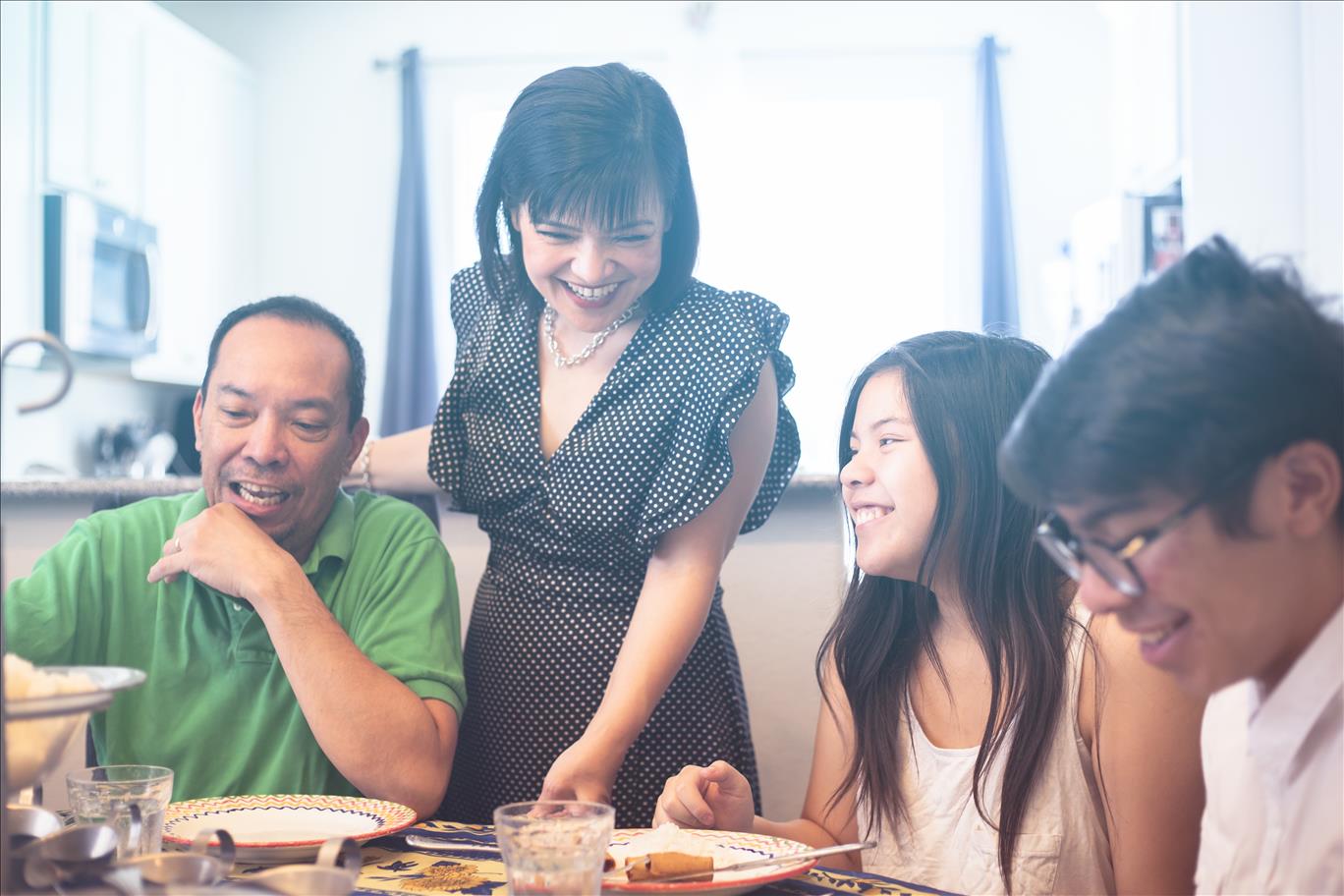
(MENAFN- The Conversation) Immigrant families in the U.S. are extremely resilient. Yet some immigrant parents struggle to raise children who can thrive in their new country's culture. Whether they are dealing with a language barrier or economic challenges, immigrants who bring their kids to the U.S. – or who become parents after arriving – face unique challenges American-born parents don't.
I see this often in my work as a general pediatrician at Children's Hospital Los Angeles and an associate professor of clinical pediatrics at the Keck School of Medicine of the University of Southern California. As the daughter of immigrants from the Philippines, I partner with parents, grandparents and key leaders and organizations in my community to evaluate and implement programs that optimize parent-child relationships in families of Filipino descent.
Filipinos are the in the United States.
Filipino American young people face challenges similar to those faced by all kids in the U.S. today, including increasing .
But people of Filipino heritage are of the U.S. to seek mental health help. Over the past decade, the Filipino community in Southern California has mobilized to – in the process creating the to meet those needs. As part of its efforts, the initiative offers parenting workshops, in which our team of health and mental health providers teach adults to build stronger parent-child relationships during the kids' school-age years.
When working with Filipino parents, we encourage them to use positive parenting strategies while also focusing on the strengths of our Filipino upbringing.
After participating in these workshops, parents report and increased use of praise with their children, compared with parents who have not completed the workshops. In addition, the children of these parents report .
Encourage kids to talk about feelings
Research is clear: When kids are able to talk with their family about their feelings, they are that family members stand by them during difficult times. This is an example of a positive childhood experience that leads to healthier adult relationships and fewer mental health problems in the future.
But as in many cultures, about their feelings. This is likely related to . Parents who can do this can as children, and into their adult lives.
This could start with and acknowledging that their emotions are real. For example, children can benefit from hearing adults say to them,“I can see that you are very upset. That must have been hard for you, and I can see you are making an effort to try again.”
Teach kids about their unique culture
Many immigrant communities are into U.S. culture. At times, this can give kids an impression that they should be ashamed, or would be left out, if they embraced their heritage.
For Filipinos, this feeling can be made worse by the Philippines' history of being colonized, . Many Filipino youths in the U.S. are not raised to celebrate their own history and culture, for reasons that include racism, discrimination and . They therefore do not learn about what makes Filipino culture unique and beautiful. Those with less cultural pride can be and poorer mental health.
Parents can foster cultural pride and help young people participate in community traditions and activities that highlight their heritage. For instance, in August 2022, I watched the movie“” with my children and other family members on the big screen.
It is the from a . Produced by Steven Spielberg's company Amblin Entertainment and distributed by Universal Pictures,“Easter Sunday” stars several Filipino American actors – including comedian Jo Koy and Rodney To, an actor and professor in the USC School of Dramatic Arts – playing their own ethnicity.
Watching this movie felt like home for me and my family, because it reflected our experiences growing up in an immigrant family. In addition, given that October is Filipino American History Month, attending events that celebrate Filipino American contributions to the U.S. and Filipino culture are ways to promote ethnic pride.
Celebrate the strengths of your culture
The Filipino community in the U.S. has a lot to be proud of. are essential health care workers, for instance. During the pandemic, workers both in health care and in other fields have mobilized and volunteered countless hours to raise awareness about the , and about the need for for the Filipino community during the pandemic and beyond.
That's just one way many Filipino Americans express the ,” meaning helping others without expecting anything in return. Parents can teach this value by pointing out examples when it is done and by modeling it in their own behavior.
Parenting is the hardest job I know. While parents can't control everything that happens to our children, we can influence and be responsible for our relationships with them and commit to continuous improvement.
We can start by learning positive parenting strategies, such as encouraging our kids to talk about their feelings and helping our kids to learn about and value our culture. By focusing on creating safe havens and positive environments within our homes, we have the power to foster open communication within our families and within our young people.














Comments
No comment