

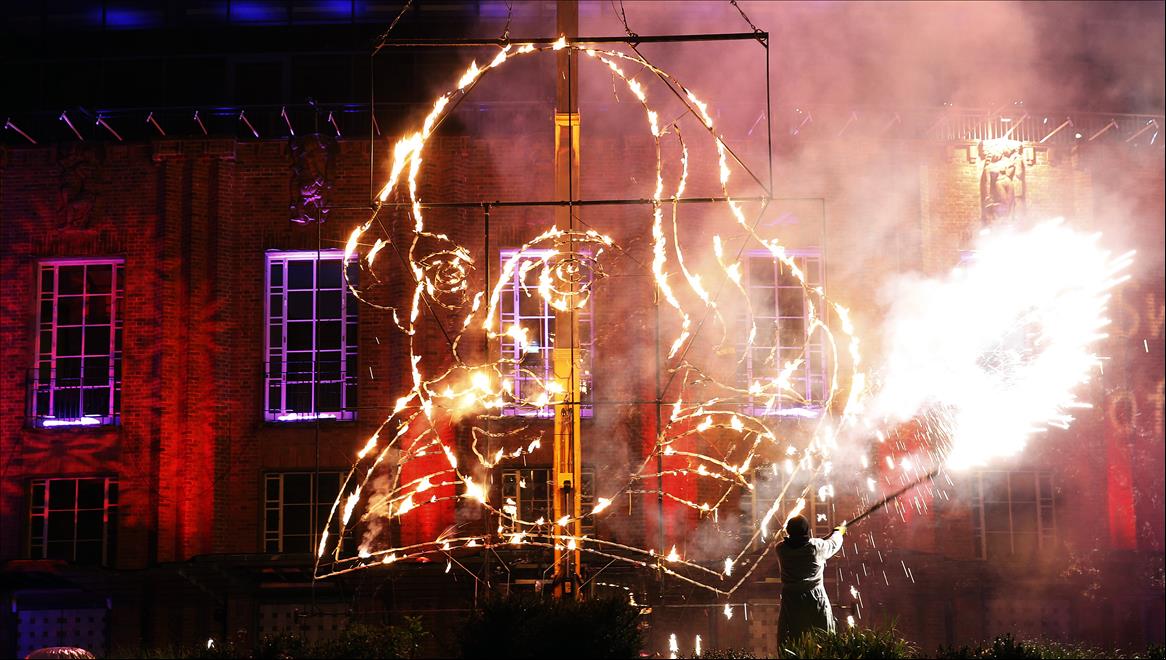
It's Time To Take The Curriculum Back From Dead White Men


Dead white men rule the roost at South African and British universities. They preside over open spaces and lecture halls. They clog up reading lists and dominate the syllabus, particularly in subjects like philosophy and English literature.
In eight years of university teaching in the United Kingdom and South Africa, I have had to cover works by Malory, Shakespeare, Tennyson, Eliot, Sophocles, Ovid, Homer, Beckett, Joyce, Hopkins, Heaney, Anouilh and … more Shakespeare. In all that time, I've been required to teach literary texts by just three women, also dead and white: Sappho, Virginia Woolf and Jane Austen.
Outside of the courses I have designed myself, only one person of colour – – has featured in my required teaching. Academics can suggest additional texts and offer optional modules but not all students will delve deeper in their own time or explore authors not included on the required reading list.
In South Africa and the UK, students who want diverse, transformative education are growing increasingly restive. Their first target was not an author or theorist, but an entirely different sort of dead white man.
Toppling Rhodes from his plinthFor 81 years, a statue honouring British mining magnate, politician and committed colonialist Cecil John Rhodes occupied a perch on the University of Cape Town's (UCT) campus. But on March 9 this year the statue's silent contemplation was interrupted when 30-year-old student Chumani Maxwele threw a over the statue and sparked a movement, #RhodesMustFall.
Rhodes openly derided black people and foreshadowed the formal introduction of apartheid as far back as 1894, when he the Parliament of Cape Town:
UCT students, staff and alumni argued that a man like Rhodes did not deserve a monument at one of Africa's . The statue, they insisted, was a physical reminder of just how little the institution had changed from the days when it only served white students.
Their complaints struck a national chord. One month after Maxwele's pungent protest, Cecil John Rhodes was from UCT.
A statue of Cecil John Rhodes is removed from the University of Cape Town's campus in April. Mark Hutchings/Reuters
Students in the UK are also questioning the lack of diversity in higher education. They are asking: and . These are not new questions. Calls for transformation are as much a hallmark of higher education as it is a resistance to change.
But in the era of social media, student activists are armed with more efficient and powerful tools than ever before. The message to universities, carried on platforms like YouTube, Tumblr, Facebook and Twitter, is clear: engage with these issues – or get left behind.
A panel discussion hosted by the University College of London. After the fall
The Rhodes monument seems an apt metaphor for the looming presence of certain authors, texts and narratives in the humanities and social sciences. The problem is that they are not as easily dislodged as statues. If we want to build on what movements like #RhodesMustFall have achieved and really decolonise universities, it's time for dead white men to stop controlling things.
Altering the curriculum is a necessary part of this change. That doesn't mean Shakespeare should pack his bags and leave universities once and for all. It simply requires a different way of teaching – and here's how it can be done.
It will take more than a month-long campaign sparked by a bucket of waste to transform higher education in South Africa and the UK. In the short term, at least, there will be no empty plinths. Changing the curriculum is just one of many things that needs to be done – but it's an important start.
By allowing different voices to step up to the lecture podium, we can begin to push dead white men like William Shakespeare out of the limelight and ultimately produce a curriculum that better reflects the diversity of English literature and culture both past and present.


Legal Disclaimer:
MENAFN provides the
information “as is” without warranty of any kind. We do not accept any
responsibility or liability for the accuracy, content, images, videos,
licenses, completeness, legality, or reliability of the information
contained in this article. If you have any complaints or copyright issues
related to this article, kindly contact the provider above.
Comments
No comment