



403
Sorry!!
Error! We're sorry, but the page you were looking for doesn't exist.
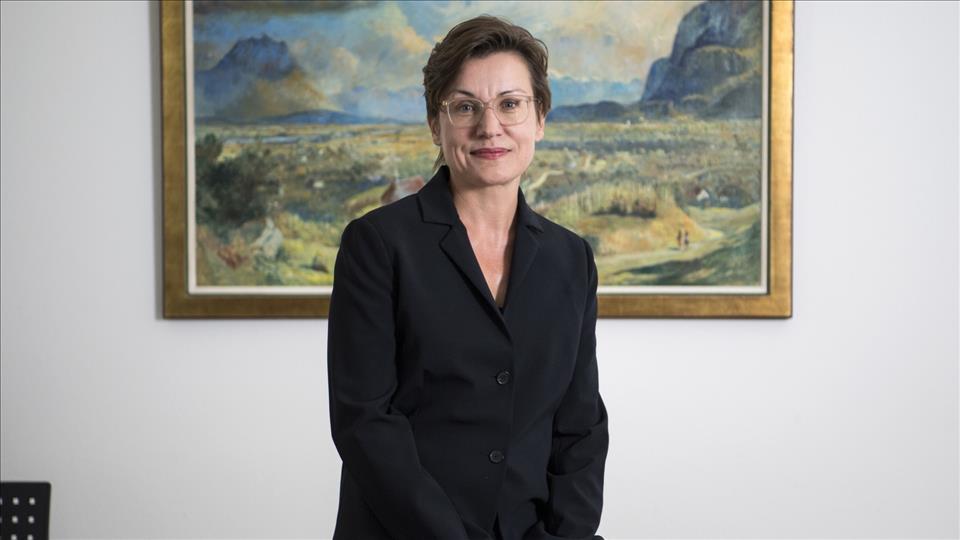
Woman To Head Red Cross For The First Time
(MENAFN- Swissinfo)
Deutsch
(de)
عربي
(ar)
As is customary, a former Swiss diplomat has been elected to head the humanitarian organisation for a renewable four-year term. Born in Croatia, Spoljaric Egger studied philosophy, international law and economics at the universities of Basel and Geneva. She will be the first woman to head the organisation, which has its headquarters in Geneva, since it was founded 150 years ago.
Previously she worked at the United Nations Development Programme (UNDP) as Assistant Secretary-General, Assistant Administrator and Director of the Regional Bureau for Europe and the Commonwealth of Independent States, where she was in charge of relations with Russia and the republics previously part of the Soviet Union. She will replace the former president of the ICRC, Peter Maurer, on October 1.
“I will strive to highlight the needs of the most vulnerable and to do justice to the incredible impact of ICRC's teams in conflict settings worldwide” she said when she was elected as president last November.
Complex international environmentSpoljaric Egger will have to navigate an extremely complex international environment.
Around 20,000 ICRC staff work in over 100 countries, including Afghanistan, Libya, and Sudan to help people severely affected by war and violence. The main goals of the organisation is to ensure protection and assistance for victims of armed conflicts according to international humanitarian law, including reuniting missing people with their loved ones, helping asylum seekers, internally displaced populations and detainees.
Over the past ten years, the Red Cross has had to face an increasing number of conflicts and humanitarian catastrophes such as the Syrian conflict, the Rohingya exodus from Myanmar and the Russian invasion in Ukraine.
Part of the ICRC's challenge is to engage in dialogue, not only with fighting forces, but with all parties involved. The issue of impartiality of the organisation arose at the beginning of the war in Ukraine. Maurer was criticised in March for meeting Sergei Lavrov, Russia's foreign minister. He was seen shaking hands and smiling in Moscow during a photo operation. Some critics went as far as to interpret the ICRC's dialogue with Moscow as legitimising Russia's invasion of Ukraine.
The war in Ukraine and the limited scope of action of the ICRC on the ground illustrates the difficulties the institution faces. A report by the UN commission of inquiry on Ukraine published last Friday, documented a long list of violations of international humanitarian law including illegal use of explosive weapons in populated areas, indiscriminate attacks without distinguishing between civilians and combatants, execution, torture and ill-treatment, sexual violence by soldiers and forced displacement of civilians. The commission concluded that war crimes had been committed by Russia in Ukraine and identified two cases of abuse of Russian prisoners of war by Ukraine forces.
ICRC's Director General, Robert Mardini, on a visit to Kyiv at the beginning of September admitted supporting“only a fraction of the needs” in Ukraine and having a limited access to the prisoners of war.“To date we have only been able to visit hundreds of prisoners of war on both sides (Ukraine and Russia). And we know there are thousands more we still need access to,” Mardini told journalists. The third Geneva Convention grants the ICRC access to all prisoners of war.

Legal Disclaimer:
MENAFN provides the
information “as is” without warranty of any kind. We do not accept
any responsibility or liability for the accuracy, content, images,
videos, licenses, completeness, legality, or reliability of the information
contained in this article. If you have any complaints or copyright
issues related to this article, kindly contact the provider above.
Most popular stories
Market Research

More Story





Comments
No comment