


What Teachers Think Of Children And Young People's Technology Use


Mobile phones, computers, social media and the internet are part of the daily lives of children and young people, including at school. Concerns over the risks of too much screen time or online activity for children and young people have been tempered by the reality of technology use in education and leisure.
The experience of life during the pandemic, when much schooling and socialising went online, has also changed attitudes to technology use. UK communications regulator Ofcom reported that in 2020 only a minority of children and young people did not go online or have internet access.
Teachers are in a unique position when it comes to assessing how children and young people use technology such as mobile phones and the effect it has on them. They see how children and young people use technology to learn, socialise, and how it affects their relationships with their peers.
Together with colleagues, I carried out in-depth research with eight teachers from different backgrounds, ages, years of professional experience, and type of educational institution from across the UK. We asked the teachers about their experiences of children and young people's use of technology: how they thought it affected their emotions, behaviour and learning both before and during the pandemic.
The teachers talked about the importance of technology as a tool in the classroom and learning and the opportunities it provides for creativity. As one teacher put it:
Empowered through techWe also found that teachers were optimistic about the role technology could play in empowering children and young people. One said:
They thought that children and young people could learn to understand and recognise the signs of unhealthy technology use from their own emotions and behaviour when using technology. This included showing empathy and care through noticing how they and others feel. One teacher said children and young people were becoming more compassionate and offering their help to friends who were showing signs of distress through their online posts.
However, some teachers did express concern about how interacting online affected children and young people's social skills. One teacher said:
Another questioned how technology use was affecting play. They said:
Teachers also pointed to the problems of disengaging from technology use. One teacher stated:
Teachers discussed how they encouraged their pupils to take part in team sports as a way to encourage face-to-face communication and conflict resolution. However, while some online safety and internet use is covered at school , guidance on how to live with technology, be resilient towards challenges and use technology in a balanced could be more explicitly taught .
The PHSE Association – a national body for personal, social, health and economic education – offers guidance on online safety and skills for the curriculum , such as the potential harms of pornography but there is much scope to develop a broader approach to supporting healthy technology use.
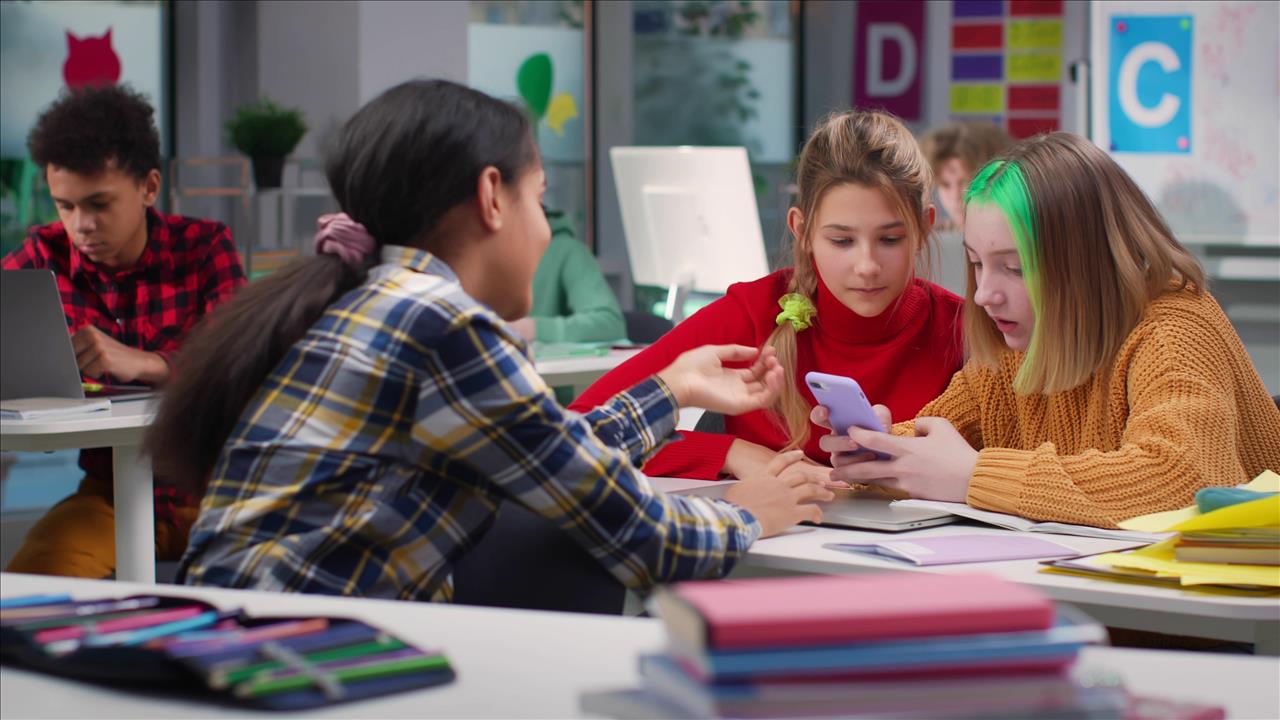
Teachers felt that there should be more discussion of online behaviour in the classroom. Daisy Daisy/Shutterstock
In class, this could be as simple as working on how to make informed decisions about technology use – such as being more cautious if online activity involves talking with strangers, or recognising if spending time online is a large time commitment. It could include using social media posts as real-world examples to encourage childrenand young people to be informed, critical and resilient towards content they are likely to see and interact with.
Teachers felt that adding online safety to the curriculum would be valuable, as would providing opportunities for children and young people to talk about their experiences and content of technology. One teacher said:
The teachers highlighted that they, too, needed support in their knowledge about technology and suggested this should be more incorporated into teacher training. One teacher said:
Children and young people can get significant benefits from technology, but it has risks, too. More attention to how teachers can address this in school can be an invaluable way to help children and young people understand and balance their time online.


Legal Disclaimer:
MENAFN provides the
information “as is” without warranty of any kind. We do not accept
any responsibility or liability for the accuracy, content, images,
videos, licenses, completeness, legality, or reliability of the information
contained in this article. If you have any complaints or copyright
issues related to this article, kindly contact the provider above.


Comments
No comment