


Bugs and bores: a source of dangerous bacteria in remote communities' water supply


(MENAFN- The Conversation) A study of three remote community water supplies in northern Australia,published today in the journal PLOS Neglected Tropical Diseases , revealed that bores with high levels of iron were more likely to harbour Burkholderia pseudomallei, the bacterium that causes the potentially fatal disease melioidosis in bothhumansandanimals , than bores with low iron levels.
The study, by researchers from Charles Darwin University andMenzies School of Health Research , reveals the challenge of delivering safe water to remote communities in Australia's wet-dry tropics, many of which rely on bore water from shallow aquifers. But we also found that treating water with chlorine is an effective way to improve its safety.
Read more:
Getting clean drinking water into remote Indigenous communities means overcoming city thinking
Based on a modelling study, melioidosis causes an estimated89,000 deaths worldwide , and people withdiabetes, chronic lung or renal disease or hazardous alcohol useare particularly at risk. Deaths due to contaminated drinking water have been documented inNorthern AustraliaandThailand , where B. pseudomallei is endemic.
B. pseudomallei is found naturally in soil and surface water in rural areas around Darwin. Aroundone-thirdof tested unchlorinated residential bores were positive for this bacterium, and it has also been found inaerator sprays and tank sludge from water treatment plants .
Water can usually be made safe by treating it with chlorine, although in laboratory experiments some B. pseudomallei strains cantolerate higher chlorine levelsthan others.
There is also an association between B. pseudomallei and increasediron levels in bore water . Naturally occurring iron-cycling bacteria can metabolise the iron, producing bacterial films inside pipes that contribute to corrosion and reduce bore yield. The problem with biofilms is that opportunistic pathogens in water supplies such as Legionella pneumophila or Pseudomonas aeruginosa can also colonise the biofilms, protecting the bacteria from chlorination.
Many aquifers in Northern Australia contain naturally high levels of iron, and some are also shallow and prone to inundation with surface water during the wet season. This iron-rich source water potentially compromises the water in the distribution system.
Putting bores to the test
The problem is that we know very little about the microbiology of drinking water in remote communities. To learn more, we studied three remote water supplies in the Top End with varying iron levels: one low, one medium, and one high.
The 'high iron' community had water with an average of 0.8mg of iron per litre – more than double the threshold of 0.3mg/L suggested by theAustralian drinking water guidelinesabove which the taste of water is affected.
The 'medium iron' community had water with average iron concentrations of 0.25mg/L, while the figure for the 'low iron' community was 0.05mg/L.
All three communities had reported melioidosis cases over recent decades: three cases since 1994 in the high-iron community; 11 in the medium-iron community; and four in the low-iron community. It is not known where these patients acquired the melioidosis bacteria.

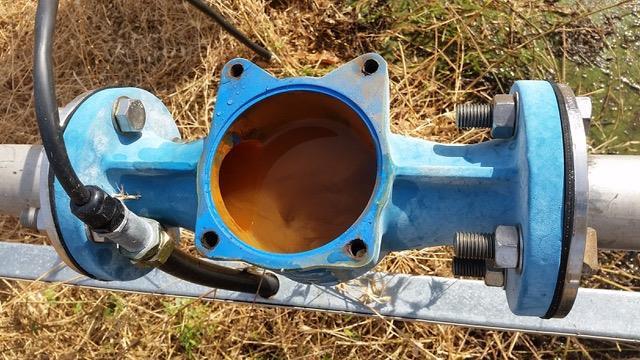
Sampling a high-iron bore.
Mirjam Kaestli, Author provided
For each community, together with collaborators Power and Water Corporation , we sampled water from five points along the drinking water distribution system, of which three were unchlorinated (bores and tanks), and two were from the chlorinated reticulation system. We then used genetic sequencing to survey the bacterial communities in water.
We found that the geochemistry of the groundwater had a substantial impact on the types of bacteria in untreated water, particularly in the case of bacteria that can metabolise iron.
We found B. pseudomallei in bores with high iron levels, and in a bacterial biofilm inside a bore pipe which also contained iron-oxidising Gallionella, nitrifying Nitrospira, and free-living Hartmannella amoebae, whichmay be able to harbour B. pseudomallei .
Growing challenge
If B. pseudomallei occurs inside amoebae growing in remote communities' source water, this could make it harder tosuccessfully target the bacteria using chlorination . Second, the interaction with Gallionella bears further scrutiny because this iron-oxidising bacterium is increasingly used in biological iron-removal filters.
In our samples we detected three pathogen groups: non-tuberculous mycobacteria, Pseudomonas aeruginosa, and B. pseudomallei. Importantly, B. pseudomallei was found in water with scarce nutrients. This highlights the fact that this bacterium canthrive under nutritionally poor conditions(it has been known to survive even in distilled water for up to16 years ). This in turn means when water providers routinely monitor the water supply integrity by using heterotrophic bacteria counts, they might not suspect the presence of B. pseudomallei as the former cannot survive under such nutrient scarce conditions.
Surprisingly, we also found B. pseudomallei in a bore accessing a deeper aquifer. We will need to investigate further across all seasons to determine whether this bacterium does indeed live in deeper, confined aquifers, or whether it is mainly linked to intrusions of surface water during the wet season. The latter would be easier for water providers to manage.
We detected no B. pseudomallei in treated water, although we did find abundant DNA of another opportunistic pathogen group: non-tuberculous mycobacteria.
Read more:
Some remote Australian communities have drinking water for only nine hours a day
Our study provides a first snapshot of the bacteria in a selection of remote water supplies, and can hopefully contribute to improved management of water supplies in the wet-dry tropics.
Water quality
Water pollution
Pathogens
Remote communities
Bacterial pathogens
Darwin city

Legal Disclaimer:
MENAFN provides the
information “as is” without warranty of any kind. We do not accept
any responsibility or liability for the accuracy, content, images,
videos, licenses, completeness, legality, or reliability of the information
contained in this article. If you have any complaints or copyright
issues related to this article, kindly contact the provider above.


Comments
No comment