


How our African ancestors made sound in the Stone Age


(MENAFN- The Conversation) The Middle and Later Stone Age, which lastedfrom about 300 000 to 300 years ago in South Africa, wasan important timefor the African continent. During this period humans developed many different strategies to produce a variety of stone tools. They used fire as an engineering tool and to cook. As expert hunter gatherers, they successfully inhabited many parts of Africa.
But one thing that's been missing from our understanding of this epoch is sound, noise or music. There's been very little research on the role of sound production during the Stone Age. That's very surprising sincewe knowthat the latter part of this period was an important one for the development of complex cognition, symbolic expression and social dynamics among human ancestors. So it stands to reason that groups which were communicating in complex ways might also explore sound for expression.
One reason to account for this lack of research may be thatsound-producing instrumentsare usually made of organic materials which typically don't survive well, archaeologically.
We wanted to address this gap in the research. So we've establisheda working groupto map and investigate Stone Age musical activities within Africa, incorporating ethnographic perspectives, knowledge gained from the in-depth study of various cultural groups.
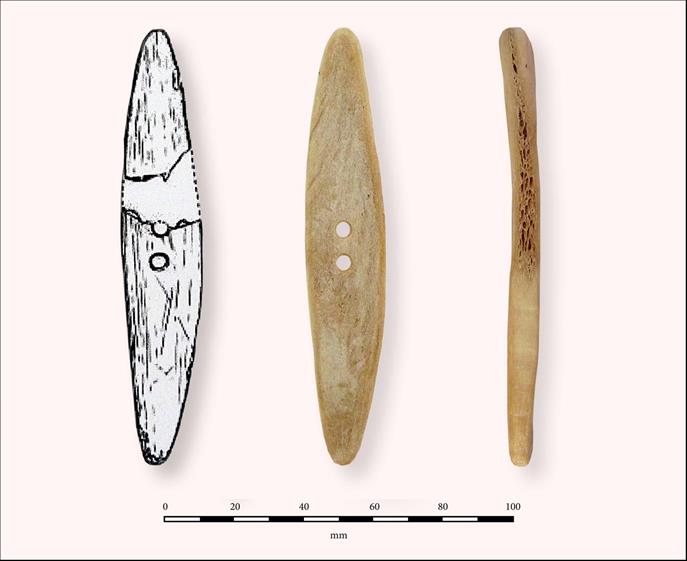
One of our first projects has beento examineancient versions of the strange disc-shaped object that South Africans colloquially know as a 'woer woer'. The 'woer woer' ('whirr whirr' in Afrikaans) can be wound up between two pieces of string and released to produce the same kind of sound as a howling wind or a swarm of bees.Different versionsexist in various parts of the world, known by different names.
Working with bone artefacts from archaeological sites in South Africa's southern Cape region, we've been able to show that some implements might have been used for sound production in the past.
This sort of research is important because it can shed light onhuman behaviour and the use of space . Some spaces may have been specifically selected for how well sound resonates and amplifies, perhaps to form part of rituals to induce altered states of consciousness or enhanced states of association.
Bullroarers and woer woers
The 'woer woer' works on the same principle as another instrument, thebullroarer . This has been used for centuries in many societies to produce sound, chiefly during ceremonial occasions. When it's spun through the air it produces audible vibrations that travel for some distance.
At leasttwo examplesof woer woers made from perforated pieces of bone have been recovered from archaeological sites along the southern Cape coast, at Klasies River and Matjes River. Both date back between 5000 and 10 000 years.
The Matjes River woer woer was recovered together with perforated bone pendants. Some of these 'pendants' bear a striking resemblance to bullroarers from other parts of the world. Bullroarers are used by the Bushmen and Aboriginal people and arealso foundin Late Palaeolithic sites in Denmark, Germany and Norway.
But how could we be sure what the southern Cape artefacts were or what they were used for?
Simple: we headed to a recording studio.
The sounds of the replica bullroarer.
Kumbani et al (2019), Journal of Archaeological Science: Reports, Author provided (No reuse)2.79 MB(download)
Using the actual bone artefacts wasn't possible – they are protected by heritage legislation – so we made modern bone replicas and spun them mechanically for a total of 15 hours. The resulting sounds were recorded in the Field Sound Studio, Cape Town. We also recorded where evidence of wear from use occurred.
The sound frequency of the objects we assumed were woer woers ranged from 52 to 200 Hz. These are bass sounds, resembling those in nature such as bees humming.
The frequency range across the sample of pendant replicas varied from 55.5 to 250 Hz, which is comparable to that produced bybullroarers . The replicas produced a sustained pulsing sound that may be likened to the breaking of ocean waves, thunder or breathing. If played in a cave, such as the sites where the original artefacts were found, the aural affect would have been impressively magnified.
The woer woer in action in the studio.
Kumbani et al (2019), Journal of Archaeological Science: Reports, Author provided (No reuse)3.09 MB(download)
Armed with these data, we conducted a few more experiments. Our interpretation of these results is that one of the decorative pendants was used to produce sound, in the same manner as a bullroarer.
If this interpretation is correct it means that aerophones were used in the distant past in southern Africa. Aerophones produce sound by creating vibrations in the air when they are spun around their axes. They are known as some of the earliest musical instruments in the archaeological record.
Buzzing as ritual gateway
So, why were these ancient bullroarers used?
It's possible that sound may be associated with burying the dead. The artefacts we tested from both sites were associated with human remains.
The combination of sound and light may have helped people enter an altered state of consciousness. Source: Neil Rusch, personal archive.
Matjes River has yielded the remains of 120 individuals. The site was certainly a sacred one within the landscape: it was a burial ground for thousands of years.
There are other possible uses, based onethnographic knowledgefrom southern Africa. The Ju|'-hoansi San of Namibia associate the sound of the bullroarer, which they use in male initiation ceremonies, with mythical creators. /Xam Bushmen in the 19th centuryreportedhow they would use the bullroarer to manipulate bees.
Interestingly, people entering an altered state of consciousnessreporthear a buzzing sound as part of their hallucinatory experience. Bees are also depicted in San rock art. These are believed to be associated with the altered state of consciousnessshamansinduced to enter the spirit world. When a woer woer or bullroarer is spun quickly a stroboscopic effect is produced, which may add to the hallucinatory experience.
This work not only aids our understanding of our ancestors' behaviour. It also suggests that it may be worth re-examining other bone artefacts whose true function may not yet be known.
Archaeology
South Africa
Sound
Sounds
Namibia
San-Bushmen
cultural artefacts
Ancient humans

Legal Disclaimer:
MENAFN provides the
information “as is” without warranty of any kind. We do not accept
any responsibility or liability for the accuracy, content, images,
videos, licenses, completeness, legality, or reliability of the information
contained in this article. If you have any complaints or copyright
issues related to this article, kindly contact the provider above.


Comments
No comment