


Finding Fuel in Venezuela: An Odyssey


(MENAFN- Venezuelanalysis.com) Not enough has been written about the impact of US-led sanctions on Venezuela, least of all thepersonal storieswhich help to fully transmit the extent to which they affect day to day life in the country.
While both the sanctions and their impact are varied and non-uniform, one of the most significant is theJanuary oil embargo , which has sparkedrecent and ongoing fuel shortagesacross Venezuela.
Mérida is one of the states which has been hardest hit by these shortages, with queues at fuel stations lasting up to ten days.
These shortages are largely attributed to the embargo, but other factors includingfalling national oiloutput, import-limiting restrictions of the international financial and commercial system,deteriorating oil infrastructure , government mismanagement and inefficiency,corruption , smuggling, and patterns of over-consumption in the population, also play a role.
Mérida is a state close enough to the Colombian border for fuel smuggling to have a serious impact, as well as being a wealthier region where the ratio of vehicles to citizens is visibly higher than in other parts of the country, in part explaining why it has been hit so severely
It is also deep in the Andean mountains, at the end of the fuel distribution chain, and as such suffers the consequences of an accumulation of problems in localities closer to the refineries, including corruption, reselling, over-consumption, as well as reduced supplies. Finally, largely due to its small, mostly pro-opposition population, and despite being a major agricultural producer, it is a state which is still considered of low strategic importance by the government, which prefers to reroute scarce fuel to the larger cities.
Causes aside, getting fuel in Mérida has become a human ordeal of titanic proportions.
Car owners have to sit out queues which can easily last for more than a week, and are administered between 20 and 40 litres a time, meaning that filling the empty tank of a typical 4x4 vehicle can take up to four weeks or more.
What do these week-long queues entail? Generally they involve sitting in your car for that period, killing time during the 30+ degrees in the day and freezing mountain winds at night, hoping that a family member will be able to bring you supplies on foot and that the boredom doesn't kill you. Daily life such as work, family responsibilities or personal errands all have to be abandoned for this marathon effort of patience. Some decide to leave their cars in the queue and find another way home to a hot meal and a bed, at the risk of losing a car battery or tyre to common thieves, while others prefer to gruel it out.
Occasionally, those in the queue organise themselves, setting up lists of people which, in theory, allow people to return home and carry on with their normal life until they are closer to the start of the line. However, mafias, selling of queue spots, and other vices have eradicated public trust in these ad-hoc systems, meaning that most prefer to sit it out.
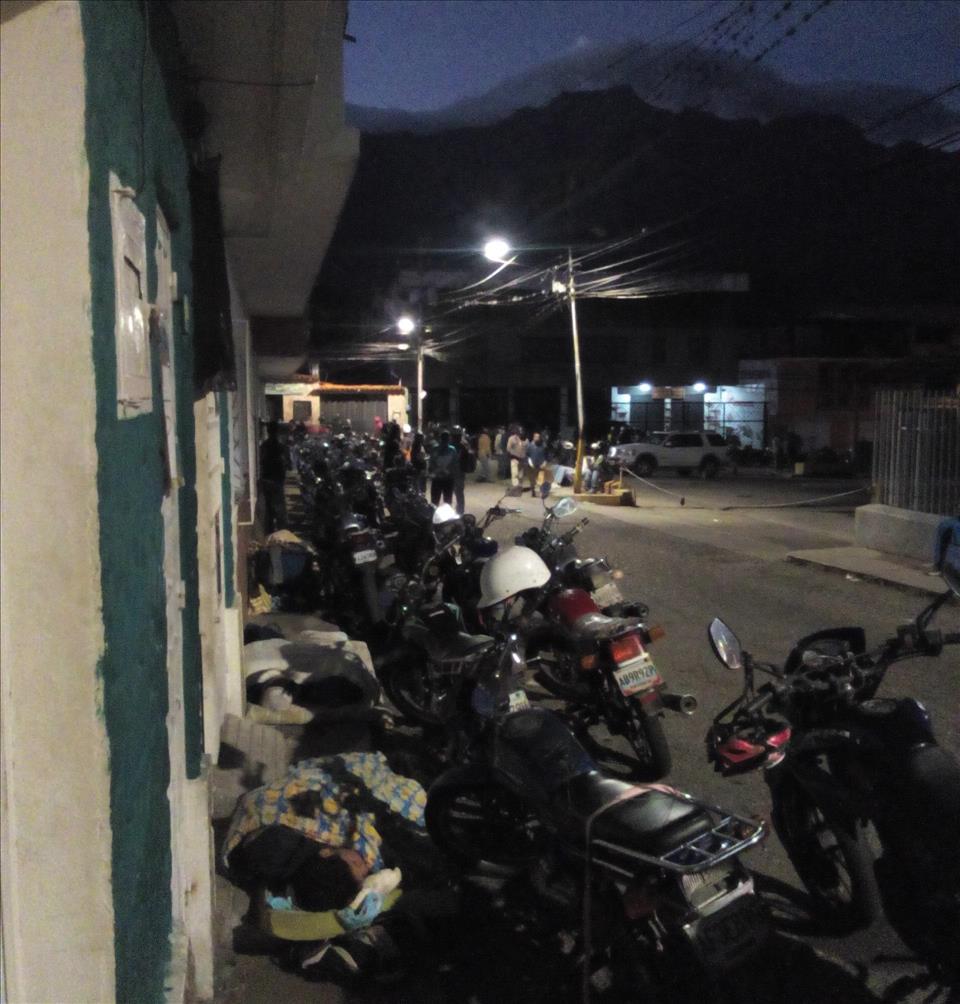
Meanwhile, motorbike users endure shorter queues, of between 10 and 20 hours, for the 5-12 litres they are allocated. Again, this can mean that a large bike needs up to 60 hours of queuing time to fill the tank to the top.
Despite being shorter, these biker queues, usually from the day before until up to 5pm the following day, involve passing the night in the streets of the Andes without any shelter, with people taking refuge in shop doorways or trying to set up makeshift camps on the pavement in order to catch a moment of shuteye.
Yet both vehicle and motorbike owners have an alternative solution: buying fuel on the recently generated black market.
A full 20-litre container costs the equivalent of up to US $30, or over three months minimum wage. In comparison, the same amount of fuel in the fuel station costs so little that there is not even a legally circulating bill which can be used to pay for it. The result of this black market is the creation of two social tiers: those who can afford fuel on the black market and those who have to sit out the queues.Where does the black market fuel come from? Corruption, which is generally perpetrated by those with readier access to the scarce commodity. This includes fuel tanker drivers, workers from the PDVSA oil company or military officials who have been put in charge of the fuel stations, determining how many litres are to be pumped and how many are reserved for 'other' destinations. It also includes those with priority access to fuel, including police, fire department, medical personnel, public officials, and inevitably, their friends, family and political contacts.The consequences of these fuel shortages on the already crisis-ridden and underproductive Venezuelan economy are yet to be fully felt, not just in the localities affected by the shortages, but on the country as a whole.
In the case of Mérida, the state's two principal industries of tourism and agriculture have been severely hampered, with crop producers struggling to distribute and commercialise their products to markets in the region or to the larger cities like Caracas. Likewise, activities that depend on fuel to function, such as taxi, bus or truck driving, as well as those which require clients to consume fuel to arrive, including bars, restaurants, and mountain leisure outlets, have all felt the pinch. Distribution of goods into Mérida has also been crippled, exasperating existing medicine shortages, for example.
But the situation is also severely affecting the workforce, which apart from losing copious amounts of (wo)man hours in the queues, are physically and mentally unable to produce as they normally would once at work due to accumulated fatigue and stress.
There are also social shifts being seen, with old friendships breaking down and new ones formed based on solidarity and mutual support forged in the heat and the rain of the queues.
New skills are acquired: how to 'suck out' fuel from your tank with a bottle and a hose so as to keep an emergency reserve at home, or how to drive with the best fuel efficiency possible. Motorbikes with their engines off, freewheeling downhill to save fuel, is now a common site in the region.
But miscalculations are always made, with the main city hospital seeing a significant rise in fuel intoxication since the shortages began due to this practice of 'sucking.' It is also nearly a daily sight to see a car with an empty tank being towed or pushed down the street.
The makeup of the city is also changing, with hosts of people concentrating around (and at times collapsing) roads close to the fuel stations, while an eerie lack of vehicles in the center of town allows pedestrians to walk in the middle of the streets. Snake-like queues with no beginning or end wind around the city, and groups of queue-goers gather in improvised groups to try to break the solitude with human contact or a game of dominos.
Family life is also being affected, as tasks such as going to the doctor or weekly shopping, which are normally far from simple or quick, become incredibly arduous without fuel, with limited buses circulating and the majority of one's family or friends busy trying to get fuel. Finding time for the family, which is normally a high priority for Venezuelans, is becoming ever more difficult.
Mentally, the fuel-finding odyssey is also hitting home. The psychological stress of juggling all-nighters on a street corner two to three times a week or sitting in a queue for a week, with work, family, and all other obligations, should not be underestimated, compounding the long list of stress-inducing conditions in current Venezuelan life (problems in water supply,power outs , wage-price disparities, bureaucracy, corruption, etc etc). Reports of people losing their heads in the queues are unfortunately becoming more frequent, with fights breaking out and, in one case, generating a deadlyconfrontation with security forces .

Legal Disclaimer:
MENAFN provides the
information “as is” without warranty of any kind. We do not accept
any responsibility or liability for the accuracy, content, images,
videos, licenses, completeness, legality, or reliability of the information
contained in this article. If you have any complaints or copyright
issues related to this article, kindly contact the provider above.


Comments
No comment