

Oman- Great moments of Chevy trucks torque


Dan Nicholson, vice president, Global Propulsion Systems, said, 'Chevrolet Trucks have pulled their weight for a century. Nobody does torque like Chevrolet and generations have counted on our trucks to get the job done confidently.'
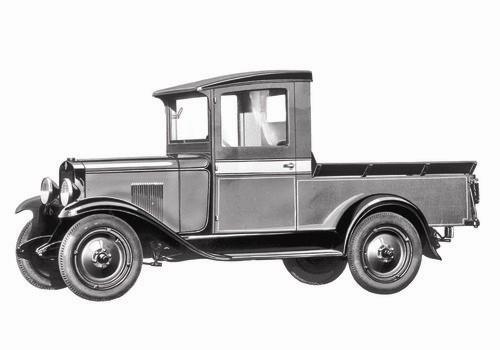
Chevy trucks have come a long way from the original 1918 one-tonne model, featuring a 2.8l four-cylinder engine with an estimated 45lb-ft of torque. Its closest contemporary engine is the standard 4.6l V-6 engine in the Silverado WT, which is rated at 304lb-ft of torque or 66lb-ft per litre, a 312 per cent increase over the 1918 engine.At the far end of the spectrum is the contemporary Silverado 3500HD one-tonne truck, with the available Duramax 6.6l turbo-diesel V-8. It's 910lb-ft of torque equates to an incredible 138lb-ft per litre, for great trailering confidence even on tough grades.
'Technological advances such as direct injection and turbocharging help contemporary Chevy Truck engines deliver more torque per litre of displacement than ever. That means customers can do more and haul more than ever,' said Nicholson. The progress in the Chevy Truck capability has been driven over the decades by the enduring performance of several landmark engine families, all sharing an elegant, overhead-valve architecture that contributes to signature low rpm torque production, reduced complexity and compact packaging.
As the brand celebrate 100 years of trucks, here's an overview of the most significant milestones in Chevrolet torque.
1929: First 'Stovebolt' Six
1955: First Small Block V-8
Chevrolet introduced its revolutionary overhead-valve V-8 engine, later to be dubbed the Small Block, in the 1955 'second series' truck line-up. That original 265-cubic-inch (4.3l) engine produced 238lb-ft of torque at only 2,000rpm and would evolve into one of the industry's most enduring engine architectures. About a decade after the Small Block was introduced, Chevy's Big Block engine family, also an overhead-valve design, debuted, elevating capability to an unprecedented level for gas-powered trucks. The Small Block is currently in its fifth generation in 2018 Chevy trucks, while the original Small Block and Big Block families live on as performance crate engines.
1987: Technology helps build torque and increase efficiencyUntil the early seventies, increased displacement and higher compression were the easy ways to build more horsepower and torque. That changed with industry mandates that dramatically effected traditional power-building techniques. Chevrolet traded high compression for high technology, developing electronic fuel injection that helped restore the torque of previous years with greater efficiency. Torque in the Small Block engine returned to 300lb-ft in 1987 and took another ten per cent increase a few years later, with the 5.7l Vortec Small Block. Today, the available 6.2l Small Block in the 2018 Silverado 1500 is rated at 460lb-ft of torque, thanks to technologies including variable valve timing and direct injection, giving it the highest torque rating of any light-duty pickup V-8 engine.
2001: Modern diesel era begins with DuramaxIntroduced in 2001 for Chevy's HD trucks, the Duramax 6.6l turbo-diesel, with overhead valves and 520lb-ft of torque, was an all-new design that established a new era of capability. Technological advances pushed its output higher and, today, the second-generation iteration available in the 2018 Silverado HD line-up offers 910lb-ft of torque, which is a stunning 75 per cent leap in torque from the same 6.6l displacement as the original, which re-set the performance bar for HD trucks.
Car and Driver recorded 0-60 mph in 6.2 seconds in a Duramax-powered Silverado, for the quickest time they've tested for a HD truck, while TFLtruck recorded a climb up the Eisenhower grade in Colorado in 10:16.99 minutes.That was about 12 seconds faster than the nearest one-tonne competitor, with each pulling 22,800 pounds.

Legal Disclaimer:
MENAFN provides the
information “as is” without warranty of any kind. We do not accept any
responsibility or liability for the accuracy, content, images, videos,
licenses, completeness, legality, or reliability of the information
contained in this article. If you have any complaints or copyright issues
related to this article, kindly contact the provider above.
Comments
No comment