

403
Sorry!!
Error! We're sorry, but the page you were looking for doesn't exist.
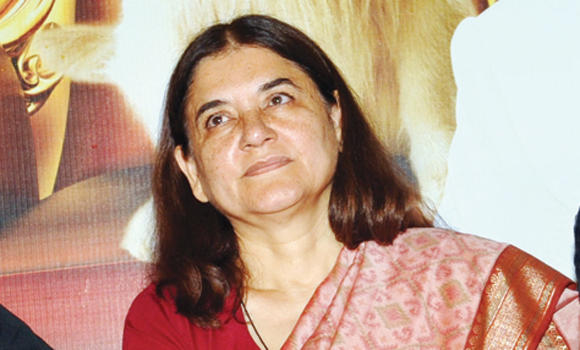
Maneka Gandhi says 2000 girls 'killed' in India everyday


(MENAFN- Arab News) NEW DELHI: Two thousand girls are 'killed' everyday due to a preference for sons in India with most aborted or murdered just after birth the country's minister for women and child development said.
Despite laws that ban parents having tests to determine the gender of unborn children sex selective abortions remain a common practice in parts of India and have resulted in a decline in the number of girls compared to boys.
'You have 2000 girls who are killed in the womb every day. Some are born and have pillows on their faces choking them' Maneka Gandhi told NDTV news channel late on Monday.
India's 2011 census showed that while the overall female-to-male ratio has improved marginally since the last census a decade ago fewer girls were born than boys and the number of girls younger than six plummeted for the fifth straight decade.
A May 2011 study in British medical journal The Lancet found that up to 12 million Indian girls were aborted over the last three decades resulting in a skewed child sex ratio of 918 girls to every 1000 boys in 2011 versus 962 in 1981.
India's traditionally male-dominated culture views sons as assets breadwinners who will provide for the family carry on the family name and perform the last rites for their parents an important ritual in many faiths.
Girls however are often seen as a liability with families having to dig deep for a substantial dowry to ensure a desirable match. In a culture that views pre-marital sex as bringing shame to the girl's family parents also worry about their safety.
Gandhi said that the government's 'Beti Bachao Beti Padhao' (Save the Daughter Educate the Daughter) campaign which aims to reverse the declining number of girls had already shown results since its launch in January.
The initiative which is being run in 100 districts where the ratio of girls to boys is particularly low aims to better enforce laws that criminalize pre-birth gender selection and improve girls' access to education.
Despite laws that ban parents having tests to determine the gender of unborn children sex selective abortions remain a common practice in parts of India and have resulted in a decline in the number of girls compared to boys.
'You have 2000 girls who are killed in the womb every day. Some are born and have pillows on their faces choking them' Maneka Gandhi told NDTV news channel late on Monday.
India's 2011 census showed that while the overall female-to-male ratio has improved marginally since the last census a decade ago fewer girls were born than boys and the number of girls younger than six plummeted for the fifth straight decade.
A May 2011 study in British medical journal The Lancet found that up to 12 million Indian girls were aborted over the last three decades resulting in a skewed child sex ratio of 918 girls to every 1000 boys in 2011 versus 962 in 1981.
India's traditionally male-dominated culture views sons as assets breadwinners who will provide for the family carry on the family name and perform the last rites for their parents an important ritual in many faiths.
Girls however are often seen as a liability with families having to dig deep for a substantial dowry to ensure a desirable match. In a culture that views pre-marital sex as bringing shame to the girl's family parents also worry about their safety.
Gandhi said that the government's 'Beti Bachao Beti Padhao' (Save the Daughter Educate the Daughter) campaign which aims to reverse the declining number of girls had already shown results since its launch in January.
The initiative which is being run in 100 districts where the ratio of girls to boys is particularly low aims to better enforce laws that criminalize pre-birth gender selection and improve girls' access to education.

Legal Disclaimer:
MENAFN provides the
information “as is” without warranty of any kind. We do not accept any
responsibility or liability for the accuracy, content, images, videos,
licenses, completeness, legality, or reliability of the information
contained in this article. If you have any complaints or copyright issues
related to this article, kindly contact the provider above.
Comments
No comment