


What Businesses Should Know About XRP and Blockchain-Based Settlement Tools


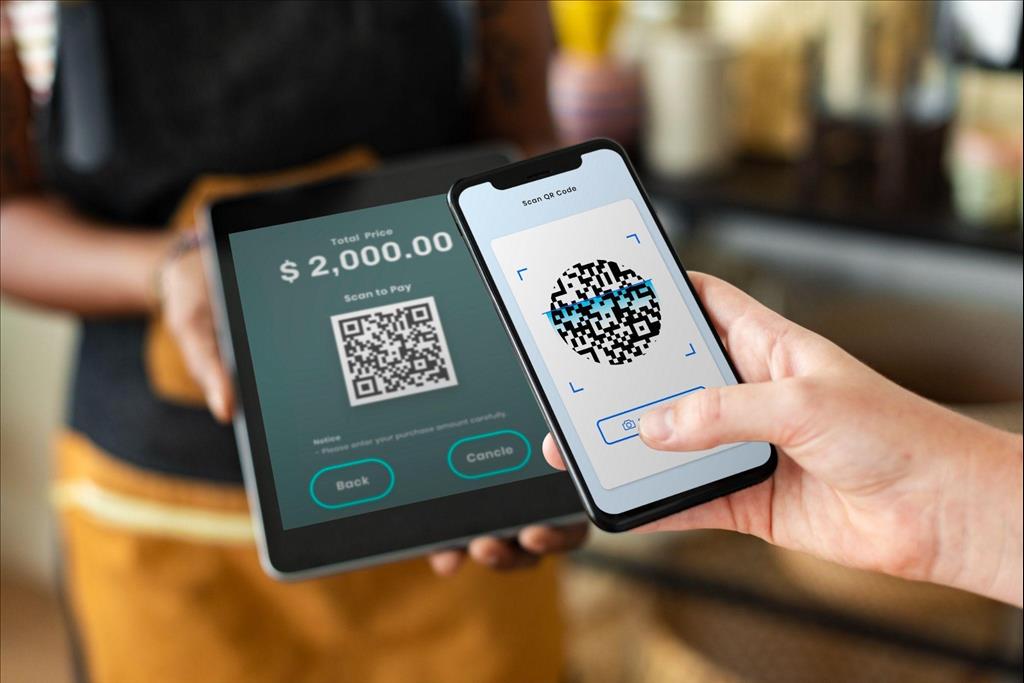
(MENAFN) While cash has long been king, card payments and digital wallets are rapidly taking over among MENA consumers. As more consumers lean toward digital payments, more businesses are exploring digital-asset settlement infrastructure and may also encounter AUD XRP pricing and market information when researching blockchain-based payment tools, as interest in alternative settlement infrastructure has grown alongside that broader shift.
According to the "Middle East and North Africa Digital Payments - Market Share Analysis, Industry Trends & Statistics, Growth Forecasts (2026-2031)" report, the digital payments market is expected to rapidly grow in the upcoming years. It is estimated to reach $462.41 billion by 2031, up from $275.47 billion in 2026. These figures describe consumer behavior at the front end of payment systems. Business settlement infrastructure, particularly for cross-border transactions, operates at a separate layer.
What Blockchain Settlement Actually Involves
A payment that looks instant to a consumer is rarely instant at the infrastructure level. Between authorization and settlement, multiple institutions and clearing systems are typically involved: the bank's internal processing, correspondent banking relationships, and currency conversion each add time and complexity.
Blockchain-based settlement works differently. What Is Blockchain Technology and How Does It Work? starts with the concept of a distributed ledger: a shared record maintained across a network of participating nodes. When a participant submits a transaction, the network reaches consensus on whether to include it. Once finalized, the record is extremely difficult to alter.
A different model isn't automatically better for every use case, though. Blockchain-based settlement does not on its own eliminate compliance requirements, reduce costs, or guarantee faster outcomes than conventional infrastructure. The ledger is one component in a broader system.
How the XRP Ledger Processes Transactions
The XRP Ledger is a public, open-source blockchain that has operated since 2012. XRP is its native digital asset, used to pay transaction fees on the network and, in certain cross-currency payment flows, to bridge different currencies.
Transactions follow a defined sequence. A participant submits a transaction to the network. Validators, independent nodes participating in the consensus mechanism, review it against the current state of the ledger. Through consensus rounds, they agree on which transactions go into the next ledger version. Once a version is validated, its contents are final.
The XRP Ledger documentation describes near-real-time settlement of approximately three to six seconds under normal network conditions. That figure refers to ledger settlement time. An end-to-end business payment involving fiat conversion, external service providers, or compliance steps can take longer.
XRP as a Bridge Asset in Cross-Border Payments
Cross-border payments typically require liquidity in both the source and destination currencies. In supported flows on the XRP Ledger, XRP can serve as a bridge, letting a sender convert from one currency to XRP and from XRP to a destination currency within the same transaction flow, where sufficient liquidity exists on both sides.
A neutral example: a business sends an international payment to an overseas supplier, and both are using service providers that support XRP Ledger-based settlement. The local currency converts to XRP, moves across the ledger, and converts to the supplier's local currency on the other end. Whether that flow is available depends on the service providers, currencies, counterparties, and compliance requirements involved.
For background on What Is Ripple (XRP)? and the ledger's history, that resource covers both.
Settlement Speed and Transaction Finality
These two concepts are related but distinct. Settlement speed describes how quickly a transaction moves through the network. Transaction finality describes the point at which an outcome can be treated as authoritative for accounting and operational purposes.
The XRP Ledger documentation makes this clear. Provisional transaction results are not the same as results from a validated ledger. A transaction should not be treated as complete for reconciliation purposes until it appears in a validated ledger with the appropriate result code.
Key Points for Businesses
The XRP Ledger uses a consensus-based validation process rather than proof-of-work mining. Settlement on the ledger can occur within seconds, though this figure is for ledger settlement time only. XRP can function as a bridge asset in supported cross-currency flows, subject to available liquidity and the payment infrastructure being used.
None of that changes the controls a business needs to maintain. Reconciliation, compliance, security practices, and appropriate service-provider arrangements remain necessary regardless of the settlement layer. The ledger is infrastructure, not a replacement for the operational processes that surround a business payment.
FAQ
What is XRP used for in blockchain-based settlement?
XRP is the native digital asset of the XRP Ledger. It can be used to pay transaction costs and, in supported cross-currency payment flows, as a bridge asset between different currencies.
How fast can transactions settle on the XRP Ledger?
XRP Ledger documentation describes near-real-time settlement of approximately three to six seconds. The writer should clarify that ledger settlement time differs from the complete end-to-end processing time of a business payment.
What is the difference between XRP and the XRP Ledger?
The XRP Ledger is the underlying public blockchain network, and XRP is its native digital asset.
Why does transaction finality matter to businesses?
Businesses need authoritative transaction outcomes for reconciliation and operational records. XRPL documentation distinguishes provisional transaction results from transactions included in a validated ledger.
MENAFN22102026008626018208ID1111848389

Legal Disclaimer:
MENAFN provides the
information “as is” without warranty of any kind. We do not accept
any responsibility or liability for the accuracy, content, images,
videos, licenses, completeness, legality, or reliability of the information
contained in this article. If you have any complaints or copyright
issues related to this article, kindly contact the provider above.


Comments
No comment