


Saudi- New Malaz: Worth a visit for Indo Chinese fare


(MENAFN- Arab News) Chinese and Indian food is very popular in Riyadh so I am not surprised that New Malaz Family Restaurant has a menu featuring these two cuisines.
Incidentally Chinese food is much loved in India. The interaction of various Chinese communities established in India with the native culture of their original country has resulted in the creation of a unique fusion cuisine which adapts Indian seasoning and cooking techniques to foreign dishes.
Indian Chinese cuisine originated in the 19th Century among the Chinese community of Calcutta during the immigration of Hakka Chinese from Canton known today as Guangzhou seeking to escape the First and Second Opium Wars and the political instability in the region. They created a unique fusion cuisine blending Indian and Chinese cuisines. After 1947 many Cantonese immigrants fleeing political repression under Mao Zedong opened their own restaurants in Calcutta. They served unique dishes combining Indian cooking with Cantonese cuisine. While the Indian Chinese fusion cuisine is heavily derived from traditional Chinese cuisine it bears little resemblance to its Chinese counterpart. The dishes tend to be flavored with cumin coriander and turmeric; chili ginger and garlic are also frequently used. Some of the most famous Indian Chinese specialties are the 'Chicken Manchurian' and 'Chili Chicken' both featured on the menu.
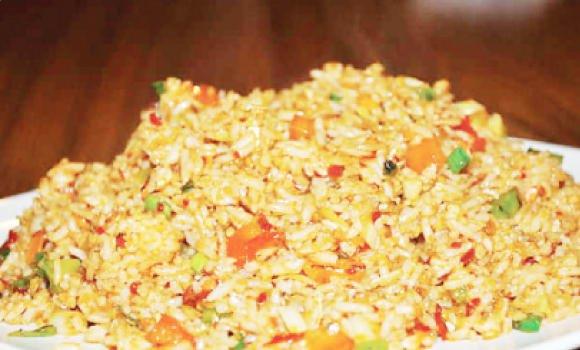
Fried Rice dishes are also available and the Szechwan Fried Rice is also a typical Indian Chinese specialty. Fried rice has many variations as it merely involves frying cooked rice with basic ingredients such as onion and egg then adding chicken prawns or beef with peas mushrooms and bamboo shoots. This tasty dish offers a contrast in texture and color. Fried Rice should be light dry and aromatic; it should never be messy and soggy with sauce because fried rice is one of those dishes where although many ingredients are mixed together each of them should stand out distinctly. It is a meal by itself and because it is considered a dry dish it is best eaten with a savory soup like the Sweet Corn Soup also a popular Indian Chinese specialty.
Lastly stir-fried noodles also known as Chow Mein are one of the most favorite Chinese dishes in India and the menu features a wide variety including Egg Noodles Vegetable Noodles Prawn Noodles Chicken Szechwan Noodles Paneer Noodles Mutton Noodles and Mushroom Noodles to name but a few.
Chinese fried noodles are first boiled and then fried in the strongly flavored oil which is left in the frying pan after shredded meats and vegetables have been stir-fried.
The noodles are fried until heated through and then the other ingredients are returned to the pan. Stir-fried noodles can be made with shredded raw vegetables cooked or dried vegetables meat seafood and even paneer which is an Indian soft cheese. It's a whole orchestra of taste and texture!
The Indian section of the menu is extensive and includes specialties from both North and Southern India. I love the selection of bread which are used to scoop up the curries. Nan Chapatis and Dosas are the best for this purpose.
Naan a flat leavened white bread with its typical tear-drop shape is traditionally baked on the side of a tandoor oven. You can order a plain Naan a Butter Naan a Garlic Naan and even a Kashmiri Naan made with nuts and sultanas. Parathas are also delicious with curries. They can be described as shallow-fried unleavened and multilayered whole meal bread which can also be stuffed with potatoes or spinach.
Chapatis are unleavened whole meal breads which should be served immediately or kept in foil. And last but not least there are 'dosas' an Indian crepe or pancake. This wafer-thin oversized crepe is indigenous to South India. This versatile pancake made from little more than dried peas beans or lentils rice and water contains less than 100 calories. Its rice and bean foundation makes it a good source of protein while fermentation boosts its content of Vitamin B and Vitamin C.
I strongly recommend the Masala Dosa a piping hot dosa spread with a flavorful potato masala. Crunchy on the outside and filled with a meltingly soft potato hash it gets a boost of flavor from a mix of fresh curry leaves ginger and chilies.
Amongst the chicken dishes I noticed 'Chicken 65' a spicy deep fried chicken dish originating from Chennai. The flavor of this dish comes from the ginger garlic red chilies vinegar and curry leaves. It was introduced in 1965 at the Buhari Hotel restaurant in Chennai by its founder A.M. Buhari a pioneer in the South Indian food industry.
The Chicken Dopiaza (also available with mutton) is a variation on a korma in which two lots of onions are used. In fact the word 'dopiaza' means 'two onions'. Half of the onions are browned in the ghee or oil before adding the meat. Towards the end of the cooking time the second half of the onions are added to give a different texture and taste to the dish.
The Chicken Korma (available with mutton) refers to a cooking style similar to braising which is used in the North of India. It is particularly important in Mughlai dishes. A Korma consists of meat or vegetables braised with stock yogurt or cream until rich and thick.
Pulaos and Biryanis are naturally featured on the menu. There is often a confusion between pulaos and biryanis. A pulao is quicker to make than a biryani and it has less fat so it is a lighter dish altogether. Biryanis are really meals in themselves and they are made with various ingredients such as meat and vegetables which often weigh twice as much as the rice. A biryani is usually heavy with spices and butter or ghee but in a pulao the rice is cooked in a seasoned broth and it can be made with vegetables chicken or meat.
New Malaz Family Restaurant is situated on 30th street Sulaimaniya in Riyadh. It's menu features Indian Chinese fusion dishes which are well worth a visit.
Email: [email protected] /* */
Incidentally Chinese food is much loved in India. The interaction of various Chinese communities established in India with the native culture of their original country has resulted in the creation of a unique fusion cuisine which adapts Indian seasoning and cooking techniques to foreign dishes.
Indian Chinese cuisine originated in the 19th Century among the Chinese community of Calcutta during the immigration of Hakka Chinese from Canton known today as Guangzhou seeking to escape the First and Second Opium Wars and the political instability in the region. They created a unique fusion cuisine blending Indian and Chinese cuisines. After 1947 many Cantonese immigrants fleeing political repression under Mao Zedong opened their own restaurants in Calcutta. They served unique dishes combining Indian cooking with Cantonese cuisine. While the Indian Chinese fusion cuisine is heavily derived from traditional Chinese cuisine it bears little resemblance to its Chinese counterpart. The dishes tend to be flavored with cumin coriander and turmeric; chili ginger and garlic are also frequently used. Some of the most famous Indian Chinese specialties are the 'Chicken Manchurian' and 'Chili Chicken' both featured on the menu.
Fried Rice dishes are also available and the Szechwan Fried Rice is also a typical Indian Chinese specialty. Fried rice has many variations as it merely involves frying cooked rice with basic ingredients such as onion and egg then adding chicken prawns or beef with peas mushrooms and bamboo shoots. This tasty dish offers a contrast in texture and color. Fried Rice should be light dry and aromatic; it should never be messy and soggy with sauce because fried rice is one of those dishes where although many ingredients are mixed together each of them should stand out distinctly. It is a meal by itself and because it is considered a dry dish it is best eaten with a savory soup like the Sweet Corn Soup also a popular Indian Chinese specialty.
Lastly stir-fried noodles also known as Chow Mein are one of the most favorite Chinese dishes in India and the menu features a wide variety including Egg Noodles Vegetable Noodles Prawn Noodles Chicken Szechwan Noodles Paneer Noodles Mutton Noodles and Mushroom Noodles to name but a few.
Chinese fried noodles are first boiled and then fried in the strongly flavored oil which is left in the frying pan after shredded meats and vegetables have been stir-fried.
The noodles are fried until heated through and then the other ingredients are returned to the pan. Stir-fried noodles can be made with shredded raw vegetables cooked or dried vegetables meat seafood and even paneer which is an Indian soft cheese. It's a whole orchestra of taste and texture!
The Indian section of the menu is extensive and includes specialties from both North and Southern India. I love the selection of bread which are used to scoop up the curries. Nan Chapatis and Dosas are the best for this purpose.
Naan a flat leavened white bread with its typical tear-drop shape is traditionally baked on the side of a tandoor oven. You can order a plain Naan a Butter Naan a Garlic Naan and even a Kashmiri Naan made with nuts and sultanas. Parathas are also delicious with curries. They can be described as shallow-fried unleavened and multilayered whole meal bread which can also be stuffed with potatoes or spinach.
Chapatis are unleavened whole meal breads which should be served immediately or kept in foil. And last but not least there are 'dosas' an Indian crepe or pancake. This wafer-thin oversized crepe is indigenous to South India. This versatile pancake made from little more than dried peas beans or lentils rice and water contains less than 100 calories. Its rice and bean foundation makes it a good source of protein while fermentation boosts its content of Vitamin B and Vitamin C.
I strongly recommend the Masala Dosa a piping hot dosa spread with a flavorful potato masala. Crunchy on the outside and filled with a meltingly soft potato hash it gets a boost of flavor from a mix of fresh curry leaves ginger and chilies.
Amongst the chicken dishes I noticed 'Chicken 65' a spicy deep fried chicken dish originating from Chennai. The flavor of this dish comes from the ginger garlic red chilies vinegar and curry leaves. It was introduced in 1965 at the Buhari Hotel restaurant in Chennai by its founder A.M. Buhari a pioneer in the South Indian food industry.
The Chicken Dopiaza (also available with mutton) is a variation on a korma in which two lots of onions are used. In fact the word 'dopiaza' means 'two onions'. Half of the onions are browned in the ghee or oil before adding the meat. Towards the end of the cooking time the second half of the onions are added to give a different texture and taste to the dish.
The Chicken Korma (available with mutton) refers to a cooking style similar to braising which is used in the North of India. It is particularly important in Mughlai dishes. A Korma consists of meat or vegetables braised with stock yogurt or cream until rich and thick.
Pulaos and Biryanis are naturally featured on the menu. There is often a confusion between pulaos and biryanis. A pulao is quicker to make than a biryani and it has less fat so it is a lighter dish altogether. Biryanis are really meals in themselves and they are made with various ingredients such as meat and vegetables which often weigh twice as much as the rice. A biryani is usually heavy with spices and butter or ghee but in a pulao the rice is cooked in a seasoned broth and it can be made with vegetables chicken or meat.
New Malaz Family Restaurant is situated on 30th street Sulaimaniya in Riyadh. It's menu features Indian Chinese fusion dishes which are well worth a visit.
Email: [email protected] /* */

Legal Disclaimer:
MENAFN provides the
information “as is” without warranty of any kind. We do not accept
any responsibility or liability for the accuracy, content, images,
videos, licenses, completeness, legality, or reliability of the information
contained in this article. If you have any complaints or copyright
issues related to this article, kindly contact the provider above.


Comments
No comment