

Bulgaria chokes on air pollution fueled by poverty


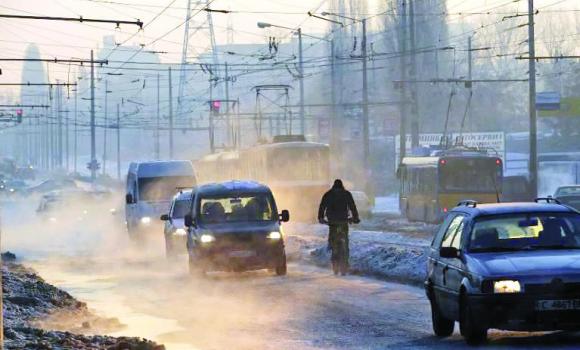
(MENAFN-Arab News) The smokestacks of Kremikovtzi steel mill on Sofia?s outskirts may have shut down years ago, but ancient cars ensure that Bulgaria?s capital is still the most polluted in Europe
When the steel plant went bankrupt in 2008, it did little to improve the thick smog that still hangs over Sofia
Experts say old cars and chronic traffic jams are to blame, made worse by the capital?s location in a lowland surrounded by mountains
Out of the 250,000 cars bought in 2013, only 20,000 were new, says Lyubomir Dorosiev, head of a used car dealer association
?We have become Europe?s vehicle cemetery since car catalytic converters are obligatory in developed countries
?The authorities do not encourage the purchase of new cars under the pretext that they care about the poor,? said Krastyo Peev, a car technician in Sofia
A recent study by the European Environment Agency (EAA) found that Bulgaria, the EU?s poorest nation, has four of the five most polluted cities in the bloc.
The exception is the Polish city of Krakow at number three
The top spot went to Pernik, an industrial city of 80,000 people around 30 kms southwest of Sofia
?It?s suffocating,? moaned grocer Kalina Hristova. ?Especially on winter evenings as most people burn coal but also tires and plastic bottles? for heating, the 32-year-old said
Pernik breached EU safety limits for air pollution for half of the year, against a target of 35 days. Pollution is measured by the concentration of tiny droplets from smokestacks, vehicle tailpipes and other pollutants ? known as particulate matter
That compares with just 29 days for Belgium and 15 for Paris, the study showed, although it was still far below the off-the-chart levels in some Asian cities like Beijing and New Delhi
Sofia itself ranked 11th on the EAA chart, winning the prize as the most polluted capital in Europe-- far ahead of Bucharest, ranked 57th, and Ljubljana, at 75th
The culprit for more than half of this small Black Sea nation?s air pollution ? 58 percent ? is smoke emanating from home stoves, according to Bulgaria?s environment protection agency. And grinding poverty ? especially in the smaller towns ? has driven up the share of people burning wood, coal and all kinds of waste to ward off the chilly east Balkan winters
In the northern town of Vratsa, many have given up more expensive central heating as they can no longer afford it
A mere 250 families have switched to central heating with gas, as most could not pay for the costly equipment, gas network supervisor Dimitar Dimitrov explained
?We stopped the central heating in our apartment and burn wood that we keep on the balcony,? said retired teacher Evdokia Slavova
The chemical plant that used to poison Vratsa?s air was shut after the fall of communism, plunging the town into poverty and unemployment
?Now we poison the air ourselves,? Slavova said. Air pollution aggravates cardiovascular and respiratory diseases and has disastrous effects on the nervous and reproductive system that can lead to cancer and early death, the EEA agency warned
The use of wood and coal for heating was however only part of the problem, experts said, pointing a finger at the fact that 43 percent of the electricity in the country comes from thermal power plants
According to Greenpeace Bulgaria, dust particles and sulphur dioxide emitted from outdated thermal plants are responsible for 2,000 early deaths every year. Bulgaria has the highest concentrations of carbon monoxide and sulphur dioxide from the industry and automobile traffic, said Ivaylo Popov from the non-governmental organization For the Earth.

Legal Disclaimer:
MENAFN provides the
information “as is” without warranty of any kind. We do not accept any
responsibility or liability for the accuracy, content, images, videos,
licenses, completeness, legality, or reliability of the information
contained in this article. If you have any complaints or copyright issues
related to this article, kindly contact the provider above.
Comments
No comment