


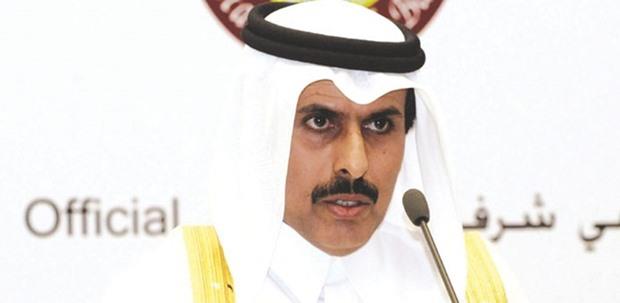
Qatar- Banking sector stays healthy on capital and low delinquency, says Sheikh Abdulla


(MENAFN- Gulf Times) The Qatar Central Bank (QCB) has said banking sector remains 'healthy on adequate regulatory capital and low loan delinquency. The central bank initiated the next strategic plan for 2017-22 to further strengthen the prudential norms and financial market infrastructure.
Moreover, a unified strategy for information security in the financial sector will come into force during the next few months, QCB Governor HE Sheikh Abdulla bin Saoud al-Thani told Euromoney in an interview, ahead of the latter's conference next month.
'The banking sector in Qatar remained healthy overall, with high capital ratios and a low level of delinquent loans, he said.
Although low oil prices have put some 'pressure on deposit mobilisation, he said Qatari banks were able to raise funds through other sources without impacting much on the cost or availability of credit.
'The banking sector could support higher credit demand from the private sector in tandem with the growth in non-hydrocarbon economy, Sheikh Abdulla said, highlighting that profitability of the banking sector remains 'comfortable.
In 2015, return on average assets stood at 2%, while return on average equity stood at 16.2%, he added.
He said the QCB in coordination with other regulators is determined to provide necessary regulatory and financial infrastructure support to the banking sector for the overall development of the economy, which has been 'robust despite the recent oil price shock due to early emphasis on the economic diversification strategy as part of the Qatar National Vision (QNV) 2030.
'Work on Strategic Plan 2017-22 is under progress, the QCB governor said without giving details.
To fulfil the goals set by the QNV 2030, the QCB had implemented a strategic plan (2013-16) in coordination with the Qatar Financial Markets Authority and the Qatar Financial Centre Regulatory Authority, aimed at enhancing the regulation, expansion of macro prudential oversight and strengthening financial market infrastructure.
'Going forward, creating a conducive financial environment to support economic diversification while promoting monetary and financial stability is our paramount goal, Sheikh Abdulla said.
The QCB has already implemented Basel III guidelines on capital and liquidity requirements, and strengthened macro prudential measures and oversight, while an early warning system for the financial sector is being developed.
He said Qatar recognises the importance of diversification of the economy, from being petrochemicals-centric to other sectors, such as financial services, tourism and others.
On sovereign debt, Sheikh Abdulla said the QCB has been leading in the development of the government debt market even when government had surplus funds.
At a broader level, credit to public sector was the key driver of the banking sector's asset growth until 2014. The economic diversification drive, coupled with the increase in involvement of the private sector in the economic development, has changed the sectoral distribution of credit facilities provided by banks, according to Sheikh Abdulla.
'The private sector's larger involvement in the development of the domestic economy translated into higher credit demand from the sector during 2015, he highlighted.
On small and medium enterprises (SMEs) and micro-level private enterprises, Sheikh Abdulla said they have a lot of potential to grow and create jobs, translating into higher economic growth.
As envisaged in the strategic plan (2013-16), concerted efforts are underway to promote this sector, by providing necessary financial support by the banks, he said, adding a dedicated development bank has taken a lead role in this mission by offering a wide range of products and services to the sector.
Moreover, a unified strategy for information security in the financial sector will come into force during the next few months, QCB Governor HE Sheikh Abdulla bin Saoud al-Thani told Euromoney in an interview, ahead of the latter's conference next month.
'The banking sector in Qatar remained healthy overall, with high capital ratios and a low level of delinquent loans, he said.
Although low oil prices have put some 'pressure on deposit mobilisation, he said Qatari banks were able to raise funds through other sources without impacting much on the cost or availability of credit.
'The banking sector could support higher credit demand from the private sector in tandem with the growth in non-hydrocarbon economy, Sheikh Abdulla said, highlighting that profitability of the banking sector remains 'comfortable.
In 2015, return on average assets stood at 2%, while return on average equity stood at 16.2%, he added.
He said the QCB in coordination with other regulators is determined to provide necessary regulatory and financial infrastructure support to the banking sector for the overall development of the economy, which has been 'robust despite the recent oil price shock due to early emphasis on the economic diversification strategy as part of the Qatar National Vision (QNV) 2030.
'Work on Strategic Plan 2017-22 is under progress, the QCB governor said without giving details.
To fulfil the goals set by the QNV 2030, the QCB had implemented a strategic plan (2013-16) in coordination with the Qatar Financial Markets Authority and the Qatar Financial Centre Regulatory Authority, aimed at enhancing the regulation, expansion of macro prudential oversight and strengthening financial market infrastructure.
'Going forward, creating a conducive financial environment to support economic diversification while promoting monetary and financial stability is our paramount goal, Sheikh Abdulla said.
The QCB has already implemented Basel III guidelines on capital and liquidity requirements, and strengthened macro prudential measures and oversight, while an early warning system for the financial sector is being developed.
He said Qatar recognises the importance of diversification of the economy, from being petrochemicals-centric to other sectors, such as financial services, tourism and others.
On sovereign debt, Sheikh Abdulla said the QCB has been leading in the development of the government debt market even when government had surplus funds.
At a broader level, credit to public sector was the key driver of the banking sector's asset growth until 2014. The economic diversification drive, coupled with the increase in involvement of the private sector in the economic development, has changed the sectoral distribution of credit facilities provided by banks, according to Sheikh Abdulla.
'The private sector's larger involvement in the development of the domestic economy translated into higher credit demand from the sector during 2015, he highlighted.
On small and medium enterprises (SMEs) and micro-level private enterprises, Sheikh Abdulla said they have a lot of potential to grow and create jobs, translating into higher economic growth.
As envisaged in the strategic plan (2013-16), concerted efforts are underway to promote this sector, by providing necessary financial support by the banks, he said, adding a dedicated development bank has taken a lead role in this mission by offering a wide range of products and services to the sector.

Legal Disclaimer:
MENAFN provides the
information “as is” without warranty of any kind. We do not accept
any responsibility or liability for the accuracy, content, images,
videos, licenses, completeness, legality, or reliability of the information
contained in this article. If you have any complaints or copyright
issues related to this article, kindly contact the provider above.


Comments
No comment