




403
Sorry!!
Error! We're sorry, but the page you were looking for doesn't exist.
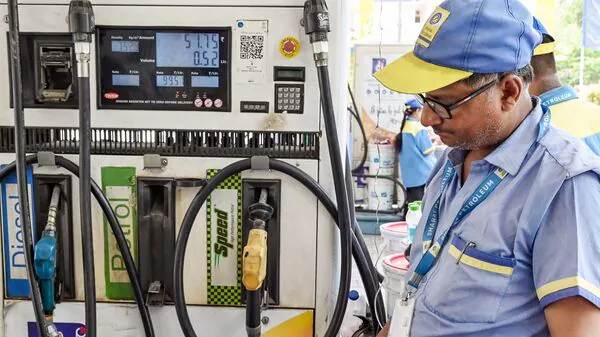
Petrol, Diesel Price Hike: Why Fuel Costs Vary In BJP And Congress-Ruled States, Why Rates Are Highest In Andhra Pradesh
(MENAFN- Live Mint) As petrol and diesel prices were hiked for the third time on Saturday, 23 May - with the cumulative price hike on these essential fuels adding to ₹5 per litre - the BJP-led central government claimed fuel prices were higher in Opposition ruled states, Moneycontrol reported.
The prices of petrol and diesel vary across states because of different rates of Value Added Tax (VAT) and additional local cesses levied by different state governments.
While the central excise duty charged by the Union government remains standard nationwide, the final retail price paid at the pump depends heavily on state-level taxation policies.
Also Read | Petrol, diesel prices hiked for third time in 10 days. Check latest rates“The states with the highest VAT impose effective rates of 30% and more, layered with per-litre additions and infrastructure cesses. The states with the lowest impose rates closer to 20%, no per-litre addition, and no further cess. The geographical map of the divergence is, with a few exceptions, the political map of the divergence,” Moneycontrol reported citing a notification from the Centre.
State-wise variation in petrol pricesAfter the latest revision of prices, the retail price of petrol was the highest in Andhra Pradesh at ₹117.8 per litre. Andhra chief minister Chandrababu Naidu's Telugu Desam Party (TDP) is an ally of the BJP at the Centre. Andhra Pradesh levies a 31% VAT alongside an additional ₹4 per litre fee and a road development cess, pushing the effective tax burden close to 35%.
After Andhra, Telangana and Kerala reported the highest petrol prices at ₹115.7 and ₹112.3 respectively. Both states have a Congress government.
Meanwhile, Madhya Pradesh, West Bengal, Bihar, Rajasthan and Madhya Pradesh reported petrol prices in the range of ₹111.4 and ₹108 per litre. All of these states have BJP-led governments.
Conversely, four BJP-ruled states - Haryana, Delhi, Uttar Pradesh and Gujarat - have the lowest petrol prices after the latest revision, in the range of ₹99.7 and ₹99.1 per litre.
At the same time, in Aam Aadmi Party-ruled Punjab, the retail price of petrol is ₹101.1 per litre.
Petrol costly despite excise duty cutTo buffer the domestic economy from supply-side shocks arising due to the US-Iran war and the consequent chokehold of Strait of Hormuz, the PM Modi-led Central government has intervened with systemic excise cuts.
However, because state-level VAT is computed as an ad valorem percentage on top of base operational costs, the final retail price paid by ordinary citizens remains heavily dictated by local cabinets.
The Centre on 27 March slashed excise duties on both petrol and diesel by ₹10 per litre, reducing petrol duty down to just ₹3 per litre and bringing domestic diesel excise duty down to zero.
Also Read | Govt imposes ₹3 per litre duty on petrol exports, cuts levies on diesel, ATF"When the central excise duty was cut on March 27, 2026, by ₹10/litre on petrol and diesel, the BJP-ruled states passed the full cut through to the pump. The Congress-ruled and INDIA-bloc states did not separately reduce VAT, which means the consumer in those states still pays more than the consumer in a BJP-ruled state directly because of state taxation," Moneycontrol reported citing the notification from the Centre.
Meanwhile, BJP-ruled states are considering a reduction in VAT levied on petrol and diesel, sources told Mint earlier.
Also Read | After excise cut, BJP-ruled states may trim VAT on diesel
Legal Disclaimer:
MENAFN provides the
information “as is” without warranty of any kind. We do not accept
any responsibility or liability for the accuracy, content, images,
videos, licenses, completeness, legality, or reliability of the information
contained in this article. If you have any complaints or copyright
issues related to this article, kindly contact the provider above.
Most popular stories
Market Research

More Story



Comments
No comment