



403
Sorry!!
Error! We're sorry, but the page you were looking for doesn't exist.
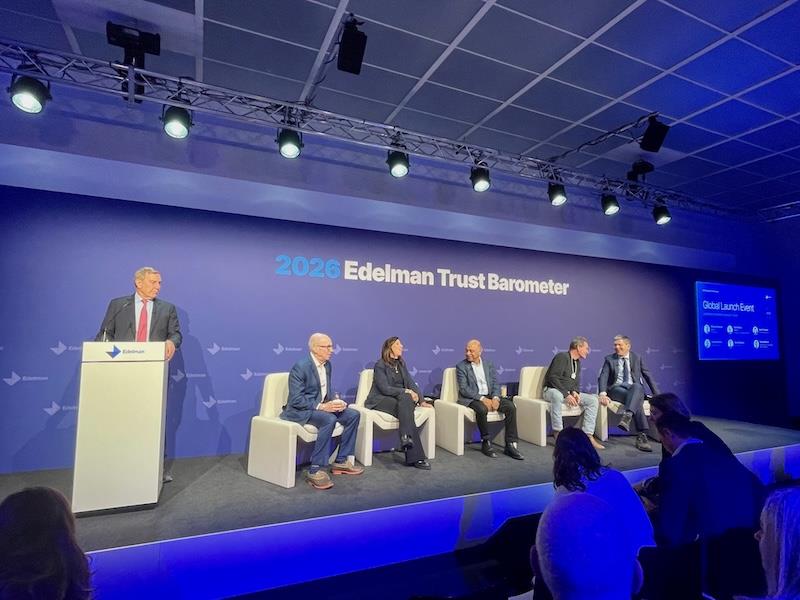
Edelman Trust Barometer: We Must Re-Build Trust From The Ground Up
(MENAFN- PRovoke)
LONDON - Edelman's 2026 Trust Barometer has found that global society is retreating into what the firm describes as a new and destabilising phase of the trust crisis: insularity, marked by narrowing worldviews, declining openness to difference and a growing reluctance to engage in dialogue or compromise.
Speaking at the launch of the report during the World Economic Forum in Davos this morning, Edelman CEO Richard Edelman said people were increasingly“choosing a closed ecosystem of trust that mandates a limited worldview, a narrowing of opinion, intellectual stasis and cultural rigidity”.
“Distrust is the default instinct,” Edelman said.“Insular respondents say they would have profoundly lower trust in institutions if they were led by anyone different from them.”
Edelman's 26th annual Trust Barometer is based on a global survey of nearly 34,000 respondents across 28 markets conducted in late 2025. According to the report, 70% of people globally are hesitant or unwilling to trust someone who differs from them in values, background, views on facts or approaches to solving societal problems. Edelman positions this as a shift beyond traditional polarisation, towards a broader withdrawal from engagement itself.
“We are withdrawing from dialogue and compromise,” Edelman said.“There's been a huge spike in nationalism. We choose individual benefit over mutual advancement.”
Rather than actively debating opposing views, Edelman argued that people are retreating into familiar communities and curated information environments:“We only trust our own choices of information sources, like Substacks, podcasts and curated social feeds, so we no longer have a broad view, it's quite vertical.
“We have developed a hard tortoise shell of belief and withdrawn into it,” he said.“It's a very unstable situation.”
The report finds this insular mindset prevalent across most markets surveyed, cutting across age, income and political affiliation.
David Miliband, president and CEO of the International Rescue Committee, who joined Edelman on a panel in Davos, argued that insularity should be understood less as a reaction to change itself and more as a response to a widespread loss of control.
“Global risks are rising, political power is fragmenting in a way it hasn't before, and it's disorienting,” Miliband said.“The risks and rewards of globalisation have been massively unequally shared. Some people have a lot of control and most have much, much less. If you wanted to create an experiment to create insularity, that's what's happened for the past 10 years.”
Miliband's analysis echoed one of the Trust Barometer's core themes: that economic anxiety, perceived unfairness and declining faith in institutions are feeding a narrowing of trust rather than outright disengagement.
Edelman linked the rise of insularity to a combination of structural pressures and cultural shifts, including what he described as“the great switch off”, with growing numbers of people actively avoiding news, alongside the rise of artificial intelligence and a collapse in optimism about the future.
The 2026 Trust Barometer shows that only around one-third of respondents globally believe the next generation will be better off than the current one, highlighting a sharp decline in confidence about long-term progress.
Taken together, Edelman said, these forces are encouraging people to prioritise perceived safety and familiarity over openness, experimentation and change.
While Edelman's global Trust Index remains relatively stable at a topline level, the firm stresses that this masks deep internal fractures within societies.
One of the most persistent is trust inequality, with higher-income respondents significantly more trusting than lower-income groups. Edelman's data shows this gap has more than doubled since 2012, reaching around 15 points globally and substantially higher in some major economies.
In developed markets such as the UK, trust levels remain comparatively low, while several developing markets continue to post higher overall trust scores, reinforcing the uneven global trust landscape.
Edelman warned that rising insularity poses a direct threat to economic growth, innovation and organisational cohesion:“Business has kept its head down for the past years, but there is no such thing as business as usual. It's impossible to play safe, increase the stock price and make money operating as a multinational with domestic competition with this amount of insularity.”
He added that the Trust Barometer data suggests societies may see a much slower pace of acceptance of innovation, alongside increased dysfunction inside organisations themselves.“People won't follow a CEO who has different values,” Edelman said.
Miliband placed this challenge within a broader geopolitical context:“Geopolitics plays into this, with the degree of imbalance and fluidity and many different coalitions. Global companies now have to have their own foreign policy, never mind states.”
He added that restoring trust would require far greater consistency between leadership rhetoric and behaviour:“To give back control, what leaders say and do must add up. There is too much divergence between what they say they care about and the action they actually take.”
While trust remains a critical driver of economic and social progress, Edelman emphasised that it cannot be rebuilt through rhetoric alone:“Trust drives growth, but action earns trust. We have to rebuild trust from the ground up. People know insularity is negative, but they don't know how to get out of it. The stakes are enormous, and business needs to lead.”
As a potential response, Edelman suggested“trust brokering”, which he described as "an attempt to restore trust between alienated parties by surfacing common interests and finding common ground."
He suggested this could begin inside organisations and businesses, through convening small, diverse groups to foster understanding and rebuild connection:“The goal is to be a convener, not an advocate. This is new for business. We need to listen better, and we need to stop this inflammatory rhetoric.”
For communications leaders, the 2026 Trust Barometer presents a challenge. Edelman's findings suggest that broad, universal messaging is increasingly ineffective in a world where trust is fragmented and audiences are highly selective about whom they listen to.
Instead, the report argues, organisations must focus on consistency, relevance and tangible action, recognising that trust is now built locally and experientially rather than through abstract institutional authority.
As both Edelman and Miliband made clear in Davos, rebuilding trust in an age of insularity will require leaders not just to speak differently, but to act differently, closing the gap between words and behaviour in a fractured world.
Speaking at the launch of the report during the World Economic Forum in Davos this morning, Edelman CEO Richard Edelman said people were increasingly“choosing a closed ecosystem of trust that mandates a limited worldview, a narrowing of opinion, intellectual stasis and cultural rigidity”.
“Distrust is the default instinct,” Edelman said.“Insular respondents say they would have profoundly lower trust in institutions if they were led by anyone different from them.”
Edelman's 26th annual Trust Barometer is based on a global survey of nearly 34,000 respondents across 28 markets conducted in late 2025. According to the report, 70% of people globally are hesitant or unwilling to trust someone who differs from them in values, background, views on facts or approaches to solving societal problems. Edelman positions this as a shift beyond traditional polarisation, towards a broader withdrawal from engagement itself.
“We are withdrawing from dialogue and compromise,” Edelman said.“There's been a huge spike in nationalism. We choose individual benefit over mutual advancement.”
Rather than actively debating opposing views, Edelman argued that people are retreating into familiar communities and curated information environments:“We only trust our own choices of information sources, like Substacks, podcasts and curated social feeds, so we no longer have a broad view, it's quite vertical.
“We have developed a hard tortoise shell of belief and withdrawn into it,” he said.“It's a very unstable situation.”
The report finds this insular mindset prevalent across most markets surveyed, cutting across age, income and political affiliation.
David Miliband, president and CEO of the International Rescue Committee, who joined Edelman on a panel in Davos, argued that insularity should be understood less as a reaction to change itself and more as a response to a widespread loss of control.
“Global risks are rising, political power is fragmenting in a way it hasn't before, and it's disorienting,” Miliband said.“The risks and rewards of globalisation have been massively unequally shared. Some people have a lot of control and most have much, much less. If you wanted to create an experiment to create insularity, that's what's happened for the past 10 years.”
Miliband's analysis echoed one of the Trust Barometer's core themes: that economic anxiety, perceived unfairness and declining faith in institutions are feeding a narrowing of trust rather than outright disengagement.
Edelman linked the rise of insularity to a combination of structural pressures and cultural shifts, including what he described as“the great switch off”, with growing numbers of people actively avoiding news, alongside the rise of artificial intelligence and a collapse in optimism about the future.
The 2026 Trust Barometer shows that only around one-third of respondents globally believe the next generation will be better off than the current one, highlighting a sharp decline in confidence about long-term progress.
Taken together, Edelman said, these forces are encouraging people to prioritise perceived safety and familiarity over openness, experimentation and change.
While Edelman's global Trust Index remains relatively stable at a topline level, the firm stresses that this masks deep internal fractures within societies.
One of the most persistent is trust inequality, with higher-income respondents significantly more trusting than lower-income groups. Edelman's data shows this gap has more than doubled since 2012, reaching around 15 points globally and substantially higher in some major economies.
In developed markets such as the UK, trust levels remain comparatively low, while several developing markets continue to post higher overall trust scores, reinforcing the uneven global trust landscape.
Edelman warned that rising insularity poses a direct threat to economic growth, innovation and organisational cohesion:“Business has kept its head down for the past years, but there is no such thing as business as usual. It's impossible to play safe, increase the stock price and make money operating as a multinational with domestic competition with this amount of insularity.”
He added that the Trust Barometer data suggests societies may see a much slower pace of acceptance of innovation, alongside increased dysfunction inside organisations themselves.“People won't follow a CEO who has different values,” Edelman said.
Miliband placed this challenge within a broader geopolitical context:“Geopolitics plays into this, with the degree of imbalance and fluidity and many different coalitions. Global companies now have to have their own foreign policy, never mind states.”
He added that restoring trust would require far greater consistency between leadership rhetoric and behaviour:“To give back control, what leaders say and do must add up. There is too much divergence between what they say they care about and the action they actually take.”
While trust remains a critical driver of economic and social progress, Edelman emphasised that it cannot be rebuilt through rhetoric alone:“Trust drives growth, but action earns trust. We have to rebuild trust from the ground up. People know insularity is negative, but they don't know how to get out of it. The stakes are enormous, and business needs to lead.”
As a potential response, Edelman suggested“trust brokering”, which he described as "an attempt to restore trust between alienated parties by surfacing common interests and finding common ground."
He suggested this could begin inside organisations and businesses, through convening small, diverse groups to foster understanding and rebuild connection:“The goal is to be a convener, not an advocate. This is new for business. We need to listen better, and we need to stop this inflammatory rhetoric.”
For communications leaders, the 2026 Trust Barometer presents a challenge. Edelman's findings suggest that broad, universal messaging is increasingly ineffective in a world where trust is fragmented and audiences are highly selective about whom they listen to.
Instead, the report argues, organisations must focus on consistency, relevance and tangible action, recognising that trust is now built locally and experientially rather than through abstract institutional authority.
As both Edelman and Miliband made clear in Davos, rebuilding trust in an age of insularity will require leaders not just to speak differently, but to act differently, closing the gap between words and behaviour in a fractured world.

Legal Disclaimer:
MENAFN provides the
information “as is” without warranty of any kind. We do not accept
any responsibility or liability for the accuracy, content, images,
videos, licenses, completeness, legality, or reliability of the information
contained in this article. If you have any complaints or copyright
issues related to this article, kindly contact the provider above.
Most popular stories
Market Research

More Story




Comments
No comment