







403
Sorry!!
Error! We're sorry, but the page you were looking for doesn't exist.
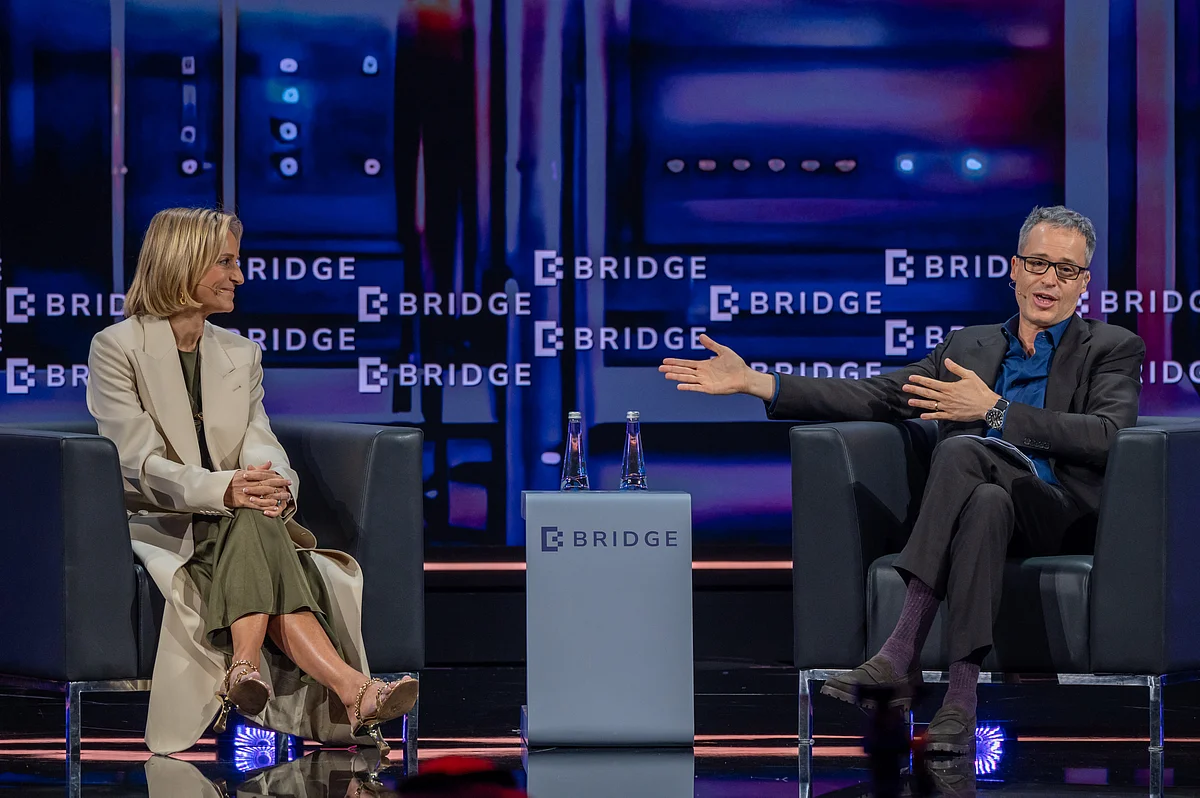
'Truth Will Never Be Clean': Media Must Admit Every Story Has Agenda, Says Top Journalist
(MENAFN- Khaleej Times)
Narratives have become weapons in the fight for public belief, and journalists must stop pretending storytelling is neutral, award-winning broadcaster Emily Maitlis warned in Abu Dhabi on Monday. She said the battle for truth is no longer about facts alone, but about who can make their version of reality travel faster and hit harder.
Speaking at Bridge Summit in a session moderated by Ted Kemp, Chief Content Officer at Khaleej Times, Maitlis said stories have always carried power, from tribal survival to royal control of written history. What has changed now is the scale and speed at which competing truths collide online.
Recommended For You Bridge Summit, Abu Dhabi: Arab actresses call for more women writers to reshape roles“If I can shout louder and reach more people, my version becomes the truth,” she said.“That is where we are today.”
Stay up to date with the latest news. Follow KT on WhatsApp Channels.
Bridge Summit 2025, held from 8 to 10 December at the Abu Dhabi National Exhibition Centre (ADNEC), brings together an international gathering of media, entertainment and creative-economy leaders under one roof. The three-day event covers a wide spectrum of content and industry sectors, including media, creator economy, gaming, music, technology and visual storytelling.
Kemp asked whether storytelling once united societies before digital platforms fractured them. Maitlis rejected the idea. Unity, she argued, was an illusion that existed only briefly in the era of mass broadcast. Before and after that, stories have always split audiences into believers and outsiders.
She said the danger lies not in storytelling having a purpose, but in storytellers hiding it.“Propaganda is a sledgehammer. Persuasion is quieter,” she said.“Even with an agenda, the truth is messy. It will contradict you. Journalists must be prepared to show that.”
Maitlis pointed to her landmark BBC interview with Prince Andrew in 2019, in which he addressed publicly, for the first time, allegations around his relationship with the late convicted sex offender Jeffrey Epstein, as an example of storytelling grounded in public interest rather than narrative control.
The interview rapidly became a global media event. It exposed discrepancies between the Prince's statements and earlier claims, provoked massive backlash, and triggered what many called one of the biggest public relations crises for the British royal family in decades.
She said she felt responsible for asking the questions that the victims of Jeffrey Epstein could not put to him directly.
“I had one chance and I could not get it wrong,” she said.“If you want to know something from Prince Andrew, ask Prince Andrew. That was the power of that interview. One person, on camera, answering for himself.”
Kemp noted that journalists now compete not just with other media but with influencers, activists and artificial intelligence, all pushing persuasive narratives into the same attention stream. Maitlis said the only answer is radical transparency.
“Every story has a purpose,” she said.“Trust comes from admitting that, and from telling the audience when you find something that does not fit. The truth will never be clean. But hiding the flaws is how we lose it entirely.”

Legal Disclaimer:
MENAFN provides the
information “as is” without warranty of any kind. We do not accept
any responsibility or liability for the accuracy, content, images,
videos, licenses, completeness, legality, or reliability of the information
contained in this article. If you have any complaints or copyright
issues related to this article, kindly contact the provider above.
Most popular stories
Market Research

More Story








Comments
No comment